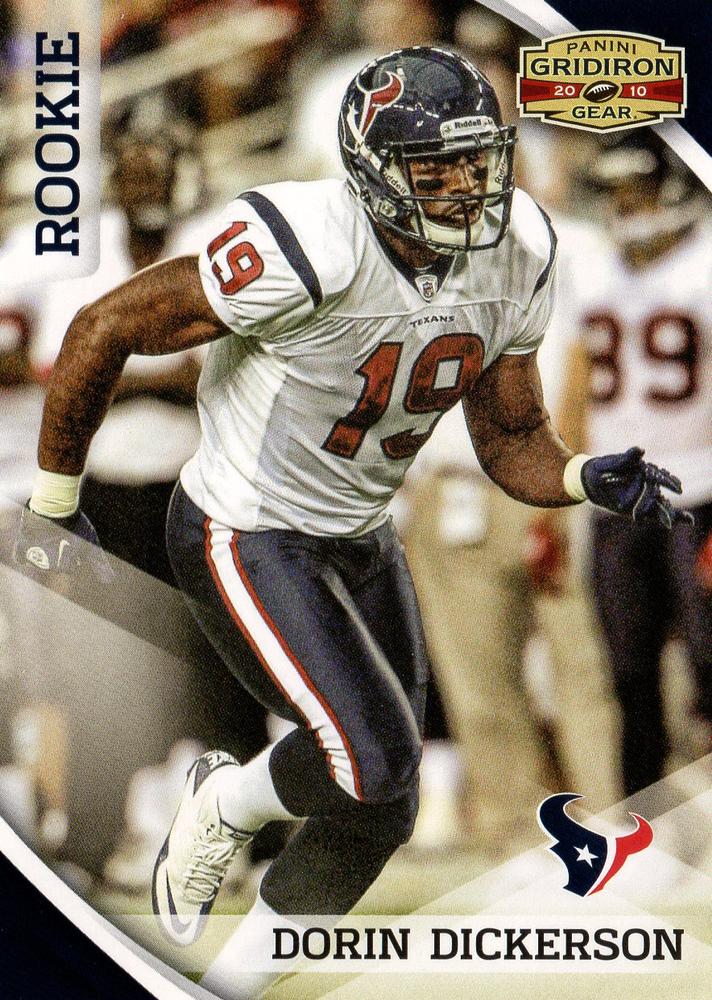
• Dorin Dickerson: All-American

    By Brian Kopycinski

    From an early age, Dorin Dickerson witnessed greatness. As a kid, his father Randy took him to Temple games to watch his uncle Ron coach the Owls football team. Ron Dickerson, a former defensive back at Kansas State, became the first African American head coach in Temple’s history, leading the program from 1993 to 1997. Dorin remembers one game fondly just “down the street” from where he grew up, when Temple came to town to face Pitt. In the blowout Panthers victory, star running back Curtis Martin rushed for over 100 yards. Being there at Pitt Stadium inspired Dickerson. He wanted to be out there on that field, someday.

    Dickerson comes from a family of athletes. His father played basketball at Kansas State and Lock Haven. His cousin, Ron Jr., played in the NFL for the Kansas City Chiefs, mainly as a kick returner. The foundation was certainly there. Dickerson attended West Allegheny High School in Imperial, Pennsylvania, about half an hour west of Pittsburgh in Allegheny County. There, under legendary coach Bob Palko, the Indians made the WPIAL playoffs three consecutive seasons while Dickerson was on the team. Dorin, primarily a running back, played all over the field during his spectacular senior season in 2005, also seeing time at quarterback, defensive back, and as a kick returner. He had 1,429 yards rushing, 22 receptions for 423 receiving yards, and led the WPIAL with 36 total touchdowns. On the defensive side, Dickerson added four interceptions. 

    Following his historic campaign, Dickerson was named the Pittsburgh Post-Gazette’s Player of the Year. He was considered a consensus Top 100 recruit and was selected to play in the prestigious US Army All-American Bowl, held annually in Frisco, Texas. Seeking a path to the NFL, Dickerson committed to play for coach Dave Wannstedt at Pitt in the Big East. He chose to remain close to home, with several top-tier programs wanting his talents. Like in high school, Dickerson played all over in college. As a true freshman in 2006, he was a wide receiver/kick returner and saw limited action, scoring a touchdown versus Toledo. He shifted to defense as a linebacker his sophomore year, making 15 tackles as a reserve, still involved in the kick return game.  

    As a junior, Dickerson made the transition to tight end, where he made an instant impact. Pitt turned things around that year, in their first winning season since 2004. They earned a bid to the Sun Bowl, in which Dickerson had 2 catches for 37 yards. For the regular season, he had 174 receiving yards to go with 2 touchdowns. His connection with quarterback Bill Stull grew further in his senior year, in one of the finest seasons for a tight end in Pitt’s storied history. A unanimous first-team All-American, Dickerson had 529 yards, second on the team, and 10 touchdowns. The Panthers improved on their previous year, winning the Meineke Car Care Bowl and finished #15 in the final AP poll. With LeSean McCoy off to the NFL, Dion Lewis stepped up and helped deliver a season to remember. Stull led the conference in passing yards, and Aliquippa’s Jonathan Baldwin broke the 1,000 yards receiving mark.  

    Drafted by the Houston Texans in the 7th round of the 2010 NFL Draft, the odds were stacked against Dickerson as a relatively undersized tight end going from the college ranks to the pros. At the combine, he ran one of the fastest times recorded at his position, 4.40 seconds, just behind Vernon Davis at 4.38 seconds for the record. As a rookie, Dickerson suited up for seven games but saw no action in the regular season. That year, the Texans went 6-10 under head coach Gary Kubiak. He was cut by Houston just before the start of the 2011 season. Dickerson then bounced between the Steelers’ and Patriots’ practice squads that year, before he signed with the Buffalo Bills in 2012.  

    In 11 games with the Bills, Dickerson had 9 receptions for 117 yards, averaging 13 yards per catch with Ryan Fitzpatrick under center. In Buffalo, he was behind on the depth chart to Scott Chandler and T.J. Graham. The Bills went 6-10 that season, finishing last in the AFC East. In August 2013, Dickerson was released by Buffalo and later signed with Detroit in October in a reserve role. He got into 5 games with the Lions, recording 2 receptions for 34 yards. Detroit back then had true stars in quarterback Matthew Stafford and wide receiver ‘Megatron’ Calvin Johnson. Under Jim Schwartz, the Lions finished the year 7-9, failing to return to the playoffs in back-to-back seasons. Dickerson spent time on injured reserve due to concussion.  

    Next season, Dickerson signed with Tennessee, but never dressed for the Titans, as he missed the next two campaigns on IR. Since retiring from the game as a player, Dickerson has remained actively involved in the community. He is now a popular radio host of 93.7 The Fan’s Morning Show and serves as a sideline analysist for Pitt football. Dickerson was inducted into the WPIAL Hall of Fame in 2016. Following in the footsteps ‘Iron Mike’ Ditka, another Western PA native, Dickerson became one of the Panthers’ greatest tight ends. The program has had success recently in developing talent for the NFL with Lucas Krull and Gavin Bartholomew. An All-American through and through, Dorin Dickerson embodied that greatness at Pitt, a tradition he carries on today in all that he does.  
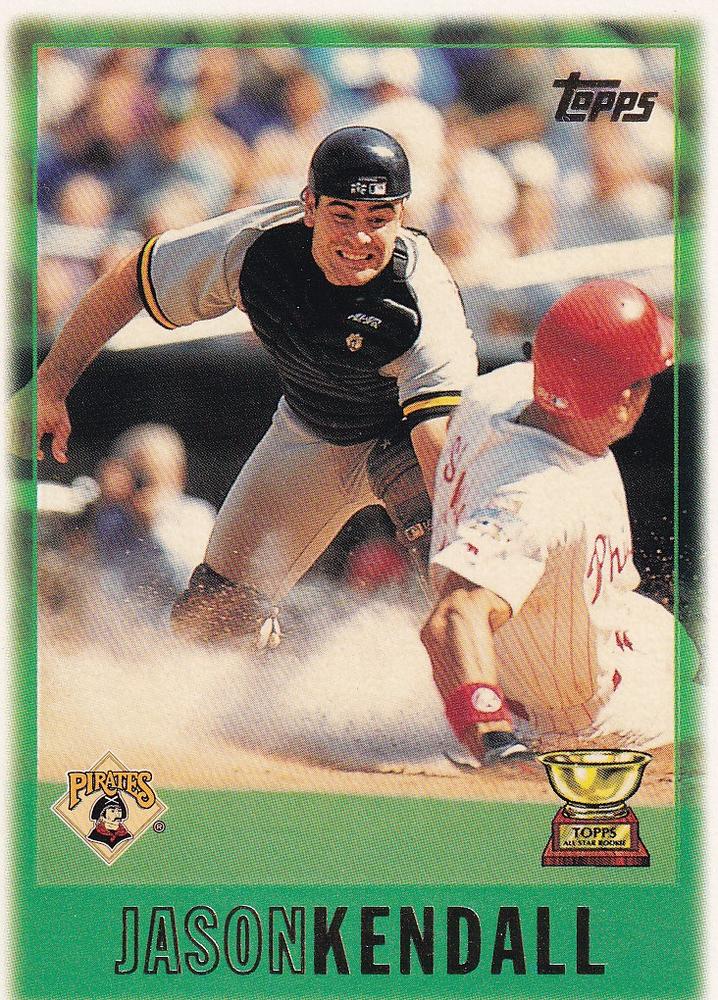
  • The Case for Kendall

    By Brian Kopycinski

    Jason Kendall was destined for Cooperstown. Born in Torrance, California, the son of former big-league catcher Fred Kendall, Jason was selected by the Pittsburgh Pirates in the 1st round of the 1992 MLB June Amateur Draft. Catching was in his blood; he had all the makings of an elite athlete. Through his first five major league seasons, Kendall was at a historic pace, comparable to that of Johnny Bench, Yogi Berra, and Carlton Fisk.  

    He averaged .314 at the plate, made three All-Star teams, and accumulated 20 wins above replacement. After the 2000 season, Kendall signed a six-year contract extension for $60 million, at the time the most expensive in Pirates’ history. Then, on Opening Day in 2001, a freak injury altered the course of what surely would have been a Hall of Fame career. 

    The Pirates opened the 2001 season on the road at Cinergy Field (formerly Riverfront Stadium) against the Cincinnati Reds. The previous season, Pittsburgh finished fifth in the NL Central at 69-93, while Cincinnati placed second, falling short of the Wild Card to the New York Mets, who went on to win the pennant. Kendall was coming off another All-Star year, hitting a career-high 14 home runs.  

    Pittsburgh’s Todd Ritchie faced Osvaldo Fernández in the opener. Through six innings, the Reds led 3-0. The Pirates fought back with two runs in the top of the seventh to shift the momentum. Reliever Scott Sauerbeck replaced Ritchie in the bottom half. Sauerbeck then crossed Kendall up on a cutter inside that landed awkwardly in his glove and tore every ligament in his left thumb. Tough as nails, he stayed in the game which ended in a Pirates’ loss. 

    Kendall played through pain all year, appearing in 157 games. He waited until the offseason for surgery and was never the same hitter from then on. His post-2001 numbers reflect this. He never hit more than 6 home runs in a season and slugged over .400 just once. Kendall later revealed that any hard swing for power caused him extreme pain. Regardless, he played through it and still had a remarkable career, one certainly deserving of further Hall of Fame consideration.  

    In 15 big-league seasons, Kendall caught over 2,000 games. He totaled 2,195 hits, stole 189 bases (the most by a catcher in the modern era), and ranks fifth all-time in hit-by-pitches with 254. He was traded from Pittsburgh to the Oakland A’s and, except for a stint with the Chicago Cubs, mostly played in small markets like Milwaukee and Kansas City. He was undoubtedly overshadowed in the National League by Mike Piazza. Playing as a singles and doubles hitter at the height of the steroid era didn’t help either.  

    After leaving the Pirates, Kendall never made another All-Star team, nor did he win any Gold Gloves or Silver Sluggers. While he was a solid defensive catcher, that was never his strength. Kendall was a balanced player that possessed elite traits. His durability and hit tool were always his strongest assets. He was a no-nonsense ballplayer who reflected Pittsburgh’s blue-collar identity on the diamond, no matter where he played. It’s shocking that a legacy such as his received just two Hall of Fame votes in his first (and only) year on the ballot in 2016. 

    Evaluating talent, beyond watching the games, is no easy task. Metrics like WAR help, though they don’t always get it right. Baseball-Reference and FanGraphs calculate it differently, with the latter placing more weight on defensive metrics. Baseball-Reference has Kendall at 41.7 WAR, putting him on par with some Hall of Fame talents. Most would say Yadier Molina is a sure thing for the Hall by now. Molina is a different case, however, as one of the greatest defensive catchers ever and a two-time World Series champion. 

    Still, the two have nearly identical WAR on Baseball-Reference, with Molina at 41.6. FanGraphs views Molina much more favorably (at 55.6 WAR, thanks to his elite defense), while Kendall sits at 36.5, creating a clear gap. Generally, catchers haven’t gotten the love they deserve for the Hall of Fame. Perhaps Kendall will get another look someday via the Veterans Committee. Modern analytics have opened the door for someone like Ted Simmons. Who’s to say Kendall isn’t deserving, too? 

    Something else to consider is Kendall’s place in Pirates’ lore. Between him and Manny Sanguillén, there are no greater catchers in the franchise’s century-plus history. Manny played in more meaningful games, winning two World Series rings with the Bucs. Kendall never had that opportunity in Pittsburgh. He was always on losing teams that went nowhere. The closest he ever came as a player was the ALCS with the Athletics in 2006. After retiring, Kendall joined the Royals organization as a coach, where he earned a ring in 2015. 

    Jason Kendall was a special ballplayer. There aren’t many like him. He brought a tenacity to the game that’s rare today. What doesn’t show up in the box score is something special, something you can’t quantify. We may never see another Jason Kendall. That fact alone makes him worthy of a plaque in Cooperstown. It’s a shame he isn’t already in the Pirates Hall of Fame. Get on it, Bob! 

  • The 1984 Fiesta Bowl: Pitt vs. Ohio State

    By Brian Kopycinski

    Pitt football enjoyed an unprecedented run of success from the late ‘70s through the early ‘80s that it has not replicated since. A Heisman Trophy winner in Tony Dorsett, multiple national championships, both claimed and unclaimed, the development of elite talents bound for the Pro Football Hall of Fame. It’s unlikely in today’s landscape of college football that we’ll see as much attention and success in the program ever again. We all know that nothing lasts forever.

    By 1983, Dan Marino and many more were off to the National Football League. Certainly, filling their shoes would be no easy task. The ‘83 Panthers had a difficult road ahead of them, under second year head coach Foge Fazio. What followed was an unexpected run that ended in heartbreak at Sun Devil Stadium in Tempe, Arizona in the 1984 Fiesta Bowl. 

    Succeeding Marino was sophomore John Congemi. Congemi had weapons on offense that included halfback John McCall and wideouts Bill Wallace and Dwight Collins. On the defensive side of the ball were standouts like noseguard Bill Maas and DB Tom Flynn. The Panthers started out the season strong, going 2-0 in wins over Tennessee on the road and Temple. Pitt fell, however, to Boomer Esiason and the Maryland Terrapins in Week 3.

    A Backyard Brawl matchup at West Virginia was set for Week 4. In a close game, Conemaugh’s Jeff Hostetler led the Mountaineers to victory over the Panther 24-21. This loss, while huge, didn’t define Pitt’s season. The Panthers ran off six straight wins, including a W over #18 Notre Dame in South Bend.  

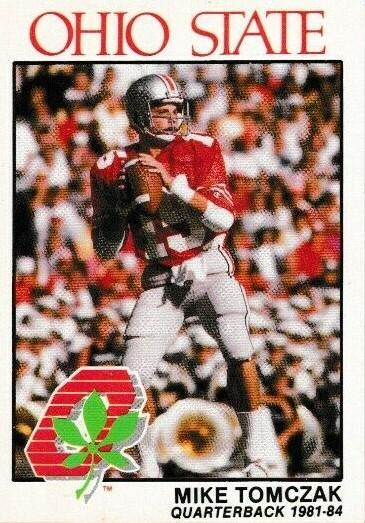
    Against reigning national champion Penn State, the #17 ranked Panthers drew a 24-24 tie in the final regular season game. With a record of 8-2-1, Pitt was awarded a coveted bid in the Fiesta Bowl and would face the 8-3 Ohio State Buckeyes. Tempe wasn’t unfamiliar to the Panthers, who defeated the Arizona Wildcats in the ninth edition of the bowl game in 1979. Ohio State, led by quarterback Mike Tomczak, presented a greater challenge.

    A defensive battle for the first three quarters, the action picked up in the fourth that came down to the final seconds in Ohio State’s favor. The memorable contest marked the end of an era of sorts in Pitt football.

    The Buckeyes quickly drove down the field to open the game. Tomczak faked the handoff at the goal line and snuck it in to put Ohio State up early. Pitt fought back and tied things up just over a minute into the second quarter, on Congemi’s 6-yard touchdown pass to tight end Clint Wilson. Congemi hit McCall on a 42-yard strike to set up the score. Before the half was out, Keith Byars dove from the 1-yard line for six to put the Buckeyes on top with less than a minute to go. This capped off a 73-yard drive that ate up nearly five minutes of game clock.

    The third quarter was hard-fought, but neither team scored. Luck appeared to be on Pitt’s sideline, as early in the fourth quarter, Wilson recovered McCall’s fumble in the endzone for a touchdown to tie the game. This good fortune for the Panthers wouldn’t last, as Byars took the ensuing kickoff 99-yards to the house. With just under ten minutes remaining, Pitt closed the gap after Congemi threw another touchdown. Beaver Falls native Dwight Collins hauled in the pass from 11-yards out, though Pitt failed on the two-point conversion attempt to make the score 21-20.

    After a stop on defense, Pitt rallied and on the next possession took the lead with Ray “Snuffy” Everett’s 37-yard field goal to make it 23-21. Despite the unfavorable odds, Mike Tomczak led the Buckeyes down the field. On an 89-yard, 13 play drive capped off by a 39-yard shot down the sideline to Thad Jemison, Ohio State took their final lead. Backup Pitt QB Chris Jelic filling in for an injured Congemi was unable to replicate the miraculous drive, and the game was over. The final score, 28-23 Ohio State.

    Congemi, the losing quarterback, was named the Offensive Player of the Game. He completed 31 passes, then a Fiesta Bowl record, for 341 yards. Ohio State linebacker Rowland Tatum was named the Defensive Player of the Game. The Buckeyes rose to #9 in the final AP poll, whereas Pitt fell to #18. Congemi remained Pitt’s starter for the next three seasons, finishing second behind Dan Marino in passing yards in program history. Both records have since been broken. 

    Tomczak, who went 5-21 passing in the second half, helped the Buckeyes win the Big Ten in 1984, and led them to the Rose Bowl where they fell to the USC Trojans. An undrafted free agent, Tomczak found success as the starting quarterback of the Chicago Bears and later with the Pittsburgh Steelers. Byars was the runner up for the Heisman in ‘84 and had a solid NFL career. The same can be said, and then some, for Bill Maas, a first-round pick of the Kansas City Chiefs in 1984.  

    It’s not easy to define success. What Pitt did back then is difficult to compare to any period in the years since. Sure, you had some good years and bowl wins in the 2000s and 2010s, but nothing like the Dorsett and Marino years. The closest example you could point to would be 2021 when Pitt won the ACC and Kenny Pickett made a run at the Heisman. Still, that’s a bit of a reach, as they failed to make the College Football Playoff and lost the Peach Bowl to Michigan State, with several key players like Pickett sitting the game out.  

    With coach Pat Narduzzi and true freshman QB Mason Heintschel, Pitt found new life in 2025 yet lost in embarrassing fashion to East Carolina in that year’s Military Bowl. As always, the future remains unpredictable, especially with the influence of NIL overtaking the game. College football now is so different from what it was back then. Watching highlights from the game, you’ll notice the oversized shoulder pads, neck rolls, and quarterbacks taking more than a five-step drop. It’s from a bygone era that many Pitt fans still remember fondly to this day. Hail to Pitt!  

  • Antwaan Randle El: Triple Threat

    By Brian Kopycinski

    All eyes are on Indiana football after Pittsburgh-born head coach Curt Cignetti and Heisman Trophy-winning QB Fernando Mendoza led the Hoosiers to their first-ever national championship this past season. Cignetti, a former signal-caller with the West Virginia Mountaineers, had coaching stints at Pitt and IUP before arriving in Bloomington. Mendoza is undoubtedly the greatest quarterback in program history. Not far behind in Hoosier lore is a name familiar to Steelers fans and anyone tracking the current coaching carousel: Antwaan Randle El.

    The Chicago-area native was a three-sport standout in high school. Drafted by his hometown Cubs in the 14th round of the 1997 MLB Draft, he seriously considered a pro career but chose Indiana, where he played baseball, basketball (under legendary coach Bob Knight), and football. In his first start as Indiana’s quarterback in 1998, Randle El threw for 385 yards and 3 touchdowns while rushing for 82 yards and 3 more scores in a victory over Western Michigan.

    He had an outstanding freshman season despite the Hoosiers’ 4-7 record in the Big Ten, earning Big Ten Freshman of the Year honors. His sophomore year was even better, throwing 17 touchdowns against 7 interceptions with 2,227 passing yards, plus 788 rushing yards and 13 scores on the ground. As a junior, he rushed for a personal-best 1,270 yards. Randle El was one of college football’s most dynamic playmakers, becoming the first Division I quarterback to pass and rush for 40 touchdowns each in a career. Yet Indiana never posted a winning record during his tenure.

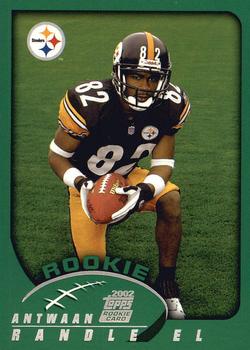
    In his senior year, he led the team to a 5-6 record, including wins over #22 Michigan State and rival Purdue. He finished sixth in Heisman Trophy voting (won by Nebraska’s Eric Crouch) and was named Big Ten Offensive Player of the Year and conference MVP. The Steelers selected him in the second round of the 2002 NFL Draft as a wide receiver.

    At Indiana, Randle El also contributed as a punter and returner, showcasing his versatility. In the NFL, he became a slot receiver/hybrid who thrived on gadget plays, drawing comparisons to Kordell Stewart. As a rookie, Randle El caught 47 passes for 489 yards and 2 touchdowns, added 134 rushing yards, and starred on special teams with 733 kick return yards and a 99-yard touchdown against the Bengals in Week 6.

    2004 was a special year for Pittsburgh. They drafted Ben Roethlisberger, finished 15-1 to win the AFC North, and reached the AFC Championship to face the Patriots. Randle El posted 601 receiving yards and 3 touchdowns with the Steelers that season. In the loss to New England, he caught three passes for 52 yards. Fans thankfully wouldn’t have to wait long for another deep playoff run.

    After finishing the 2005 regular season 11-5, Pittsburgh defeated Cincinnati handily in the Wild Card round before an iconic Divisional win over Indianapolis. Randle El caught a 6-yard TD from Roethlisberger in the first quarter and added four catches for 52 yards in the AFC Championship victory over Denver. His defining moment came in Super Bowl XL.

    With Pittsburgh leading Seattle 14-10 in the fourth quarter, he took a handoff from Willie Parker on a trick play and threw a 43-yard touchdown to Hines Ward, one of the more memorable plays in Super Bowl history. Ward earned MVP honors with 123 yards and that score. The Bus went out on top, and Coach Cowher finally got his ring. Randle El also returned two punts for touchdowns that season and was named First-Team All-Pro as a punt returner.

    He signed with Washington that offseason, where he remained a reliable pass catcher and return man. The 2007 Redskins made the playoffs at 9-7, and Randle El scored a TD in their loss to Seattle. After four productive years with Washington, he returned to Pittsburgh at age 31, now lower on the depth chart behind Mike Wallace and Hines Ward.

    Heath Miller remained a favorite target of Big Ben’s. The Steelers also drafted two notable receivers that year, Antonio Brown and Emmanuel Sanders. In his final season (2010), Randle El caught just 22 passes for 253 yards amid reduced return duties. The Steelers won the AFC North again and reached the Super Bowl but fell to Aaron Rodgers and Green Bay 31-25. Randle El had two catches for 50 yards in the game.

    He sat out 2011 and retired in 2012 but stayed connected to the game of football. After a stint as athletic director at Ashburn’s Virginia Academy, he joined the Buccaneers as an offensive assistant in 2019, contributing to their Super Bowl LV win with Tom Brady. He then spent four seasons as wide receivers coach with the Detroit Lions, mentoring stars like Amon-Ra St. Brown and Jameson Williams in a high-powered offense.

    Now, Randle El serves as assistant head coach and wide receivers coach for his hometown Chicago Bears under Ben Johnson. With things trending upward in Chicago, his name has surfaced as a candidate for many coaching vacancies league-wide. While an OC role seems more immediate, don’t rule out a head coaching job. He’s only 46, with a proven track record as a developer of talent.

    As a player, Randle El was nothing to sniff at, an accomplished college star who seamlessly transitioned to wide receiver and excelled in a unique role. Always a threat with the ball in his hands, he’ll forever be linked to that iconic Super Bowl trick-play TD. Pittsburgh will always hold a special place in his football journey. Perhaps one day he’ll return to help the Steelers chase another Lombardi.

  • Young Guns: “Lucky” Pierre Larouche

    By Brian Kopycinski

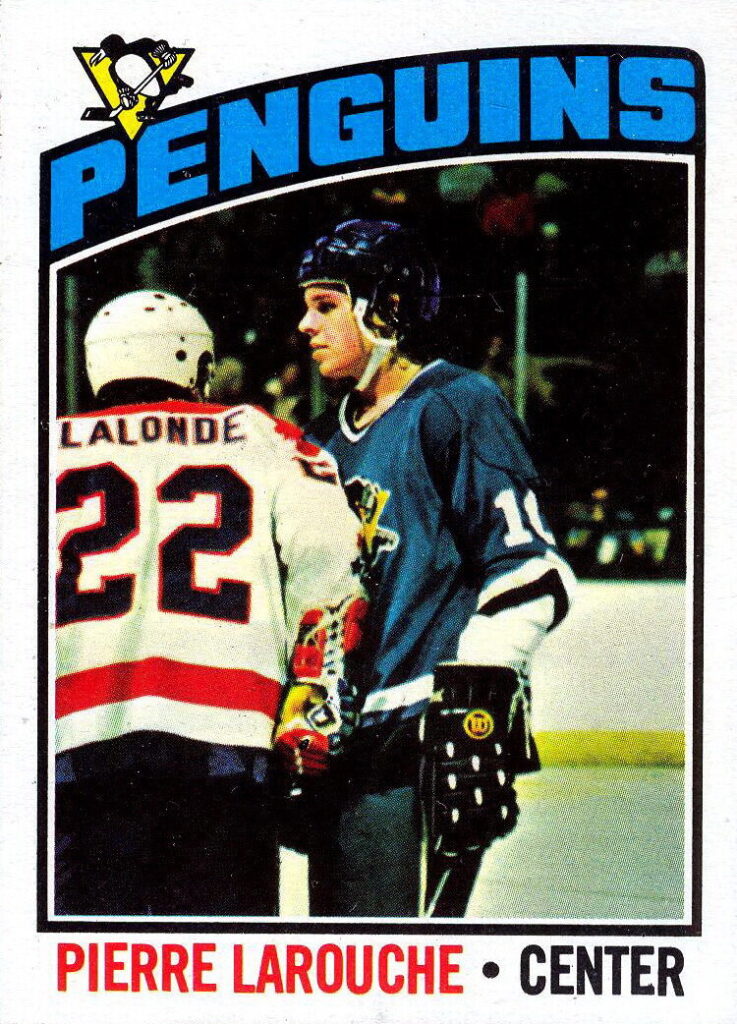
    In the early years of the franchise, the expansion Pittsburgh Penguins faced stiff competition in the league’s West Division, most notably from the Chicago Blackhawks and the Philadelphia Flyers. While the Pens did eventually make the playoffs, this success was short-lived, as the team fell early in the postseason in both 1970 and 1972. Back then, center Jean Pronovost was their best player and leader on the ice. To truly compete with the Boston Bruins, Montreal Canadiens, and Flyers for a Stanley Cup, the Penguins needed greater firepower in their lineup. In 1974, with the 8th overall pick, Pittsburgh selected Pierre Larouche, “Lucky” Pierre. 

    The Amos, Quebec pond skater grew up playing backyard hockey about 350 miles north of Montreal. Early into his hockey career, Larouche showed signs of greatness. With the Sorel Éperviers of the QMJHL, he recorded a whopping 251 points for the 1973-74 season. As the league’s top scorer with 94 goals and 157 assists, he was awarded the Jean Béliveau Trophy. This impressive record stood until Le Magnifique himself, Mario Lemieux, broke it playing for the Laval Voisins with 282 points in 1983-84. Larouche was also drafted by the Houston Aeros of the WHA in 1974 but opted for the direct transition to the National Hockey League with the Penguins.

    Larouche, a finesse goal-scoring forward, joined an up-and-coming Penguins team that now featured winger Rick Kehoe, acquired in a trade from the Toronto Maple Leafs. Pittsburgh had moved to the Norris Division of the Prince of Wales Conference, the same season the expansion Washington Capitals and Kansas City Scouts joined the league. Larouche’s rookie year was simply phenomenal. At just 19, he scored 31 goals and added 37 assists for 68 total points. Larouche finished second in the Calder Memorial Trophy voting to the Atlanta Flames’ Eric Vail, though it’s up for debate who really deserved the honor.

    That year, the Pens returned to the postseason, sweeping the St. Louis Blues in the Preliminary Round 2-0, with Larouche scoring the game-winning goal in Game 1. Pittsburgh lost in the next round to the New York Islanders in seven games. Next season, head coach Marc Boileau was fired after the Penguins got off to a poor start. The team played much better under Ken Schinkel, who had recently retired as a player after six seasons with Pittsburgh. While the Pens lost in the Preliminary Round to the Maple Leafs, the 1975-76 season was still one to remember. Larouche had the finest year of his career, breaking the 100-point threshold, scoring 53 goals with 58 assists. He became the youngest Penguin to score 50 goals, and youngest to hit 100 points with 50 goals, a record that stood until “The Great One” Wayne Gretzky came around.  

    Larouche and Pronovost were among the best players in the game. The duo was named to the NHL All Star game, ranking 3rd and 4th in league goal scoring, respectively. By now, Larouche had become known for his brash and outspoken personality. He had another good season with the Pens in 1976-77, as Pittsburgh fell again in the opening round to Toronto. To some, Larouche had outworn his welcome. An infamous quote has been attributed to him, saying to teammates, “…if they want me to play defense, they can pay me another $150,000.” Frustration had grown on both sides, and Larouche was traded during the 1977-78 season to his hometown Canadiens. Idolizing Guy Lafleur, he changed his jersey number from 10 to 28 out of respect for “The Flower”.

    This change of scenery quickly paid dividends. The Habs were in the midst of their dynasty, with Larouche eventually playing on the same line as his hero Lafleur. For the 1979-80 season, Larouche once again hit the 50-goal mark, also notching 41 assists. Still, despite helping the Canadiens win two Cups, Larouche had been criticized for his personality and unbalanced play. Deemed expendable, he was dealt to the hapless Hartford Whalers partway through the 1981-82 season. The Whalers back then were just awful, and while Larouche had a few good years in Hartford, it was hardly enough to turn the depleted franchise’s hopes around.

    Larouche had one more stop in his NHL career, the New York Rangers, where he returned to form. For 1983-84, he was an All-Star for the second and final time, scoring 48 goals in the regular season. Larouche enjoyed a nice stretch with the Rangers on competitive teams. New York reached the Conference Finals in 1986 but lost to the Canadiens. Larouche’s career ended in 1987 just after the start of the season, suffering a serious back injury in the first month of play. To that point, he had 12 points in 10 games, clearly still a threat on the ice. By then, the game had become more physical. Larouche has said that he always related more to the goal scorers like Gretzky and Mike Bossy.  

    Had Larouche remained in Pittsburgh for his career, the Pens still likely wouldn’t have won a Cup. While they certainly could have made deeper playoff runs, defeating the Canadiens or the Islanders at the height of their dominance would have been near impossible. You could argue that Larouche’s 1975-76 season was the best from a Penguins player before the emergence of Lemieux. For his career, Larouche scored 395 goals with 427 assists, for 822 points. “Lucky” Pierre Larouche remains one of the greatest Pens of his era. His remarkable presence, both on and off the ice, won’t be forgotten any time soon.

  • David Freese: In the Clutch

    By Brian Kopycinski

    Third base has been a much talked about position on the Pittsburgh Pirates roster in recent years. Ke’Bryan Hayes, while providing stellar defense, never lived up to the hype that he showed in his cup of coffee in 2020. Fans expect more from this team, and most are not looking forward to an entire year of Jared Triolo, who is best suited for a super utility role, at the hot corner. There have been rumblings about Munetaka Murakami that haven’t panned out, and Eugenio Suárez that remain to be seen. While the future at the position remains unresolved, let’s reflect on the kind of player the Bucs could use in their lineup again, a natural leader and winner like David Freese. 

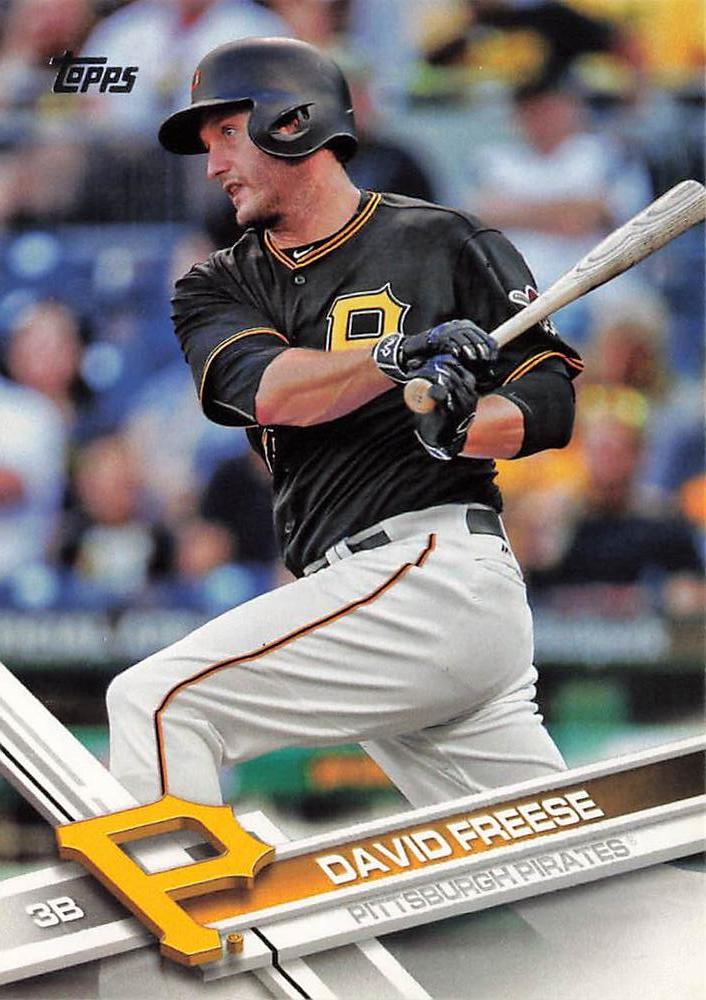
    While not exactly an underrated player given his postseason heroics, Freese has definitely gone under the radar when discussions of the best third baseman of the 2010s come up. Overshadowed by Nolan Arenado, Freese, a fine fielder himself, never won any Gold Gloves, and he wasn’t exactly a power hitter like Hall of Famer Adrian Beltré. Still, looking back at his career, Freese was no slouch. The height of his excellence came on the biggest stage in the 2011 World Series. His clutch hitting in Game 6 of the Fall Classic, capped off by a walk-off home run, forced a Game 7 that St. Louis won for their eleventh Commissioner’s Trophy.  

    Named World Series MVP, Freese was an All-Star for the Cardinals in 2012. In Game 1 of the NLCS, he helped chase the Giants’ Madison Bumgarner with his two-run bomb in the second inning. The South Alabama product spent another year in St. Louis, then two with the Angels before he came to Pittsburgh. The Angels made the playoffs in 2014, winning the AL West, but were swept in the Division Series by the Royals. Freese struggled, hitting just .125. While he was a productive player in the regular season for the Halos, this poor postseason showing was out of character for him. Freese signed with the Pirates on the heels of the Bucs’ 98-win season in 2015, coming off their third straight trip to the playoffs under manager Clint Hurdle. 

    Freese was expected to split time at third base with Jung-ho Kang. He would also platoon at first with John Jaso. It had been a quiet offseason for Pittsburgh, with the signing of Freese being its biggest move. A reunion with Ryan Vogelsong, a two-time World Series champion, was another notable signing. Simply put, the team regressed in ‘16. McCutchen had a down year, Cole took a step back. Trading for Ivan Nova was nice, but clearly not enough. Freese maintained his consistent level of play. While his counting stats weren’t remarkable, that’s not all that matters when evaluating a player. Freese had been there and done that. They needed someone like him in that clubhouse if they were going to go anywhere. 

    Sadly, this never came to be. 2017 was more of the same for the Pirates. Kang was out for the entire season, for reasons we don’t need to get into. As a result, Freese took over third full time and continued to deliver that steady play. The team generally underperformed and continued to fall behind the Cubs and the Brewers for relevance in the NL Central. Things would get worse in 2018. While they had a winning season, Cutch and Cole were gone; the team lacked a clear identity, and the future remained uncertain, more so than usual.  

    Freese, now in his mid-30s, was outspoken about the Pirates’ lack of competitiveness going into the season. This would be unheard of from any of the regulars nowadays, always toting the line. Freese, hitting .282 with 9 HRs and 42 RBIs in 94 games, was traded to the Dodgers at the deadline for Jesus Valdez, who as of 2025 is still fighting it out in Triple-A for the Diamondbacks’ top farm club. The Dodgers, on pace to win their division once again, clearly valued the veteran Freese and what he brought to the table. He did not disappoint.  

    For 19 regular season games, Freese hit a blistering .385 in 47 plate appearances. In Game 4 of the NLDS, he came off the bench in the sixth and came through with a two-run single off the Braves’ Brad Brach, that helped send the Dodgers to the Championship Series. While the Dodgers lost to the Red Sox in the World Series, this wasn’t the end for Freese. He returned to LA for the 2019 season, primarily as a first baseman and pinch hitter. For his age 36 season, Freese put up 1.5 bWAR in 79 games for the Dodgers, batting .315 with 11 homers.  

    His last hurrah came in the NLDS versus the Nationals, where he started a two-out rally in the sixth inning of Game 3, his hit off Patrick Corbin keeping the inning alive. The Dodgers went on to score seven runs and won the game but lost the series to the eventual champions. To the end, Freese had the clutch gene. His postseason batting record is quite impressive. While by no means Reggie Jackson, Freese held his own in tense moments, batting .299/.370/.549 in the playoffs over 14 series. Nearly half of his hits went for extra bases.  

    Freese has much to be proud of for his career and has the hardware to show for it. We appreciate all that he did in Pittsburgh, and what he had to say about the direction of the team. While it’s disappointing we never got to see what David Freese could do in Buctober, we should have no doubt that he had the will to win.  

  • Mickey Davis: Mr. Hustle

    By Brian Kopycinski

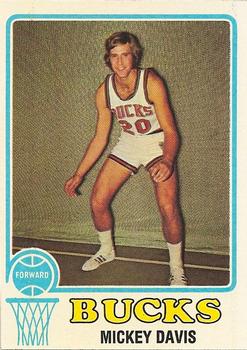
    Edward “Mickey” Davis carved out a respectable basketball career that spanned high school stardom in Western Pennsylvania, collegiate success at Duquesne University, a brief ABA stint, and a solid five-year run in the NBA with the Milwaukee Bucks. The Rochester, PA native, standing at 6’7” and known for his versatility as a swingman, emerged from humble beginnings. The older brother of longtime Dallas Mavericks point Brad Davis, Mickey was the first in the family to make a name for himself. 

    Davis’s hardwood journey began at Monaca High, where he dominated as a three-year starter, showcasing his exceptional scoring and rebounding ability. As a senior in 1968, he set the school’s single-season scoring record (515 points) and earned the team’s MVP honors. His standout high school career in a region rich with talent led to his induction into the Beaver County Sports Hall of Fame in 1985.  

    After graduating from Monaca, Davis attended Duquesne on a basketball scholarship, playing three seasons for the Dukes under head coach Red Manning, alongside his cousin Bill Zopf and Aliquippa’s Jarrett Durham. As a swingman, he quickly became a key contributor. Davis led the team in both points (19.1) and rebounds (9.5) per game as a junior. The peak of his college tenure came during that 1970-71 season, where Duquesne compiled a 21-4 record and earned an NCAA Tournament bid. The Dukes, ranked #15 in the final AP Poll, fell in the first round to Penn. Showing great potential, Davis opted to forgo his senior year and turn pro early. 

    Davis began his professional career with the Pittsburgh Condors for the 1971-72 ABA season. The Condors, formerly the Pipers, had fallen on hard times, years removed from their championship squad that featured Connie Hawkins. Davis played sparingly in his first taste of pro action, appearing in just 23 games as a rookie. While his ABA career was unremarkable, it provided valuable exposure. Davis was later drafted by the Bucks in 1972 in the seventh round, 113th overall. The Bucks, led by Kareem Abdul-Jabbar and Oscar Robertson, were a powerhouse team that won their first NBA title just a season ago.  

    Davis contributed as a role player in an elite environment, becoming a valuable depth piece on playoff-contending teams. He spent five seasons with the Bucks, averaging five points and an assist per game. Davis was waived partway through the ‘76-’77 season and later called it a career. He was an effective shooter. For the ‘73-’74 season, he averaged a career best .504 field goal percentage. His best performance in the regular season came on January 6, 1974, against the Washington Bullets at the Capital Centre, when he scored 22 points, grabbed 8 rebounds, and added 4 assists filling in for an injured Bob Dandridge. 

    Davis’s finest moment arrived in the 1974 NBA Finals against the Boston Celtics. With starting guard Lucius Allen sidelined and Milwaukee’s backcourt struggling against Boston’s defensive pressure, coach Larry Costello shifted the 6’7” Davis to the point, a highly unconventional move. He started all seven games in the series, providing stability to the Bucks’ lineup. The Bucks pushed the Celtics to a decisive Game 7, which Boston won 102-87 at Milwaukee Arena. In Game 6, a Bucks win at Boston Garden, Davis scored 12 points, helping force the series finale. Though Milwaukee fell short in their pursuit of a second title, Davis held his own, averaging 11.3 points in the classic that featured several Hall of Fame talents.

    After his NBA career, Davis worked as a regional sales manager for the Milwaukee-based Miller Brewing Company. Though his career lacked the longevity of his brother Brad’s, Mickey Davis played meaningful minutes at the highest level alongside legends like Kareem and Oscar Robertson. His story remains a point of pride in Beaver County. Today, Mickey and his wife, Linda, reside in Florida, enjoying their retirement. They have four children.

  • Kevan Barlow: Pittsburgh Running Back

    By Brian Kopycinski

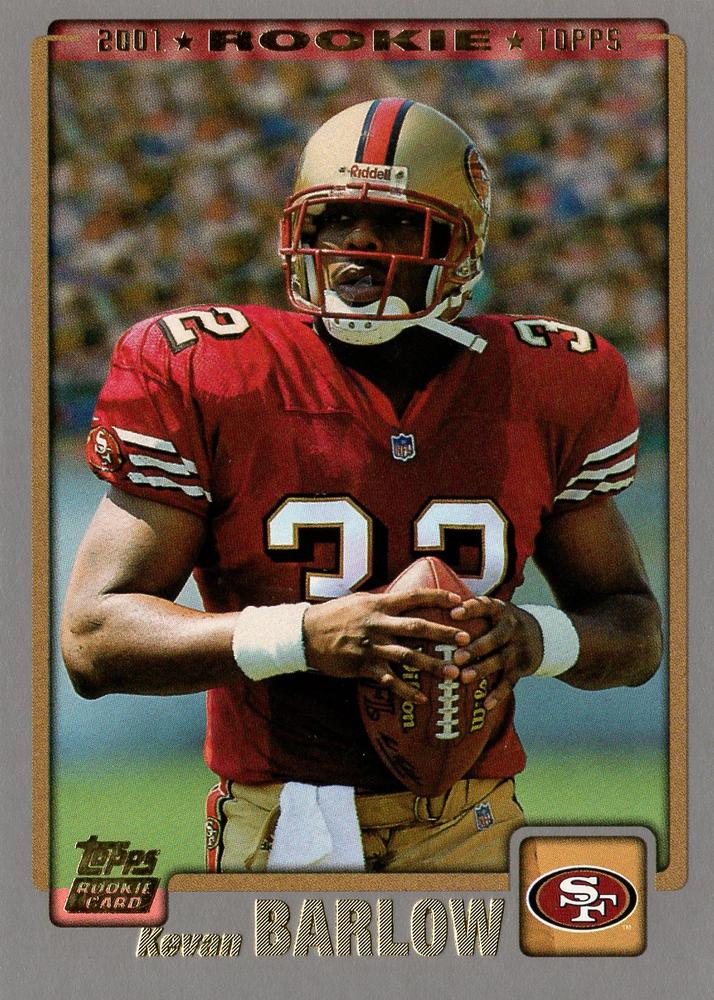
    Pitt has developed a number of great running backs over the years, from Hall of Famers Tony Dorsett and Curtis Martin to recent standouts like Dion Lewis and LeSean McCoy. Some of them, like Dorsett and Martin, grew up in and around the city. Another Pittsburgh native Panther that has been seriously overlooked is Kevan Barlow. In the tradition of great Pitt running backs, his sustained success across all levels is a testament to his determination. Succession defined his career, not injuries, from Pitt to the NFL.  

    Like Dorsett and Martin before him, Barlow was a star on the gridiron in high school. He led the East Liberty based Peabody Highlanders to three consecutive City League titles. Barlow was named to the Big 33 Game and awarded numerous accolades for his high school career. He joined a Pitt team in 1997 that had struggled mightily over the past few seasons. As a freshman under new head coach Walt Harris, Barlow served as a backup to Dwayne Schulters. Pitt improved considerably, with quarterback Pete Gonzalez having a career year. The Panthers fell to Southern Miss in the Liberty Bowl, finishing with a record of 6-6.

    1998 was much worse for the Panthers, who went an abysmal 2-9 on the year. Despite this poor overall showing, Barlow led the team in rushing with 533 yards and 4 TDs. He continued to improve over the next two seasons, being named First Team All-Big East in 1999 and eclipsing the 1,000-yard mark his senior year with 8 touchdowns on the ground. In the Backyard Brawl, Barlow rushed for an insane 272 yards with 4 scores in the Panthers’ victory. That season, Pitt ended up losing to Sage Rosenfels and the Iowa State Cyclones in the Insight.com Bowl at Bank One Ballpark in Phoenix 29-37. In the tight game, Barlow scored from three yards out in the fourth quarter. Liking what they saw in the experienced back, the San Francisco 49ers selected him in the 3rd round of the 2001 NFL Draft, 80th overall. 

    Barlow was the eighth running back selected that year, notably LaDainian Tomlinson and Deuce McAllister in the first round. Like at Pitt, Barlow was a backup his first few years with the 49ers, to Pro Bowler Garrison Hearst. Despite not starting a game in this span, he racked up over 1,000 rushing yards, plus over 300 receiving yards, and a total of 10 touchdowns. San Francisco made the playoffs both years, losing to the Packers in the Wild Card in ‘01, defeating the Giants in the Wild Card the following year, then falling to the eventual champion Buccaneers in the Divisional. In the victory over the Giants, Barlow went in for six in the second quarter. 

    In 2003, Barlow had the best year of his career, rushing for a total of 1,024 yards with six scores, plus over 300 yards and a touchdown through the air. He did this all while only starting in four games. After Hearst was released in ‘04, Barlow had a firm lock on the 49ers RB1 moving forward. The Niners were awful that year though, after Jeff Garcia left for Cleveland and the ensuing instability at the quarterback position proved to be greater than anticipated. Barlow still had a good year, rushing for over 800 yards and 7 touchdowns, with over 200 receiving yards. Clearly, he was not an issue on a very much flawed football team. With a 2-14 record, the 49ers earned the first-overall pick in the 2005 draft, and they used this selection on Utah QB Alex Smith, some might say controversially, over Cal’s Aaron Rodgers. San Francisco also took a running back that year, Miami’s Frank Gore. It didn’t take long for Gore to surpass Barlow, who had been dealing with recurring knee soreness, missing a few games due to injury the past season. The 49ers struggled again, winning just five games in 2005. For Barlow, it was the beginning of the end.  

    For the 2006 campaign, the New York Jets would be without Pitt legend and future Hall of Famer Curtis Martin. Perhaps the Jets saw something of Martin in Barlow when they traded for him. The two certainly have a lot in common. Barlow saw less playing time in ‘06, taking a backseat to rookie Leon Washington. He still led the Jets with 6 rushing touchdowns, in just three starts. New York’s AFC team went 10-6 and made the playoffs, to face the Patriots in the Wild Card. Prime Tom Brady easily defeated the Jets, with Barlow absent from the box score. In May 2007, he signed with his hometown Steelers, hoping to join Fast Willie Parker in the backfield. In August, his knee ailments reached the career ending stage, and he was subsequently released by Pittsburgh. 

    Considering his placement on the depth chart and the number of snaps he received, Barlow made the most of his opportunities and became a steady, reliable back in the league after developing for four years in college. His career outcome is a far cry from the world of NIL today, where some kids are onto their third and even sometimes fourth schools. Barlow never complained. He showed up to work. At Pitt, Barlow ranks 12th all-time in rushing yards and touchdowns. He shares the rushing touchdowns distinction (20) with Kenny Pickett. For the 49ers, Barlow ranks 8th in rushing yards, just ahead of Christian McCaffrey. 

    During his career, Kevan Barlow frequently visited San Quentin State Prison, offering encouragement, visited children’s hospitals in the Bay Area, and has been a strong advocate for children’s cancer charities. His legacy extends beyond the football field, marking a life well lived.

  • Jordan Staal’s Exceptional Rookie Year

    By Brian Kopycinski

    The Pittsburgh Penguins of the 2000s were a team in transition, from Mario Lemieux to Sidney Crosby. After a few poor seasons, not to mention a league-wide lockout, things were looking up after the selections of Crosby, Marc-André Fleury and Evgeni Malkin. The turnaround was quick. The team went from a record of 22-46-14 to 47-24-11, from 2005-06 to 2006-07.

    Following Crosby’s historic rookie year, Malkin, the Soviet born second-overall pick of the ‘04 draft, looked to keep this momentum going as a potential Calder Memorial Trophy winner, after Sid lost out to Alexander Ovechkin. While the name Jordan Staal hasn’t necessarily been forgotten by Pens fans, what Staal did his first year in the league, making the direct jump from junior hockey to the NHL, simply doesn’t get talked about enough.  

    Jordan, the third of four boys, all to play in the NHL, grew up in Thunder Bay, Ontario, located on Lake Superior. He played two seasons in the OHL for the Peterborough Petes, about two hours northeast of Toronto. Considered one of the top prospects in the 2006 cycle, the Penguins drafted Staal second-overall, behind American defenseman Erik Johnson.  

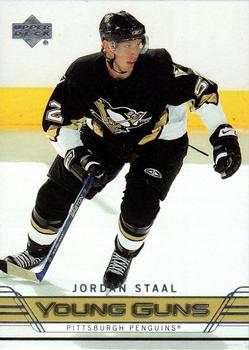
    For his rookie season, Staal played in 81 out of a possible 82 games and set several records that still stand to this day. As an 18-year-old, he scored goals and played great defense. The most notable of his achievements include becoming the youngest player to score a hat trick and setting the record for the most shorthanded goals by a rookie in a season with 7.  

    Staal was third on the team in goals with 29, behind Crosby and Malkin, and led the Pens with a +16 +/- line. For his efforts, he was named to the NHL All-Rookie Team, alongside his teammate Geno, and finished third in the Calder Trophy voting, the honor awarded to Malkin. In the years since, Staal remained a valuable member of the Conference Finals and Stanley Cup teams.  

    His play made him a fan favorite in Pittsburgh. Sadly, Staal wouldn’t spend the majority of his career in the black and gold. On Draft Day in 2012, hosted at Consol Energy Center, he was traded to the Carolina Hurricanes for Brandon Sutter, Brian Dumoulin, and the eighth-overall pick. The Penguins used this selection on defenseman Derrick Pouliot.  

    Staal joined his older brother Eric in Carolina, where he has enjoyed his best years. In 2019, he succeeded Justin Williams to become the Hurricanes’ captain, the same honor his brother wore proudly on his sweater for many years. Carolina easily won this trade. Pouliot was a bust. Sutter had a few good years. Dumoulin was the best of the return. While Staal wasn’t a part of the back-to-back Penguins Stanley Cup run, he’s been great for the Canes, and helped lead them to consecutive Division championships in recent years.  

    At the age of 37, Staal has shown no major signs of slowing down, having only missed significant time due to injury twice in his Hurricanes career. While Ron Francis holds the record for most games in franchise history (with the Hartford Whalers), Staal leads all Canes players with 937 and counting. Staal is a natural leader, one you can’t win without.  

    Whether this happens in Carolina or elsewhere, he’s a proven winner already with what he’s accomplished in a Penguins uniform. Looking back, Staal went from being fresh out of school to one of the top rookies in the NHL. His accomplishments on the ice have added to a lasting legacy that extends beyond himself to his brothers and all they’ve done, as one of the greatest hockey families of all-time.  

  • The “Other” Barry: Foster’s Breakout ’92 Season

    By Brian Kopycinski

    When you think of Pittsburgh Steelers football, you think of defense and the run game. Legends like Franco Harris and Rocky Bleier led the way to four Super Bowl championships alongside the Steel Curtain of Mean Joe, Greenwood, Holmes and White. Still, nothing lasts forever. A stretch of mediocrity followed as this core aged and left the game. The 1980s weren’t just unkind to the Steelers, as the Bucs dealt with the fallout of the Pittsburgh Drug Trials.  

    The ‘90s, however, brought new light to the sports scene as the city transitioned from an industrial to a more modern economy heading towards the 21st century, with several new stars making a name for themselves. You had Bonds, Bonilla and Van Slyke, Lemieux and Jágr. All-Stars, champions. It took a few years for the Steelers to get going in the new decade under head coach Bill Cowher. One player who stood out as a potential successor to Franco that has gone severely underappreciated is Barry Foster, a legend in his own right.  

    Foster grew up in the Dallas area and played his college ball at Arkansas, helping lead the Razorbacks to back-to-back Southwest Conference championships and Cotton Bowl appearances in the late ‘80s. Under head coach Ken Hatfield, Foster thrived in the wishbone offense, rushing for 833 yards and 7 touchdowns during his senior season. The Steelers drafted him in the fifth round, 128th overall in 1990, joining a crowded running backs room that included former first-round pick Tim Worley and Merril Hoge. Foster didn’t see too much action in his first year, though he made a notable blunder on special teams that led to a Steelers’ loss. This rookie mistake didn’t define him, and after an improved sophomore campaign, Foster took the reins after Worley was suspended for the season after failing drug tests.  

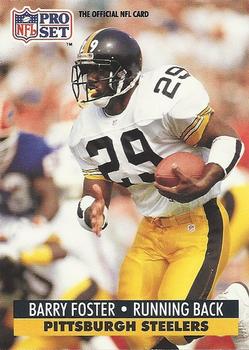
    For the team, the past two seasons had been up and down in Chuck Knoll’s twilight years. Bubby Brister won nine games as a starter in ‘90, but the Steelers regressed the following year to a 7-9 record. 1992 would be the dawn of a new era, with the introduction of Cowher as the Steelers’ new coach, who would name Neil O’Donnell, another 1990 draft pick, the starting quarterback. What Foster did that season was simply unprecedented. Nobody could have expected him to breakout the way he did. As a fifth-round draft pick, he went from being a backup to setting the franchise record for the most rushing yards in a single season at 1,690. This record still stands to this day. 

    The 1992 season was a look at what was to come under Coach Cowher. The Steelers won the AFC Central Division at 11-5, though they quickly exited the playoffs in a loss to Frank Reich and the Bills, coming off their historic comeback in the Wild Card over the Oilers. Despite the blowout defeat at Three Rivers, Foster still had over 100 yards rushing in the game. O’Donnell threw two interceptions in the Steelers’ 3-24 loss to Buffalo. Coming off such a historic campaign, that included twelve 100-yard performances, Foster was recognized by numerous accolades that included a Pro Bowl nod, First Team All-Pro honors and finishing second in the AP MVP vote to Steve Young. 

    Next year, Worley was traded to the Bears, giving Foster a firm lock on RB1 moving forward. After what he did in ‘92, this move should have come as no surprise. Foster had another Pro Bowl Season in 1993 but missed some games due to injury. In nine games, he rushed for a total of 711 yards with 8 touchdowns. The Steelers lost again in the playoffs, this time to the Chiefs in the Wild Card. 1994 was another disappointing season for Pittsburgh. While there was another AFC Central title and playoff victory over the Browns to celebrate, losing to the Chargers in the Conference Championship when favored was no way to go out. For Foster, who dealt with ankle and knee injuries again that year, it would be his last NFL game.  

    The reasons for this are several. There was Foster’s contract, the emergence of Bam Morris, and the signing of Erric Pegram. More than anything, the damage to one’s body that the game of football all but guarantees became too much for him to bear. Foster was traded to the expansion Panthers in May of 1995 but was soon cut after failing his physical. Later that season, he signed with the Bengals for a hefty sum after number one overall pick Ki-Jana Carter went down, then quickly changed his mind and retired once again, at just 26 years old.  

    Not long after Foster left, the Bus made a stop in Pittsburgh. On Draft Day, Jerome Bettis was traded by the Rams to the Steelers in exchange for draft capital. The rest is history, culminated by another Lombardi hoisted high a decade later. Bettis went out on top, beloved by fans. He’s in the conversation for the best Steelers running back of all-time, up there with Franco Harris. If you were to steer this discussion to the greatest season by a Steelers back, look no further than Barry Foster’s 1992 masterpiece. His peak deserves to be talked about in the same light. Most ‘90s football fans remember a Barry, that is, Barry Sanders. In 1992, “that” Barry was a Pittsburgh Steeler. For one spectacular season, Foster ran with the best of them. Let’s never forget that. Since his playing days, Barry Foster has been a middle school football coach and assistant principal in his home state of Texas.