-
Altoona’s Finest: The Legend of Adam Hyzdu
By Brian Kopycinski
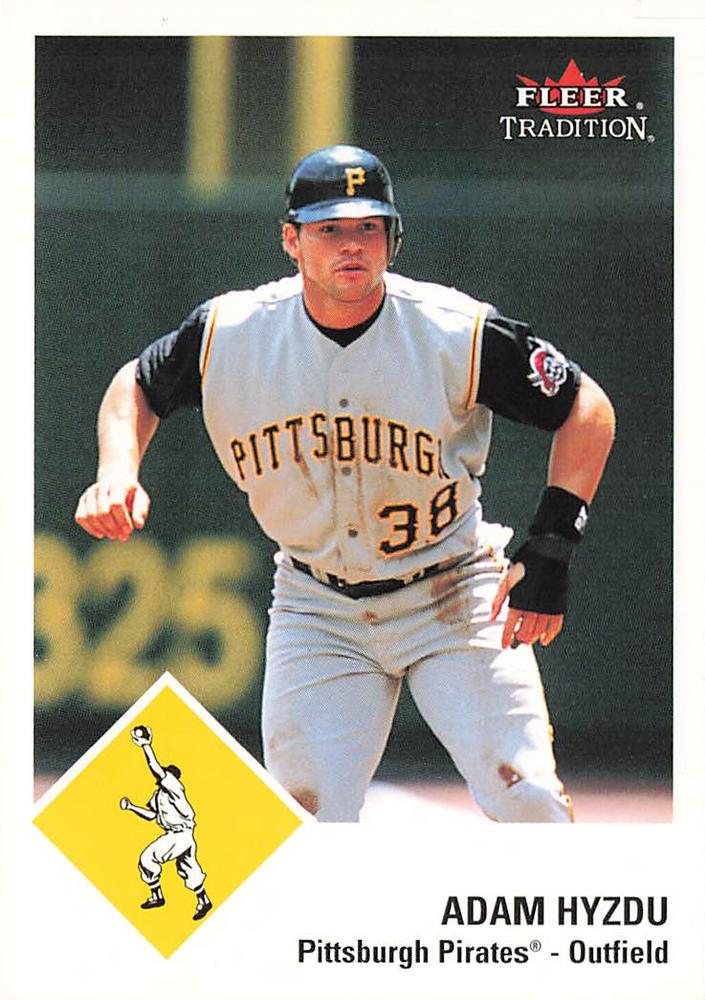
In baseball, most journeymen are forgotten. Some, however, become legends in their own right. While Adam Hyzdu never fully lived up to the expectations that come with being a first-round pick, he still carved out an accomplished career at both the major and minor league levels. Best remembered for his time with the Altoona Curve, Hyzdu played nearly two decades of professional baseball, spending parts of seven seasons in the majors. Along the way, he earned Eastern League MVP honors, was named National League Player of the Week with the Pittsburgh Pirates, and won a World Series ring with the Boston Red Sox.
Hyzdu first made a name for himself at Cincinnati’s Archbishop Moeller High School, where he set records in both baseball and football, many of which still stand. Most notably, he hit 22 home runs, breaking a school record previously held by Ken Griffey Jr. He was also a standout quarterback and heavily recruited on the football field. While he initially committed to Mississippi State to play baseball, he instead turned professional after being selected by the San Francisco Giants in the first round, 15th overall, of the 1990 MLB Draft. He debuted that same year at age 18 with the Everett Giants in the Northwest League.
He reached the Giants’ Texas League affiliate in Shreveport in 1993, hitting 19 home runs between A+ and Double-A. After four years in the organization, Hyzdu was claimed by his hometown Cincinnati Reds in the 1993 Rule 5 Draft. He spent two seasons in the Reds’ system, playing well for Chattanooga in 1995 before being released ahead of the 1996 season. He then signed with Boston and delivered a breakout campaign with the Double-A Trenton Thunder, batting .337 with 25 home runs and 80 RBIs while leading the club in most offensive categories. He was promoted to Triple-A Pawtucket in 1997 and posted another strong 20-plus home run season before electing free agency.
In 1998, Hyzdu appeared in 34 games for the Tucson Sidewinders in the Diamondbacks’ system, hitting .340 before being loaned to the Sultanes de Monterrey of the Mexican League. After his time in Mexico, he returned briefly to Pawtucket in 1999, appearing in just a dozen games before once again entering free agency. Soon after, he joined the Pittsburgh Pirates organization after being recruited by GM Cam Bonifay to help anchor the club’s newly established Altoona Curve affiliate in the Eastern League.
In the franchise’s earliest days, Hyzdu quickly became its defining player. In his first season with the Curve, he hit .316 with 24 home runs, 76 RBIs, and a 1.006 OPS. Altoona finished 67–73 under manager Marty Brown in its inaugural season, but Hyzdu gave the young franchise an identity from the start. His performance earned a late-season promotion to Triple-A Nashville, where he hit five home runs in just 14 games.
To the surprise of many, Hyzdu returned to Altoona to open the 2000 season, and his production only climbed. He launched 31 home runs, drove in 106 runs, and hit .290 while leading the Curve to a 74–68 record. For the second straight year, he was named team MVP and also earned Eastern League MVP honors. His impact was so significant that Altoona retired his No. 16 jersey during a fireworks ceremony following the final game of the season on September 4.
After Altoona’s season ended, Hyzdu bypassed Triple-A entirely and was promoted directly to the majors, making his debut in Pittsburgh that September. He collected a hit in his first big league at-bat on the 8th against Cincinnati and soon after delivered his first home run, a pinch-hit, go-ahead blast in extra innings over Philadelphia on the 20th.
His major league career followed a familiar pattern: brief call-ups, strong flashes, and extended stretches in a limited role. While his 2001 season with Pittsburgh was quiet, he broke through in the summer of 2002.
Over an eight-game stretch in July, he went 15-for-30 with four home runs and 12 RBIs. On July 19, he hit his first career grand slam off Bud Smith while collecting three hits. The next day, he produced arguably the best game of his career, two three-run homers and two singles in a 15–6 Pirates win, driving in seven runs.
The surge earned him National League Player of the Week honors for July 15–21. He added another grand slam on August 23 at Miller Park as Pittsburgh defeated Milwaukee 6–3. In total, he appeared in 59 games in 2002, hitting 11 home runs with 34 RBIs while batting .234 with an .808 OPS.
The 2003 season proved difficult. Hyzdu opened the year with the Pirates but struggled in a part-time role, batting .206 with one home run in 76 plate appearances before being demoted to Nashville in August. Although he finished the year strongly in Triple-A, it marked the end of his tenure in Pittsburgh.
He returned to Boston in 2004 via Pawtucket and hit .301 with 29 home runs and 79 RBIs before a September call-up as the Red Sox chased the AL East title. He appeared in 17 games and hit .300, though he was left off the postseason roster. Still, he was part of the championship team that broke the Curse of the Bambino and won the World Series.
Hyzdu was traded to San Diego in March 2005 and later returned to Boston midseason. He again earned a late call-up as the Red Sox secured a Wild Card berth, though they were swept by the Chicago White Sox in the postseason. He was released soon after.
In 2006, he joined the Texas Rangers organization, spending most of the year in Triple-A Oklahoma City. He concluded his professional career in 2007 with the Fukuoka SoftBank Hawks in Japan, who advanced to the Pacific League Semifinals.
Across seven major league seasons, Hyzdu appeared in 221 games. His big league numbers may not stand out at first glance, but they only tell part of the story. In the minors, particularly in Altoona, he was one of the most productive hitters of his era, finishing with 1,642 hits, 273 home runs, and 1,010 RBIs across 1,703 games while batting .276.
More than two decades after his final season in Altoona, Hyzdu remains the standard by which every Curve player is measured. His popularity has endured long after his playing days ended, and both the city and organization have welcomed him back on multiple occasions. Today, he runs his late father-in-law’s RV dealership, RVAZ Corral, in Mesa, Arizona. He and his wife, Julie, together since their teenage years, have three children: Zac, Alexa, and Luke. Both sons went on to play baseball at the collegiate level.
-
Johnny Ray: The Bug on the Rug
By Brian Kopycinski
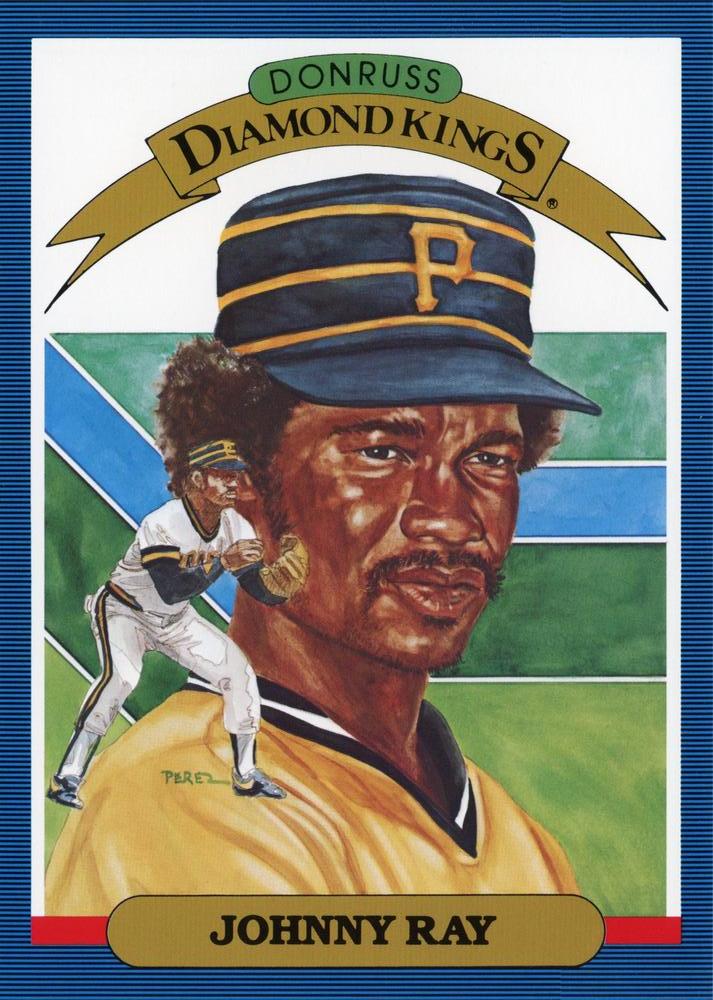
John Cornelius Ray, a native of Chouteau, Oklahoma, was a quiet star from a largely forgettable era of Pirates baseball. The switch-hitting second baseman, consistent and durable, was one of the few bright spots in the lineup on losing teams. Always a tough out, Ray was a line-drive hitter who drove the ball to the gaps, hit for a high average, and played solid defense. His Pirates tenure has been somewhat overlooked over the years. Outside of the late Bill Mazeroski, Ray stands as arguably the next greatest second baseman in Pirates history.
After graduating from Chouteau High School, Ray first attended Northeastern Oklahoma A&M College. In two seasons with the Golden Norsemen, he hit a whopping .439 and was named to the NCJAA All-Region team twice. Ray later transferred to the University of Arkansas. With the Razorbacks, he hit .319 in two seasons, leading the team with 47 RBIs in 1979. That year, Arkansas made it to the College World Series final, falling 2–1 to Cal State Fullerton in the championship game. Ray was a two-time All-Southwest Conference player. He was drafted by the Houston Astros in the 12th round of the 1979 MLB June Amateur Draft.
By 1981, Ray led the Pacific Coast League with 50 doubles for the Tucson Toros. On August 31, he was traded to the Pittsburgh Pirates with players to be named later, Randy Niemann and Kevin Houston, for “Scrap Iron” Phil Garner, a key member of the “We Are Family” Bucs. The following season, Ray became the Pirates’ everyday second baseman, starting in all 162 games. In his first month, he hit .342. After an impressive rookie campaign, Ray was named The Sporting News Rookie of the Year after slashing .281/.318/.382 with seven home runs and 63 RBIs, good for 3.8 bWAR. The BBWAA awarded its honor to Dodgers second baseman Steve Sax.
Over the next two seasons, Ray led the league in doubles with 38 each year. His best season with the Pirates came in ’83, when he won the Silver Slugger Award with a team-best 5.1 WAR. That year, Pittsburgh finished second in the NL East at 84–78. In ’84, Ray notched a career-best .312 average and 121 OPS+. By then, he was one of the hardest batters in the league to strike out, although he did not walk much. In 1985, Ray totaled 70 RBIs, striking out just 24 times in 594 at-bats. In Jim Leyland’s first year on the job, Ray was moved to third in the order. He had another outstanding season, was named the NL Player of the Month for April, and batted .301 with 78 RBIs in 155 games, though the Bucs stumbled to a last-place finish in the division.
Johnny Ray had established himself as one of the franchise’s best-hitting second basemen. Only George Grantham, a member of the 1925 World Series team, led Ray in batting average, though Grantham played more games at first than second with the Pirates. Pittsburgh was much improved in 1987, led by an exciting core of young talent. However, on August 29, Ray was traded to the California Angels for minor leaguer Bill Merrifield, father of Whit Merrifield, and a player to be named later, pitcher Miguel García. This opened a spot for José “Chico” Lind, who would man the keystone for the Bucs through the early ’90s.
Without Ray, the Pirates improved on their previous record in 1988, finishing second in the NL East behind the Mets at 85–75. Meanwhile, Ray himself had another career year, reaching personal bests in hits, doubles, and RBIs. He also learned a new position, playing 40 games in left field for the Halos in ’88. Ray was named an All-Star for the first time, finishing the campaign with a .306 average. In 1989, the Angels finished twenty games over .500 at 91–71, though they placed third in the AL West behind the Royals and eventual World Series champion Athletics. For Ray’s career with the Pirates and Angels, he never got to play for a true contender.
After the 1990 season with the Angels, Ray continued his professional career in Japan with the Yakult Swallows of the Central League. In his first season in NPB, he hit .299/.363/.480 with 11 home runs and 51 RBIs in 110 games. 1992 would be his last year in the game, as he hit just .190 in 49 games. Ray called it a career and returned home to Chouteau. That year, the Swallows won the Central League and played in the Japan Series, falling to the Seibu Lions in seven games. In ten Major League seasons, valued at 24.2 WAR by Baseball-Reference, Ray hit an exceptional .290. The only Pirates second basemen to collect more hits than him are Bill Mazeroski and Rennie Stennett.
Johnny Ray’s time in Pittsburgh was more than an afterthought. In the midst of controversy and scandal, the team struggled through the decade, yet Ray remained a silver lining. In franchise history, he ranks among the best at his position. Ray is a member of the Northeastern Oklahoma A&M Athletics Hall of Fame, the Southwest Conference Hall of Fame, and the University of Arkansas Sports Hall of Honor. While it is easier to remember the good times, let’s not forget players like Ray who still played meaningful baseball. They deserve more credit for their efforts—and then some.
-
Joel Hanrahan: The Hammer
By Brian Kopycinski
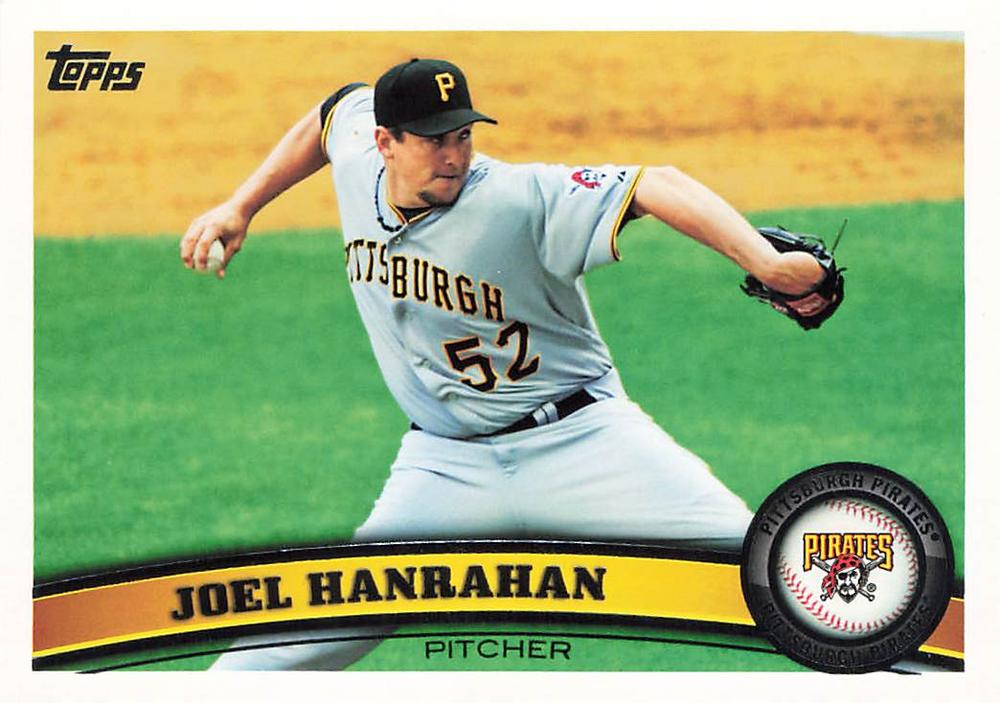
Joel Hanrahan, nicknamed “The Hammer,” was a dominant closer for the Pirates on losing teams that went nowhere. Acquired from the Washington Nationals, the two-time All-Star was once one of the top relievers in the game. Hanrahan’s brilliance has unfairly been overlooked in favor of his successors, who pitched in more meaningful innings on playoff contenders. While Jason Grilli and Mark Melancon were both excellent in their time, many have forgotten just how good a closer Joel Hanrahan truly was.
Hanrahan split his youth between Iowa and Florida and was selected by the Los Angeles Dodgers out of Norwalk (IA) High School in the second round of the 2000 MLB June Amateur Draft. He began his career as a starting pitcher and spent seven years in the minors before making his major league debut with Washington in 2007. Hanrahan joined the Nationals’ organization after becoming a free agent in 2006. He started 11 games as a rookie, appearing in 12 total games, pitching 51.0 innings with a 6.00 ERA while going 5–3.
Converted to the bullpen in 2008, Hanrahan found better results in his new role. On a Nationals team that lost 100 games, he went 6–3 with a 3.95 ERA in a career-high 84.1 innings. Hanrahan became a late-inning regular, earning nine saves while finishing 34 games. The first half of the 2009 season was a struggle, and Washington viewed him as expendable. He was traded to Pittsburgh on June 30 with outfielder Lastings Milledge for outfielder Nyjer Morgan and pitcher Sean Burnett. The change of scenery paid off, as Hanrahan was lights out for the remainder of the year, posting an elite 1.72 ERA in 31.1 innings for the Bucs.
To say that the Pirates were bad that year would be a massive understatement. Outside of a few bright spots in Hanrahan, and rookies Garrett Jones and Andrew McCutchen, the roster severely lacked depth and talent. Fan favorites Nate McLouth, Freddy Sánchez, and Jack Wilson were all traded that summer. The 2010 season would be even worse, as the Buccos lost 105 games, their worst record since the 2001 inaugural season at PNC Park. Hanrahan continued to impress out of the pen, later sharing closer duties with Evan Meek after Octavio Dotel was dealt to the Dodgers at the end of July.
During the 2010 campaign, Hanrahan went 4–1 with a 3.62 ERA, notching a career-best 100 strikeouts. He also earned six saves and finished 27 games. After another disappointing season, ownership knew it was time for a change. Manager John Russell was let go, and former Rockies skipper Clint Hurdle was brought in. Hurdle named Hanrahan his closer for 2011, a well-deserved honor. Hanrahan later credited much of his success to pitching coach Ray Searage. The 2011 season would be a career year, cementing him as one of the league’s best closers.
Hanrahan’s walkout music, “Before I Forget” by Slipknot, perfectly captured his intensity on the mound. His high-end fastball and wicked slider were constant problems for opposing hitters. Hanrahan earned his first All-Star nod, striking out Michael Young of the Texas Rangers in the ninth inning of the National League’s 5–1 victory at Chase Field. That year, Pittsburgh improved to a 72–90 record, finishing fourth in the NL Central. Hanrahan’s breakout, highlighted by a 1.83 ERA and 40 saves, was valued at 2.4 WAR per Baseball-Reference.
The 2012 season brought great optimism that ultimately ended in a car crash. With a few key additions, the roster began to resemble a real baseball team, but the hot start didn’t last. The second-half collapse was historic and deserving of its own case study. Regardless, Hanrahan remained “that guy” in the ninth inning. He made another All-Star team, striking out the only batter he faced, Billy Butler, in the Midsummer Classic held in Kansas City. While his ERA rose slightly to 2.72, he still enjoyed a strong year, racking up 36 saves.
At that point, his two-year total of 76 saves was the greatest in franchise history, a record later broken by Mark Melancon. Still, the Pirates improved considerably during this span, posting a 22-game swing between their 2010 and 2012 records. Clearly, something was working. Unfortunately for Hanrahan, he wouldn’t be part of the success to come, as he was traded to the Boston Red Sox that offseason. The six-player deal sent Hanrahan and Brock Holt to Boston in exchange for Melancon, Stolmy Pimentel, Jerry Sands, and Iván De Jesús.
Boston went from worst to first in 2013, winning the World Series, while the Pirates snapped their streak of consecutive losing seasons and defeated the Cincinnati Reds at home in the Wild Card Game. It was a season to remember in Pittsburgh, as Andrew McCutchen earned National League MVP honors and the Bucs returned to the postseason for the first time since 1992. A heartbreaking NLCS loss to the St. Louis Cardinals ended their run, but Bucco Fever had swept the city.
Bad luck struck Hanrahan that year. He opened the season as Boston’s closer but missed time early with a hamstring strain before being shut down with a damaged flexor tendon in his right elbow. He underwent Tommy John and flexor tendon surgery, ending his season and costing him a chance at October glory. Hanrahan pitched in just nine games, earning four saves with a bloated 9.82 ERA. Meanwhile, Melancon rebounded with an All-Star season in Pittsburgh.
Hanrahan became a free agent and eventually signed a one-year deal with the Detroit Tigers. He did not pitch in 2014 while rehabbing and later re-signed on a minor-league deal for 2015, though he never appeared in a game. A torn UCL discovered that spring led to his release, and fed up with the rehab process, Hanrahan officially retired in 2016. A cruel stretch of injuries ended a career filled with promise.
If he had remained healthy, who knows what Joel Hanrahan might have become? He had all the makings of an elite closer and perhaps could have ranked among the decade’s best alongside Aroldis Chapman, Craig Kimbrel, and Kenley Jansen. Hanrahan was just 31 when he pitched his final major league game. He had plenty of baseball left in him. Unfortunately, like so many great what-ifs, injuries took their toll.
He soon returned to the game as a pitching coach, beginning with the West Virginia Black Bears. Over the next few years, he climbed the ladder, eventually reaching Triple-A Indianapolis in 2021. Hanrahan modeled his coaching approach after Ray Searage and helped guide pitchers such as Blake Cederlind, Max Kranick, and James Marvel to the majors. He later joined the Nationals organization in a similar role.
Joel Hanrahan’s impact on the Pirates—as both a player and a coach—has been seriously overlooked. For a brief stretch, he was one of the best closers in baseball, period. While the trade ultimately netted Pittsburgh Mark Melancon, arguably the better long-term option, “The Hammer” was elite in his own right and deserves to be remembered. Don Kelly should consider bringing Hanrahan onto his staff. He knows exactly what it takes to be great.
-
Ramón Hernández: Ahead of His Time
By Brian Kopycinski
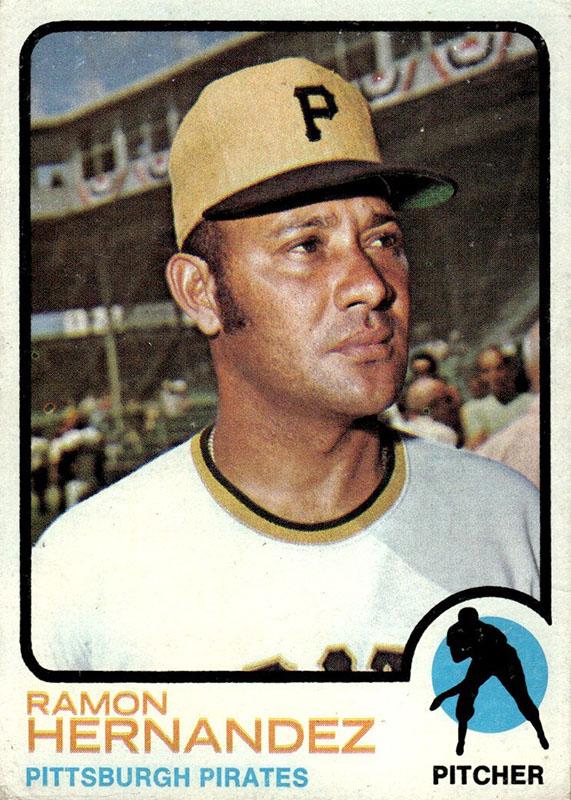
Ramón Hernández was a fiery competitor for the Pirates in the early 1970s, a crafty relief specialist whose unusual delivery made him something of a pioneer for his era. The left-hander hailed from Carolina, Puerto Rico, the same suburb of San Juan that produced “The Great One,” Roberto Clemente. Hernández debuted in the Puerto Rican Winter League shortly after his 18th birthday, and for the next two decades he returned home each offseason.
Hernández’s path to the major leagues was anything but conventional. He first joined the Pirates organization in 1959 as an amateur free agent, beginning a professional career that would span multiple eras. His early years were difficult. He struggled in the minors, endured a suspension, and sat out the entire 1961 season. Pittsburgh eventually sold his contract to the Los Angeles Angels, where he spent several seasons working as both a starter and a reliever without much success.
In 1966, Hernández was selected by the Atlanta Braves in the Rule 5 Draft. He broke camp with the club in 1967 as a 26-year-old rookie and spent the entire year in the majors, though his performance was largely replacement-level. After the season, he was claimed by the Chicago Cubs in the Rule 5 Draft, only to continue struggling against major league hitting. His contract was soon purchased by the St. Louis Cardinals, sending him back to the minors once again.
Hernández spent the remainder of the 1968 season at Triple-A Tulsa, where results were still uneven. The 1969 season, however, marked a turning point. Pitching for the Cardinals’ Double-A affiliate in Arkansas, he showed significant improvement. Around this time, Hernández also gained a reputation for a volatile temper and frequent clashes with players and management. St. Louis ultimately released him, and he resurfaced in 1970 with the Mexico City Reds of the Mexican League. There, Hernández finally showed the talent that had been missing, posting a 1.82 ERA with 56 strikeouts in 32 games.
More than a decade after first joining the organization, Hernández returned to the Pirates in February 1971, acquired in a trade that sent minor leaguer Danilo Rivas the other way. He pitched well enough at Triple-A Charleston to earn two in-season promotions, in June and again in September. During his brief time in the majors that season, Hernández posted a miniscule 0.73 ERA across 12.1 innings. Despite this strong showing, he was ineligible for the Pirates’ postseason roster and missed out on contributing to the club’s 1971 World Series run.
The 1972 season stands as the high point of Hernández’s major league career. A mainstay out of the bullpen, he shared save opportunities with Pirates great Dave Giusti and recorded 14 saves of his own. Over 70 innings, Hernández posted an elite 1.76 ERA, establishing himself as one of the National League’s most reliable relief arms. His deceptive sidearm delivery baffled hitters, particularly left-handers, and he mixed a fastball, curveball, and screwball from varying arm angles.
That success carried into October. Hernández made history in the 1972 NLCS by forming the first postseason Hispanic battery with catcher Manny Sanguillén, earning the save in Game 1. The Pirates fell short in the series, losing to the Cincinnati Reds. The year ended on a tragic note when Roberto Clemente, Hernández’s close friend and fellow Puerto Rican, died on December 31, 1972, in a plane crash while delivering humanitarian aid to earthquake victims in Nicaragua. Hernández, like the rest of the team, was devastated by the loss.
No doubt affected by Clemente’s death, 1973 was a down year for the Pirates, though not for Hernández. He enjoyed another strong season, posting career highs in innings pitched and strikeouts, good for 2.0 WAR. While Pittsburgh missed the postseason that year, the club rebounded to win the NL East in both 1974 and 1975, with Hernández remaining a steady presence out of the bullpen. He allowed no runs in two appearances during the 1974 NLCS versus the Los Angeles Dodgers but gave up two runs in Game 3 of the 1975 series against Cincinnati.
The 1976 season marked Hernández’s final year in Pittsburgh, as his contract was later purchased by the Cubs. His major league career concluded in 1977, a disappointing final chapter that saw him split time between the Cubs and the Boston Red Sox.
Over nine major league seasons, Hernández compiled 6.2 WAR, an ERA+ of 116, and 46 saves, finishing with a 3.03 career ERA. While Hernández never served as a full-time closer, his skill set indicates he could have thrived in that role. He instead became a trusted high-leverage arm at a time when bullpen roles were still undefined.
Following his big league career, Hernández continued pitching winters in his native Puerto Rico through the 1979–80 offseason, where his longevity placed him among the league’s most accomplished pitchers. Ramón Hernández passed away on February 4, 2009, at the age of 68. He was an unsung but essential contributor to four NL East championship teams, a pitcher whose impact rarely showed up in headlines but consistently appeared in the box score. In an era before modern bullpen roles were fully established, Hernández quietly mastered his craft, and in Pirates history, he remains one of the most effective and underappreciated relief pitchers the franchise has ever had.
-
The Case for Kendall
By Brian Kopycinski
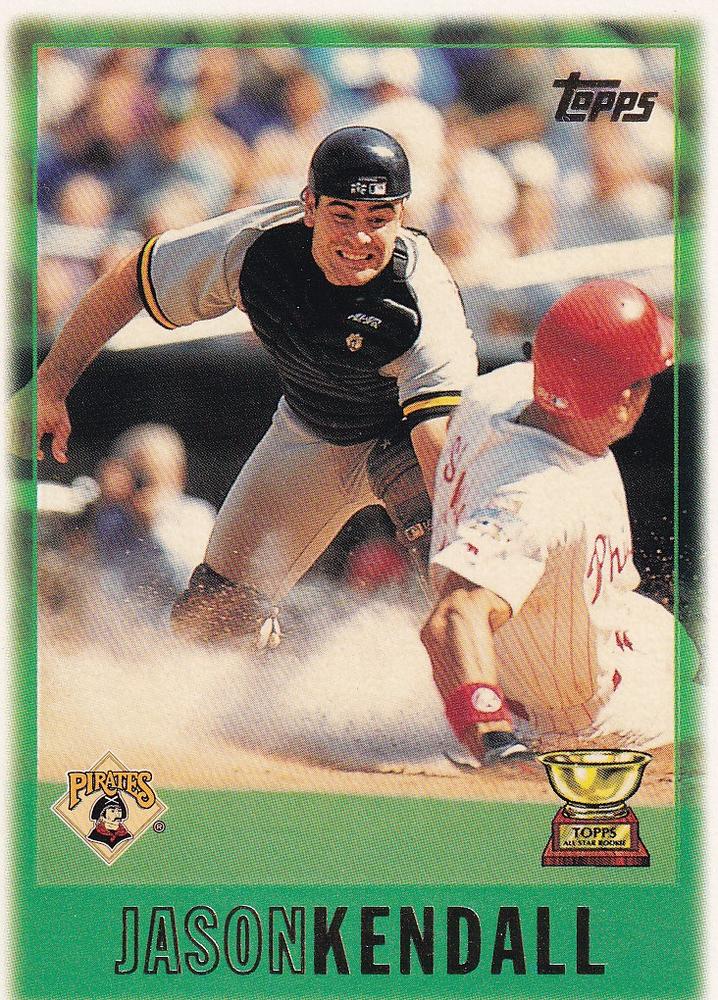
Jason Kendall was destined for Cooperstown. Born in Torrance, California, the son of former big-league catcher Fred Kendall, Jason was selected by the Pittsburgh Pirates in the 1st round of the 1992 MLB June Amateur Draft. Catching was in his blood; he had all the makings of an elite athlete. Through his first five major league seasons, Kendall was at a historic pace, comparable to that of Johnny Bench, Yogi Berra, and Carlton Fisk.
He averaged .314 at the plate, made three All-Star teams, and accumulated 20 wins above replacement. After the 2000 season, Kendall signed a six-year contract extension for $60 million, at the time the most expensive in Pirates’ history. Then, on Opening Day in 2001, a freak injury altered the course of what surely would have been a Hall of Fame career.
The Pirates opened the 2001 season on the road at Cinergy Field (formerly Riverfront Stadium) against the Cincinnati Reds. The previous season, Pittsburgh finished fifth in the NL Central at 69-93, while Cincinnati placed second, falling short of the Wild Card to the New York Mets, who went on to win the pennant. Kendall was coming off another All-Star year, hitting a career-high 14 home runs.
Pittsburgh’s Todd Ritchie faced Osvaldo Fernández in the opener. Through six innings, the Reds led 3-0. The Pirates fought back with two runs in the top of the seventh to shift the momentum. Reliever Scott Sauerbeck replaced Ritchie in the bottom half. Sauerbeck then crossed Kendall up on a cutter inside that landed awkwardly in his glove and tore every ligament in his left thumb. Tough as nails, he stayed in the game which ended in a Pirates’ loss.
Kendall played through pain all year, appearing in 157 games. He waited until the offseason for surgery and was never the same hitter from then on. His post-2001 numbers reflect this. He never hit more than 6 home runs in a season and slugged over .400 just once. Kendall later revealed that any hard swing for power caused him extreme pain. Regardless, he played through it and still had a remarkable career, one certainly deserving of further Hall of Fame consideration.
In 15 big-league seasons, Kendall caught over 2,000 games. He totaled 2,195 hits, stole 189 bases (the most by a catcher in the modern era), and ranks fifth all-time in hit-by-pitches with 254. He was traded from Pittsburgh to the Oakland A’s and, except for a stint with the Chicago Cubs, mostly played in small markets like Milwaukee and Kansas City. He was undoubtedly overshadowed in the National League by Mike Piazza. Playing as a singles and doubles hitter at the height of the steroid era didn’t help either.
After leaving the Pirates, Kendall never made another All-Star team, nor did he win any Gold Gloves or Silver Sluggers. While he was a solid defensive catcher, that was never his strength. Kendall was a balanced player that possessed elite traits. His durability and hit tool were always his strongest assets. He was a no-nonsense ballplayer who reflected Pittsburgh’s blue-collar identity on the diamond, no matter where he played. It’s shocking that a legacy such as his received just two Hall of Fame votes in his first (and only) year on the ballot in 2016.
Evaluating talent, beyond watching the games, is no easy task. Metrics like WAR help, though they don’t always get it right. Baseball-Reference and FanGraphs calculate it differently, with the latter placing more weight on defensive metrics. Baseball-Reference has Kendall at 41.7 WAR, putting him on par with some Hall of Fame talents. Most would say Yadier Molina is a sure thing for the Hall by now. Molina is a different case, however, as one of the greatest defensive catchers ever and a two-time World Series champion.
Still, the two have nearly identical WAR on Baseball-Reference, with Molina at 41.6. FanGraphs views Molina much more favorably (at 55.6 WAR, thanks to his elite defense), while Kendall sits at 36.5, creating a clear gap. Generally, catchers haven’t gotten the love they deserve for the Hall of Fame. Perhaps Kendall will get another look someday via the Veterans Committee. Modern analytics have opened the door for someone like Ted Simmons. Who’s to say Kendall isn’t deserving, too?
Something else to consider is Kendall’s place in Pirates’ lore. Between him and Manny Sanguillén, there are no greater catchers in the franchise’s century-plus history. Manny played in more meaningful games, winning two World Series rings with the Bucs. Kendall never had that opportunity in Pittsburgh. He was always on losing teams that went nowhere. The closest he ever came as a player was the ALCS with the Athletics in 2006. After retiring, Kendall joined the Royals organization as a coach, where he earned a ring in 2015.
Jason Kendall was a special ballplayer. There aren’t many like him. He brought a tenacity to the game that’s rare today. What doesn’t show up in the box score is something special, something you can’t quantify. We may never see another Jason Kendall. That fact alone makes him worthy of a plaque in Cooperstown. It’s a shame he isn’t already in the Pirates Hall of Fame. Get on it, Bob!
-
David Freese: In the Clutch
By Brian Kopycinski
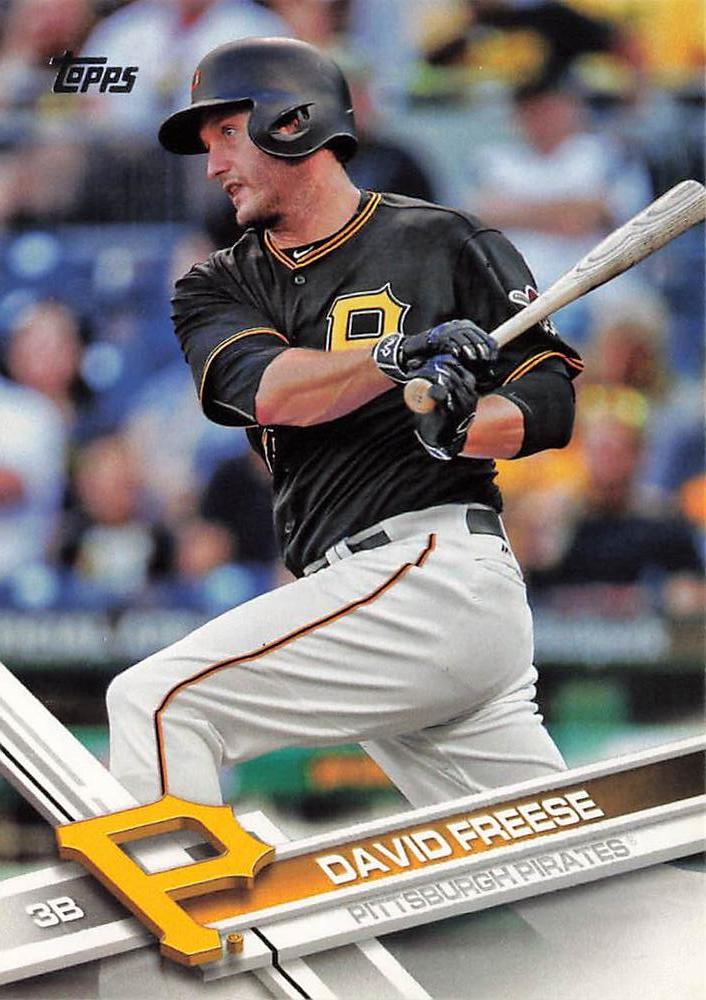
Third base has been a much talked about position on the Pittsburgh Pirates roster in recent years. Ke’Bryan Hayes, while providing stellar defense, never lived up to the hype that he showed in his cup of coffee in 2020. Fans expect more from this team, and most are not looking forward to an entire year of Jared Triolo, who is best suited for a super utility role, at the hot corner. There have been rumblings about Munetaka Murakami that haven’t panned out, and Eugenio Suárez that remain to be seen. While the future at the position remains unresolved, let’s reflect on the kind of player the Bucs could use in their lineup again, a natural leader and winner like David Freese.
While not exactly an underrated player given his postseason heroics, Freese has definitely gone under the radar when discussions of the best third baseman of the 2010s come up. Overshadowed by Nolan Arenado, Freese, a fine fielder himself, never won any Gold Gloves, and he wasn’t exactly a power hitter like Hall of Famer Adrian Beltré. Still, looking back at his career, Freese was no slouch. The height of his excellence came on the biggest stage in the 2011 World Series. His clutch hitting in Game 6 of the Fall Classic, capped off by a walk-off home run, forced a Game 7 that St. Louis won for their eleventh Commissioner’s Trophy.
Named World Series MVP, Freese was an All-Star for the Cardinals in 2012. In Game 1 of the NLCS, he helped chase the Giants’ Madison Bumgarner with his two-run bomb in the second inning. The South Alabama product spent another year in St. Louis, then two with the Angels before he came to Pittsburgh. The Angels made the playoffs in 2014, winning the AL West, but were swept in the Division Series by the Royals. Freese struggled, hitting just .125. While he was a productive player in the regular season for the Halos, this poor postseason showing was out of character for him. Freese signed with the Pirates on the heels of the Bucs’ 98-win season in 2015, coming off their third straight trip to the playoffs under manager Clint Hurdle.
Freese was expected to split time at third base with Jung-ho Kang. He would also platoon at first with John Jaso. It had been a quiet offseason for Pittsburgh, with the signing of Freese being its biggest move. A reunion with Ryan Vogelsong, a two-time World Series champion, was another notable signing. Simply put, the team regressed in ‘16. McCutchen had a down year, Cole took a step back. Trading for Ivan Nova was nice, but clearly not enough. Freese maintained his consistent level of play. While his counting stats weren’t remarkable, that’s not all that matters when evaluating a player. Freese had been there and done that. They needed someone like him in that clubhouse if they were going to go anywhere.
Sadly, this never came to be. 2017 was more of the same for the Pirates. Kang was out for the entire season, for reasons we don’t need to get into. As a result, Freese took over third full time and continued to deliver that steady play. The team generally underperformed and continued to fall behind the Cubs and the Brewers for relevance in the NL Central. Things would get worse in 2018. While they had a winning season, Cutch and Cole were gone; the team lacked a clear identity, and the future remained uncertain, more so than usual.
Freese, now in his mid-30s, was outspoken about the Pirates’ lack of competitiveness going into the season. This would be unheard of from any of the regulars nowadays, always toting the line. Freese, hitting .282 with 9 HRs and 42 RBIs in 94 games, was traded to the Dodgers at the deadline for Jesus Valdez, who as of 2025 is still fighting it out in Triple-A for the Diamondbacks’ top farm club. The Dodgers, on pace to win their division once again, clearly valued the veteran Freese and what he brought to the table. He did not disappoint.
For 19 regular season games, Freese hit a blistering .385 in 47 plate appearances. In Game 4 of the NLDS, he came off the bench in the sixth and came through with a two-run single off the Braves’ Brad Brach, that helped send the Dodgers to the Championship Series. While the Dodgers lost to the Red Sox in the World Series, this wasn’t the end for Freese. He returned to LA for the 2019 season, primarily as a first baseman and pinch hitter. For his age 36 season, Freese put up 1.5 bWAR in 79 games for the Dodgers, batting .315 with 11 homers.
His last hurrah came in the NLDS versus the Nationals, where he started a two-out rally in the sixth inning of Game 3, his hit off Patrick Corbin keeping the inning alive. The Dodgers went on to score seven runs and won the game but lost the series to the eventual champions. To the end, Freese had the clutch gene. His postseason batting record is quite impressive. While by no means Reggie Jackson, Freese held his own in tense moments, batting .299/.370/.549 in the playoffs over 14 series. Nearly half of his hits went for extra bases.
Freese has much to be proud of for his career and has the hardware to show for it. We appreciate all that he did in Pittsburgh, and what he had to say about the direction of the team. While it’s disappointing we never got to see what David Freese could do in Buctober, we should have no doubt that he had the will to win.
-
Rick Rhoden: A Professional
By Brian Kopycinski
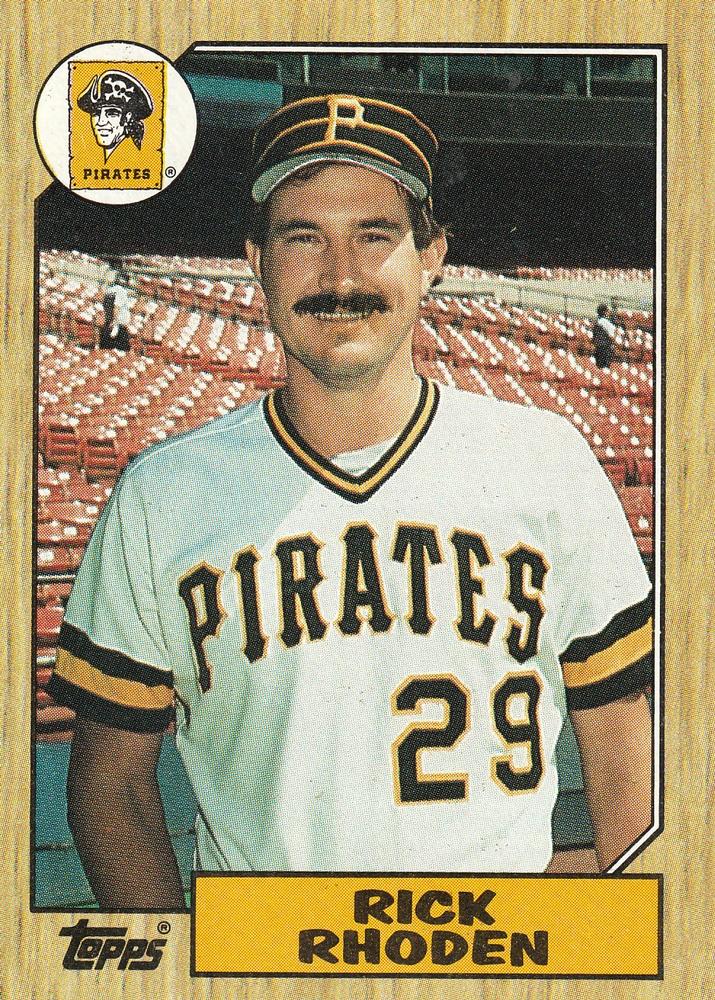
For many years, the debate over the best hitting pitcher remained alive and well. Historically, there’s Bob Lemon and Don Newcombe, and, of course, Babe Ruth. In the modern game, you have Madison Bumgarner, Mike Hampton, Dontrelle Willis, and Carlos Zambrano. Nowadays, it’s hard to argue against Japanese phenom Shohei Ohtani being the answer, not just of this question, but also that of the greatest player of all time. When looking back through the rich history of the Pittsburgh Pirates, one pitcher stands out among those associated with the franchise’s past as the best to ever do it out of the box and off the mound: Rick Rhoden.
Rhoden, born and raised in Palm Beach County, Florida, overcame osteomyelitis as an adolescent. Selected out of high school by the Dodgers in the first round in the 1971 draft, he quickly rose the ranks in the minors and debuted with the big club at the age of 21 in 1974. With Los Angeles, he was an All-Star in 1976, posting a superb 12-3 record along with a 2.98 ERA, and a member of two pennant-clinching teams.
The Dodgers did, however, lose both the 1977 and 1978 World Series to the New York Yankees. After the emergence of another promising rookie in Bob Welch, Rhoden was moved to the bullpen late in the 1978 season. Soon after the 1979 campaign began, he was traded to the Pirates, in exchange for former All-Star Jerry Reuss. This deal worked out well for both sides, as each player’s best years came with their respective new team.
Rhoden made only one start for the Bucs in 1979, against the Braves on May 8, giving up four runs over five innings with just two strikeouts, taking the loss in the Braves’ 4-1 victory. Pittsburgh was aware that Rhoden had been dealing with some arm trouble at the time of the trade, but it ended up being more serious than originally thought. The following month, he underwent shoulder surgery, ending his first season with the Pirates prematurely. As a result, Rhoden was not a “member” of the Bucs’ ‘79 championship team, an accolade that evaded him over the course of his 16-year major league career.
It took Rhoden a few years to establish himself as a starter in the Pirates’ rotation, but when he did, the finesse pitcher with strong control was one of its best for the decade of the 1980s. Rhoden broke out in 1983, greatly improving his ERA from 4.14 the previous year to a stellar 3.09. The Bucs had a strong staff that year, on a team that finished second in the NL East, after starting off the ‘80s to mediocre results.
In the shadow of the Pittsburgh Drug Trials, the Pirates were a disappointment to fans on and off the field. These years, specifically the early to mid ‘80s, are easily the darkest in franchise history, with not much to show for them besides a few standout performers, such as Rhoden. Rhoden wasn’t just a great pitcher; he could swing it, too. Some batting highlights of Rhoden’s tenure with Pittsburgh include a .375 average in 1980, tying a career high three home runs in 1982, and hitting safely in eleven straight games in 1984.
You could argue Don Robinson was the better hitter, but Rhoden did more in fewer plate appearances. He won the Silver Slugger three times, in 1984, 1985, and 1986. Rhoden was also an All-Star in ‘86, and contributed a career-best 6.6 bWAR, placing fifth in the NL Cy Young voting. For five seasons with the Pirates, he had a perfect fielding percentage, making him worthy of a Gold Glove. On all fronts, Rhoden was a professional, plain and simple.
Eventually, Rhoden was traded, per his request, to the Yankees in a deal that saw future Cy Young Doug Drabek included in the return. This trade was a clear win for Pittsburgh, as Drabek became the ace the Bucs needed in their young core to lead them to three consecutive NL East titles. Rhoden, to his credit, had a decent year with the Yanks in ‘87, winning 16 games, but was clearly on the back nine of his career. In 1988, he made history on June 11 as the first pitcher to start a game as a designated hitter.
In two plate appearances, he grounded out and hit a sac fly in New York’s win over Baltimore. Not long after the calendar year turned, Rhoden was traded that offseason to the Astros, as Houston had a clear need in their rotation after the departure of the legendary Nolan Ryan. 1989 would be Rhoden’s last as a big leaguer. For the ‘Stros, he started 17 games, going 2-6 with a 4.28 ERA and just 41 strikeouts.
After his baseball career, Rhoden began a unique journey in the world of professional golf, becoming one of the most accomplished multi-sport athletes of his era. He has several top finishes in PGA Champions Tour events, has won the American Century Championship numerous times, and is a regular competitor in celebrity golf tournaments. This remarkable transition from baseball to golf has no comparison.
A similar case with another sport is Beaver’s John Burkett, an All-Star pitcher and veteran of 15 seasons, who went on to become a professional bowler. Rhoden was an avid golfer when he was with the Pirates and took the game more seriously after retirement. This hard work certainly paid off for him, in more ways than one. Rhoden’s greatness as a pitcher, hitter, and golfer makes him a one-of-a-kind athlete and Pittsburgh Pirate, a special type of player we may never see again. Let’s see Ohtani’s short game.
-
Doc, Willie, and Phil: The Trade That Delivered ’79
By Brian Kopycinski
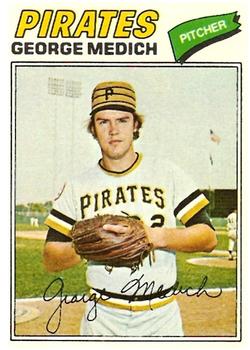
In recent years, the Pittsburgh Pirates have been involved in some historically bad trades, from Jason Schmidt and Aramis Ramírez to Chris Archer and Gerrit Cole. One that stands out among the worst in the franchise’s storied history is the deal, completed on December 11, 1975, that sent second baseman Willie Randolph to the New York Yankees in a package that included Ken Brett and Dock Ellis for starter George “Doc” Medich, a Pittsburgh native. On its own, this trade was undeniably bad, but with greater context it wasn’t as horrible as it seems.
Dave Cash, the Pirates’ primary second baseman on the 1971 World Series team, was traded to the Philadelphia Phillies in October 1973 for Ken Brett, George Brett’s older brother. Cash had shown great promise at the keystone in the years following Bill Mazeroski’s retirement. Rennie Stennett then took over second after Cash’s departure, becoming a reliable presence in the Bucs’ lineup. Still, it’s fair to say that Pittsburgh hadn’t found a true successor to Maz. Randolph, a highly touted prospect, certainly would have been worthy of this mantle had he remained a Pirate.
Brett was coming off the best season of his career to that point with the Phillies in ‘73, posting a 13-9 record in 25 starts and 31 appearances, with 111 strikeouts and an ERA of 3.44. As an 18-year-old rookie, he made history with the Boston Red Sox in 1967 as the youngest to ever pitch in a World Series. With Pittsburgh in 1974, Brett was an All-Star, earning the win in the Midsummer Classic hosted at Three Rivers Stadium, yet the swingman with a good bat was viewed as expendable. Ellis, best known for his no-no while allegedly under the influence of LSD, had worn out his welcome. On its face, the trade made sense for both sides.
The Pirates, aiming to repeat as NL East champs, hoped to bolster their young rotation, which featured John Candelaria, Bruce Kison, and Jerry Reuss, with the addition of Medich as a potential staff ace. The tall, hard throwing righty was a solid starter that showed great potential in his three full seasons with the Yankees, on otherwise mediocre teams. In 1973, Medich finished third in AL Rookie of the Year voting that Baseball-Reference values at 4.8 WAR. In 32 starts, Medich went 14-9 in 235 innings, striking out 145 to an ERA of 2.95. His innings total would increase the following campaigns, highlighting his durability.
Medich was a standout athlete at Hopewell High School in Aliquippa, Beaver County, excelling in basketball and football in addition to baseball. He attended the University of Pittsburgh, where he joined the Panthers’ baseball and football teams, as a tight end and punter on the gridiron. A 30th round selection of the Yankees in the 1970 June Amateur Draft, the pre-med student was committed to continuing his studies. In the minors, Medich would sometimes end his seasons early to return to medical school at Pitt, and miss spring training, often reporting late.
For the Yankees, following the malaise of the Horace Clark Era, it was now or never after the blockbuster signing of Jim “Catfish” Hunter on New Years Eve, 1974. Sandy Alomar Sr. had manned second for the Bronx Bombers the past few seasons to uninspired results. Outside of Hunter, the Yankees had seen decent if not inconsistent performance from the back end of their starting rotation, from the likes of Pat Dobson, Larry Gura and Rudy May. The possibility and experience Brett and Ellis presented appealed to New York. Randolph was widely seen as the prize of all prospects that winter. Before his major league debut on July 29, he was hitting .339 for the Triple-A Charleston (West Virginia) Charlies. At the time, writers generally saw the trade as an even deal, with some even giving the edge to Pittsburgh.
The Yankees made another big move that day, shipping the slugging Bobby Bonds to the California Angels for pitcher Ed Figueroa and outfielder Mickey Rivers, who became key pieces, not to mention Randolph, to the championship puzzles in ‘77 and ‘78. Ellis returned to form in 1976, winning 17 games for the pennant clinching Yanks. Brett was dealt to the Chicago White Sox in May, where he posted one of the best seasons of his career. Following their breakout campaigns, both Brett and Ellis bounced around the league for the remainder of their careers, with varying levels of success. Randolph, however, emerged as one of the finest second basemen of his era, and today has a place in Monument Park. For Pittsburgh, he only got into 30 games in 1975, hitting just .164 in 61 at-bats. Randolph also went hitless in his two plate appearances in the NLCS, as the Pirates were swept in three games by the eventual World Series champion Cincinnati Reds.
Unfortunately for the Pirates, Medich never lived up to the billing with his hometown team. In just one season with the Bucs, he went 8-11 with a 3.51 ERA in 26 starts, striking out just 86 batters. That year, the team finished second in the NL East nine games behind the Phillies, with a record of 92-70 under longtime manager Danny Murtaugh. It wouldn’t be long before Medich found his way on a new ball club. Before the 1977 season began, he was traded in a nine-player deal to the Oakland Athletics. Frustrated by the move, Medich seriously considered quitting the game.
The remainder of his career would have its ups and downs. He found a home with the Texas Rangers for four and a half seasons, where he showed flashes of greatness. As a member of the ‘82 Brewers, he pitched in Game 6 of the World Series, where he gave up six runs, four earned, in two innings. After leaving baseball, Medich was arrested in 1983 for writing illegal prescriptions. He has since admitted to being addicted to painkillers and muscle relaxers, as a way to cope with stress and injury during the last season of his playing career. Medich, an orthopedic surgeon, was charged and convicted on a similar offense in 2001.
With Medich, the A’s received longtime fireman Dave Giusti and prospects Tony Armas, Doug Bair, Rick Langford, and Mitchell Page. In return, the Pirates acquired All-Star Phil Garner, a veteran in Tommy Helms and a rookie in Chris Batton. A few months prior, Manny Sanguillén had been dealt in a rare player for manager trade, for New Castle’s own Chuck Tanner.
Years removed from tearing down his dynasty, A’s owner Charlie Finley wasn’t done just yet. Garner, who wanted more money, was a perfect fit for Pittsburgh at third, after Richie Hebner signed with the Phillies. Garner came up through the minors at the hot corner but was blocked at the position by Sal Bando. There was an opening at second after Oakland released Dick Green to begin 1975. Armas and Page faced stiff competition in Pittsburgh’s outfield, consisting of Al Oliver, Omar Moreno and the late Hall of Famer Dave Parker. If not for a change of scenery, it’s possible their careers could have gone in completely different directions.
Armas, a feared power hitter in the American League for Oakland and Boston, slugged 251 long balls for his career. He led all the major leagues with 43 homers for the Red Sox in 1984, the first Venezuelan player to ever do so. Page, who had a respectable career himself, finished second in AL Rookie of the Year voting in 1977 with a .307 batting average, 21 home runs and a .926 OPS. The award went to future Hall of Famer “Steady” Eddie Murray, who by all accounts had a great season, though it’s debatable whether he should have won it or not, with Page’s 6.1 bWAR to Murray’s 3.2. We can always speculate on players, but they remain nothing more than what-ifs.
Giusti, one of the greatest closers in Pirates’ history, had a good 1977 with the A’s but struggled after being purchased by the Chicago Cubs, retiring shortly after the conclusion of the season. Bair, a journeyman reliever, was a member of two World Series champions, the ‘82 Cardinals and the ‘84 Tigers. Langford was a workhorse starter for the A’s for a decade, who led the league twice in complete games, in 1980 and the strike-shortened 1981 season. Helms, the 1966 NL Rookie of the Year for the Reds, played sparingly for the Bucs, and like Giusti, called it a career in ‘77 after a brief stint with the Red Sox. Batton, who had a cup of coffee with Oakland in ‘76, never suited up for the big-league club in Pittsburgh.
Randolph is up there with Bobby Grich and Lou Whitaker as the best second basemen not in the Hall of Fame. While he was on the ballot just once in 1998, garnering just 1.1% of the vote, Cooperstown remains a possibility someday via the veteran’s committee. Regardless, Willie Randolph had a heck of a career, as a player and a coach. He was consistently great, having one of his best seasons at the age of 36 with the Milwaukee Brewers in 1991, never falling off a cliff over the course of 18 years like some all-time greats eventually do. Randolph was a six-time All-Star and World Series champion. Later, he became the Yankees’ third base coach, contributing to another dynasty in New York. Randolph also found success as the manager of the New York Mets, the team the Brooklyn son grew up rooting for.
Still, there remains a lasting silver lining to an otherwise clear Pirates blunder, that being a championship of their own. The late ‘70s were a special time for Pittsburgh sports, with the Pirates, Pitt Panthers, and Steelers all claiming titles. The “We Are Family” Bucs, led by “Pops” Willie Stargell, were a truly iconic team, defeating the Baltimore Orioles in seven games in a rematch of the 1971 Fall Classic. One of the key, often overlooked, contributors to this World Series was Phil Garner, who batted .500 with a total of 12 hits, as did Stargell, hitting .400 in 30 at-bats. The pair are currently tied with a handful of others for the second most base hits in a single World Series, with Marty Barrett, Lou Brock, and Bobby Richardson topping the list with 13. Stargell, the ‘79 NL co-MVP alongside Keith Hernandez, also took home NLCS MVP and World Series MVP honors in a remarkable postseason run.
Another thing to keep in mind is that stats aren’t everything. There’s a lot that doesn’t show up on the box score. Why do you think they called Garner “Scrap Iron”? It’s difficult to compare him to someone like Randolph. They’re simply different players. Earlier in his career, Garner, too, was a threat on the base paths, though he wasn’t the finest fielder. Randolph certainly has him in this department, though he himself was overshadowed at the position defensively by Frank White and the aforementioned Whitaker. If you’re just looking at WAR, then Randolph is clearly the better player, but the value of someone like Garner to a ball club shouldn’t be understated. After Pittsburgh, he had some good years with the Houston Astros, who he’d later lead to a National League pennant in 2005 as their skipper.
While many Pirates fans think of Willie Randolph as “the one that got away”, a World Series ring in ‘79 is a nice consolation prize. It’s also worth mentioning that the Yankees, who won the most games in the 1980s, never won a championship with Randolph in this span, though they came close in ‘81. Don’t forget that Garner was traded that season to Houston for another underappreciated second baseman in Johnny Ray. Ray finished second in NL Rookie of the Year voting after he took over second full-time in 1982. The following season, he won the Silver Slugger Award, so it’s not like the position was devoid of talent following the loss of Randolph. Would a player of his caliber have helped extend the Bucs’ championship window? It’s unlikely, given the play of Stennett, Garner, and Ray over these years.

Pittsburgh Sports History