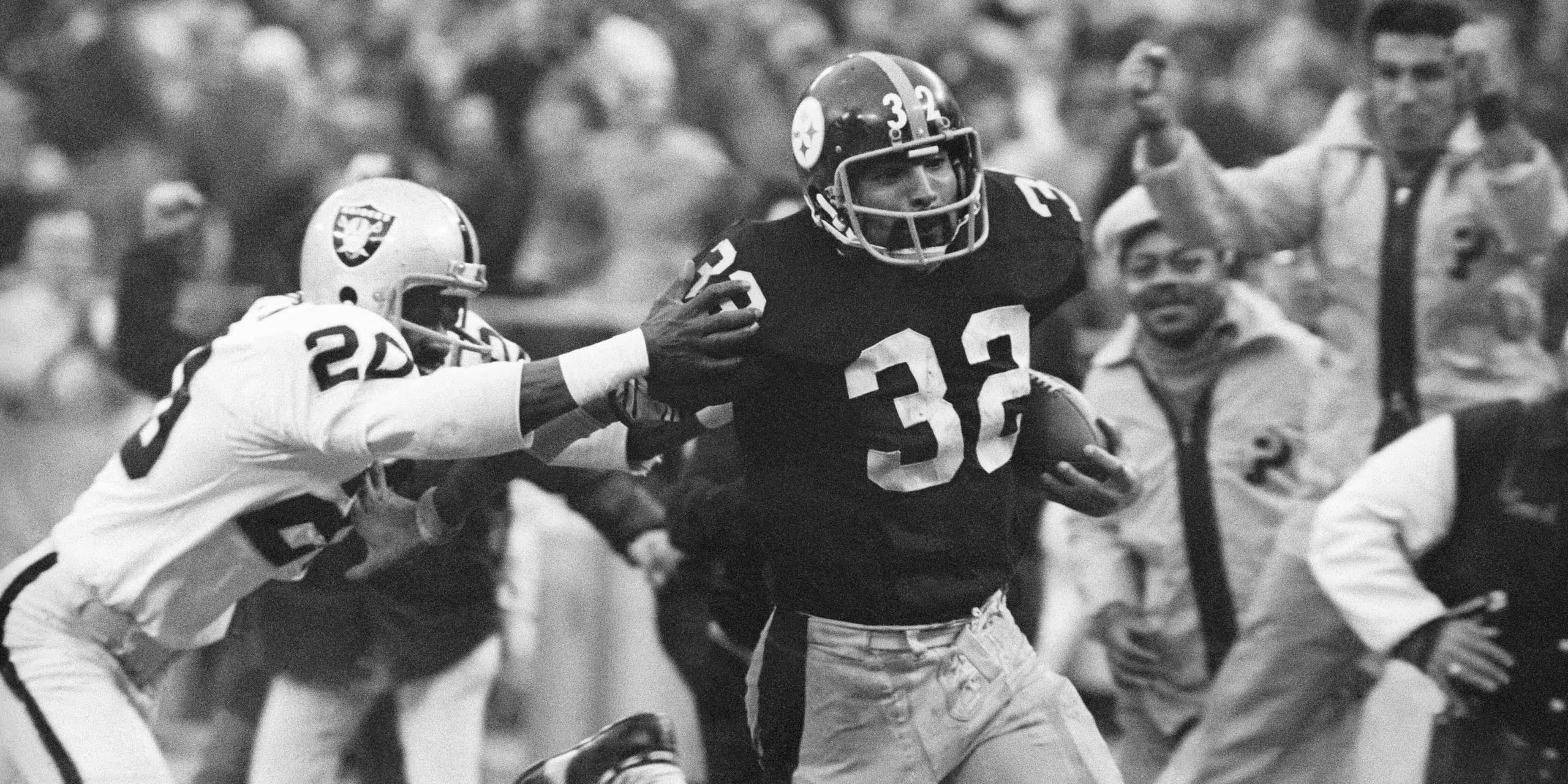
-
Flashes of Greatness: Willie Asbury
By Brian Kopycinski
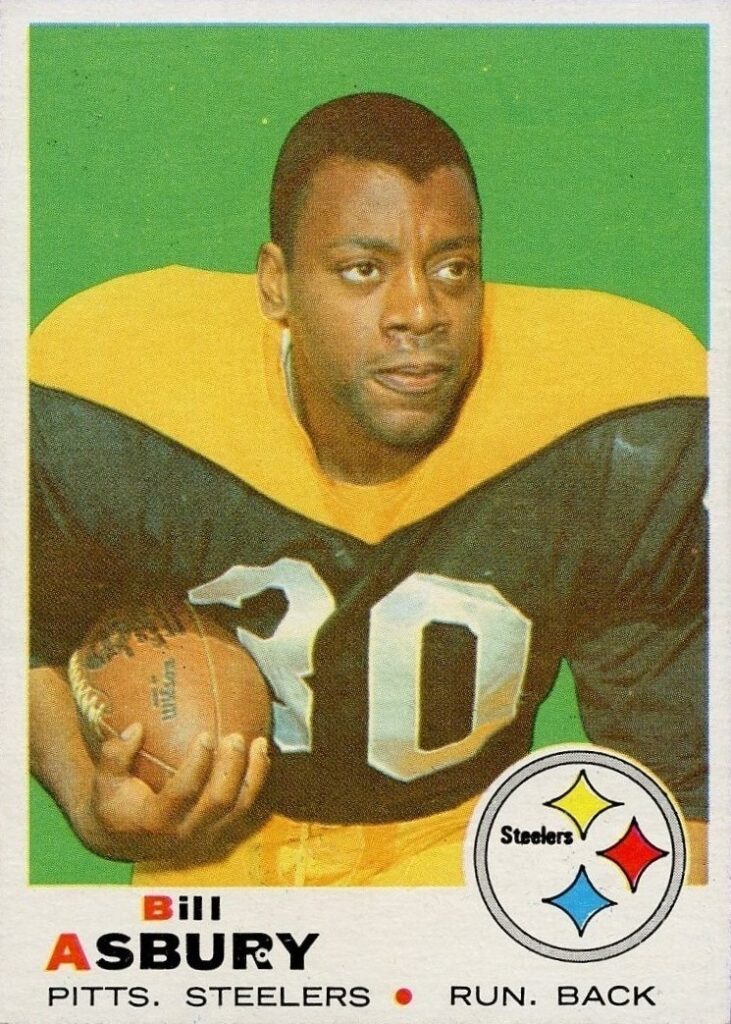
By the late 1960s, the Pittsburgh Steelers were a struggling franchise in decline. Mediocrity defined the decade. It wasn’t until the early ’70s that the Steelers began to show life again under head coach Chuck Noll. Noll was hired in 1969 after Bill Austin was fired following another disappointing season. While Noll fared poorly in his first year on the job, with the Steelers finishing 1–13, the foundation was being laid for a championship team. “Mean” Joe Greene and L.C. Greenwood were selected in the 1969 NFL Draft. Terry Bradshaw and Mel Blount would follow in 1970.
Before the Steelers became the Team of the Decade, an unprecedented dynasty that captured four Super Bowl championships, an unremarkable culture had been the standard. While these middling teams did little in the way of winning, there was still plenty of talent in black and gold. Roy Jefferson was an All-Pro, and Ben McGee a defensive stalwart. Another standout from this era is Willie Asbury, a Kent State legend who led the Steelers in rushing as a rookie in 1966. While his playing career was short, his improbable journey to the NFL and his remarkable life after football make for a story worth telling.
Born in Crawfordville, Georgia, Asbury graduated from Cincinnati’s Princeton High School. The school counts several professional athletes among its alumni, including Josh Harrison and Paris Johnson. As a senior, Asbury was named All-City and All-Country in football. After graduation, he enrolled at Kent State University, about a four-hour drive northeast of Cincinnati. In his sophomore year, Asbury ran for 349 yards and three touchdowns as the Golden Flashes’ leading rusher. He missed the 1964 season after suffering a near-fatal kidney disorder. Asbury collapsed after completing a mile run during conditioning and was later diagnosed with acute renal failure. He was admitted to the hospital, lost 58 pounds, and eventually recovered.
Asbury returned in 1965, leading his team and conference in rushing with 998 yards and scoring six touchdowns. The Flashes went 5–4–1 that year, and Asbury was named MAC Offensive Player of the Year. He also earned Associated Press honorable mention All-American honors. In addition to football, Asbury was a track standout at Kent State, setting the school’s shot put record. He earned his bachelor’s degree in sociology in 1965.
Asbury was drafted by the Atlanta Falcons, an expansion team, in the fourth round of the 1966 NFL Draft. He was later cut and signed by the Steelers. Asbury had met with Art Rooney Jr. several times before the draft during his senior year, and Rooney saw great potential in him.
The Steelers were coming off another down year, finishing 1965 at 2–12, their second consecutive losing season. Head coach Mike Nixon was let go after just one year, and Bill Austin was brought in on the recommendation of Vince Lombardi, under whom Austin had served as an offensive line coach for five seasons. This period of Steelers history was defined by inconsistency on both sides of the ball. As noted, it would be several years before the Steelers became relevant again under Chuck Noll. Austin coached Asbury during his three years with the team.
As a rookie in 1966, what would be his finest season, Asbury led the team with 544 rushing yards and seven touchdowns. He started all fourteen games, wearing No. 30. He also totaled 228 receiving yards and two touchdowns.
He scored his first career touchdown in Week 1 at home against the New York Giants, in the second quarter of a 34–34 tie. Three different quarterbacks started for the Steelers that year, George Izo, Bill Nelsen, and Ron Smith, with mixed results. Pittsburgh finished 5–8–1, good for sixth place in the NFL East Division.
In 1967, Asbury split carries with Earl Gros, rushing for 315 yards and four touchdowns, while Cannonball Butler and Don Shy also contributed in the backfield. In Week 1 against the Chicago Bears, Asbury tied Minnesota’s Dave Osborn for the NFL’s longest rushing attempt that season with a 73-yard gain. In the Steelers’ 41–13 victory, he totaled 107 yards and two touchdowns. Despite Asbury’s impact, Pittsburgh failed to improve, finishing 4–9–1 and last in the Century Division.
1968 was Asbury’s final season in the league. He was largely a non-factor in the Steelers’ offense, with just four rushing attempts for nine yards and three catches for 27 yards in seven games. Dick Hoak emerged as a Pro Bowl talent, rushing for a career-best 858 yards. It was another dismal season for the black and gold, who finished 2–11–1. Austin was fired, and the Steelers took a new direction by hiring Noll, a defensive coach with the Chargers and Colts.
Heading into the 1969 season, Asbury was cut in August and retired from the game. He quickly pivoted to professional life, beginning with Sanford Rose Associates in Akron. From there, he joined the Akron Human Relations Committee and later took a position at his alma mater. He earned his M.A. in sociology from Kent State in 1973. In 1981, he was inducted into the Kent State Athletics Hall of Fame.
Asbury eventually joined Penn State University, serving as an Affirmative Action Officer, Assistant to the Provost, and Executive Assistant to the President for Administration. He was promoted to Vice President of Student Affairs in 1987, a position he held until 2003.
Willie Asbury enjoyed an accomplished career in both football and higher education. With the Steelers, he totaled 868 rushing yards and eleven touchdowns, along with 307 receiving yards and two touchdowns. His work at Penn State was just as important to him, a career that gave him renewed purpose. At 83 years of age, Asbury remains a living legend from an overlooked era of Steelers football, his legacy defined as much by his work off the field as what he accomplished on it.
-
Randy Grossman: “The Rabbi”
By Brian Kopycinski
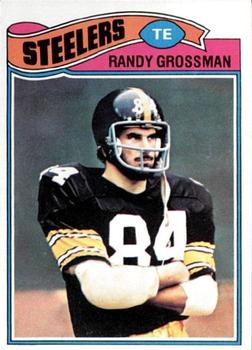
The Pittsburgh Steelers dynasty of the 1970s is widely considered to be the greatest in NFL history. While most remember the stars like Bradshaw, Franco, and “Mean” Joe, these well-rounded teams consisted of a number of unheralded contributors. Some have gotten the recognition they deserve in the years since, while others have been largely forgotten. While never superstars, these men of steel were players you couldn’t win without. One that stands out to me is Curt “Randy” Grossman, a highly underrated tight end from an era that prioritized the run game. Grossman, an undrafted free agent, was with the Steelers for the entirety of this unprecedented run.
Nicknamed “The Rabbi,” courtesy of teammate Dwight White, Grossman was a standout at Temple University before he joined the Steelers. He was born in Philadelphia and raised in the suburb of Havertown, attending Haverford High School. Temple, an independent program at the time, went 9–1 during Grossman’s senior year in 1973, when he led the team in receptions (39) and receiving yards (683). A relatively undersized tight end for the NFL, Grossman battled it out in camp and the preseason to make the team. In 1974, Larry Brown, who later converted to tackle, emerged as the Steelers’ top option at tight end. Grossman contributed 13 receptions for 164 yards in his rookie year, as the Steelers began their dynasty with a win over the Minnesota Vikings in Super Bowl IX.
Grossman scored his first career touchdown in Week 2 of the 1975 season, a 20-yard pass from Joe Gilliam in a close home loss to the Buffalo Bills. He totaled 135 yards on the campaign, as the Steelers went on to repeat as AFC Central champions with a 12–2 record. In the postseason, Grossman made an impact. In the AFC Championship versus Oakland, he added four catches for 36 yards, and he scored a touchdown in the first quarter of Super Bowl X against Dallas. In the 1976 NFL Draft, Pittsburgh selected Clemson tight end Bennie Cunningham in the first round. Undeterred, Grossman had another fine year. As a rookie, Cunningham remained a backup, while Grossman totaled 181 yards. Though Cunningham was viewed as the future, Grossman still factored into the Steelers’ long-term plans. That year, the Steelers once again won the division but later fell to their greatest rival, the Oakland Raiders, in the Conference Championship.
Cunningham emerged as the Steelers’ TE1 in 1977, breaking out with 347 yards and two touchdowns. Grossman became somewhat of an afterthought, hauling in just five passes for 57 yards. The Steelers went 9–5 that year but made an early playoff exit in the Divisional Round against Denver. Cunningham began 1978 as the starter, but an injury cut his season short. Grossman stepped up in his absence in what would be the greatest campaign of his career. His 448 receiving yards were the third-best mark on the team, behind only Lynn Swann and John Stallworth. Grossman’s 64.8 success rate was the best in the league. Pittsburgh returned to the postseason with a vengeance and made it back to the big game to face Dallas in a rematch of Super Bowl X. Grossman had three catches for 29 yards in Super Bowl XIII, as the Steelers defeated the Cowboys to claim their third Lombardi Trophy.
In the City of Champions, 1979 was a special year. The “We Are Family” Bucs defeated the Baltimore Orioles in a classic World Series that went seven games. The Steelers, at the height of their dynasty, cruised through the playoffs and defeated the Los Angeles Rams in Super Bowl XIV, giving Randy Grossman his fourth Super Bowl ring. Reliable as ever, Grossman continued to produce, giving the Steelers a one-two punch at the tight end position with Cunningham leading the way. The beginning of the new decade unofficially marked the end of the Steelers’ dominance. This regression was inevitable, as the core of talent aged together and neared the ends of their careers. In 1981, Grossman’s final season, Pittsburgh went 8–8 and missed the playoffs for the second consecutive year. Grossman scored his last touchdown in a Week 11 win over the Atlanta Falcons.
Over eight seasons, Randy Grossman totaled 1,514 yards and five touchdowns. His contributions in the postseason made a difference and helped the Steelers win when it mattered most. He was never a star in his time, like the Raiders’ Dave Casper or the Lions’ Charlie Sanders, but he was a steady, dependable target on four Super Bowl teams. Like Cunningham, Grossman has gone seriously overlooked in team history at the tight end position. While names like Heath Miller and Eric Green are often at the top, you can’t forget about players like Grossman who contributed meaningfully to the franchise. While never garnering headlines, it’s players like Randy Grossman who help you win championships.
Grossman is a member of both the Temple University Athletics Hall of Fame and the Philadelphia Jewish Sports Hall of Fame. After retiring as a player, he went on to a successful career in finance as an independent advisor with his firm, Wealth Management Strategies. Grossman and his wife Barbara have three children and three grandchildren.
-
Keith Willis and the 1980s Steelers
By Brian Kopycinski
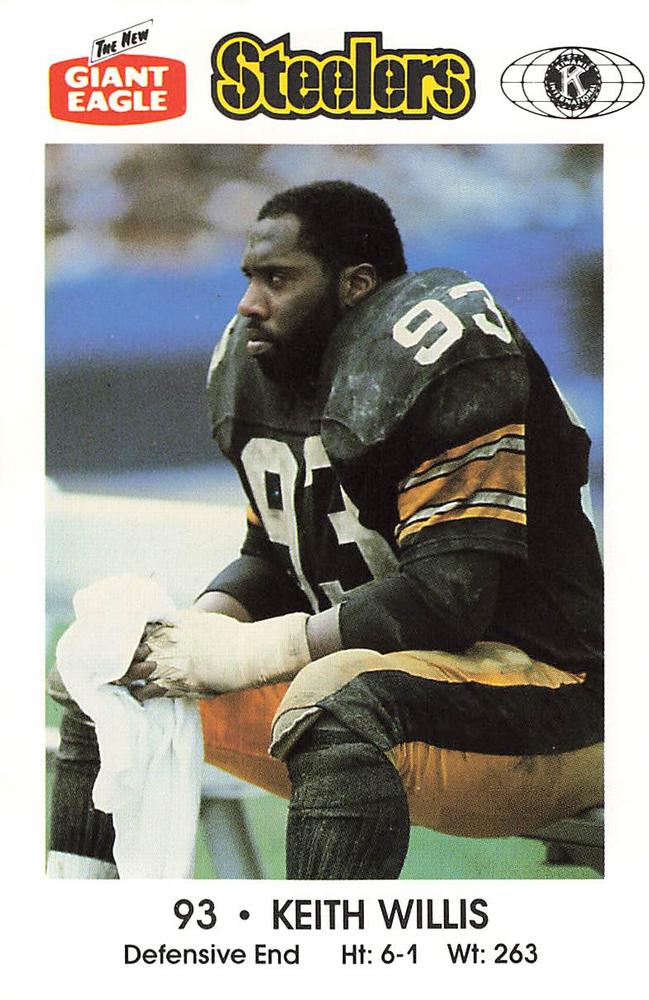
By the early 1980s, the Pittsburgh Steelers dynasty was fading. The cornerstones of the Steel Curtain were either gone or nearing the end of their careers, and while the team reached the playoffs from 1982 through 1984, that window quickly closed. What followed was nearly a decade of inconsistency, a sharp contrast to the franchise’s Super Bowl standard.
Even so, the era was not without its standouts. Veterans such as Mike Webster, John Stallworth, and Donnie Shell remained productive. Yet one defender from this period has been largely forgotten: Keith Willis.
An undersized, undrafted lineman out of Northeastern, Willis didn’t merely make the roster—he thrived. Over nine seasons in Pittsburgh, he recorded 59.0 career sacks, a total that still ranks sixth all-time in franchise history. For a player who arrived with little fanfare, Willis became one of the defining defenders of a transitional Steelers generation.
Willis grew up in Newark, New Jersey, starred at Northeastern, and went undrafted in 1982. Signed as a free agent, he made the team during a strike-shortened season and appeared in all nine games as a reserve. His first career sack came against Kansas City quarterback Steve Fuller, an early indication of what was to come.
In 1983, Willis erupted. Despite starting only four games, he posted a then–team-record 14.0 sacks. While sacks only became an official statistic in 1982—meaning legends like Joe Greene were never fully credited—this context does little to diminish Willis’s achievement. He was disruptive, relentless, and suddenly indispensable.
Though his sack totals fluctuated in the seasons that followed, Willis steadily grew into a core defensive piece. By the mid-1980s, as Pittsburgh cycled through quarterbacks and leadership voids emerged in the locker room, he became one of the few constants. In 1986, on a 6–10 team going nowhere fast, Willis still delivered a double-digit sack season—an individual bright spot amid organizational drift.
A neck injury sidelined him for all of 1988, coinciding with one of the lowest points in franchise history. Willis rebounded in 1989, however, starting every game and helping guide the Steelers back to the playoffs. The following year, he recorded the only interception of his career and played a key role on another competitive 9–7 team.
The 1991 season marked the end of an era. It was the final year of Chuck Noll’s tenure, and fittingly, one of Willis’s most efficient campaigns. Even in a reduced role, he notched seven sacks in seven starts and finished his Steelers career as the franchise’s leader in official sacks—a remarkable feat for an undrafted lineman.
Willis’s playing career concluded shortly thereafter, but his impact on the game did not. He transitioned into coaching, beginning at Slippery Rock University and later holding defensive line positions at several collegiate programs before returning to the professional ranks. His longevity in coaching mirrored the perseverance that defined his playing days.
The Steelers defenses of the 1980s were tasked with forging a new identity after the collapse of the Steel Curtain. Keith Willis embodied that effort. Tough, relentless, and often overlooked, he stood firm when the standard was slipping. Among undrafted players in franchise history, his name belongs alongside the very best.
The 1980s may not be remembered fondly in Pittsburgh, but greatness still emerged. Keith Willis was one of those rare constants—an unheralded gem whose legacy deserves far greater recognition, including a rightful place in the Steelers Hall of Honor.
-
DeAngelo Williams: Stepping Up
By Brian Kopycinski
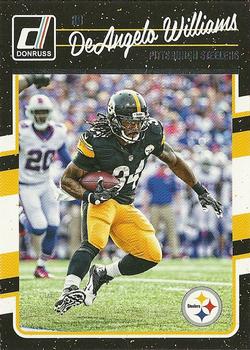
When the Steelers needed him most, DeAngelo Williams stepped up. The Panthers’ 2006 first-round pick had been a dynamic playmaker throughout his nine-year tenure with Carolina. Pittsburgh needed an insurance policy for their star running back Le’Veon Bell, who was coming off an All-Pro season. Williams filled in admirably for Bell whenever the opportunities came. He greatly exceeded expectations for a back in his early-30s and quickly became a fan favorite in Pittsburgh. Over his 11 seasons in the NFL, Williams made an impact as a player and advocate for the cause of breast cancer awareness, invaluable both on and off the field.
At Memphis, Williams was one of the best running backs in college football. His 22 touchdowns as a junior led the FBS, as did his absurd 1,964 rushing total his senior year. He was the third running back taken in the 2006 draft, after Reggie Bush and Laurence Maroney. While the Heisman Trophy ultimately went to Bush, Williams finished seventh in the award voting that cycle. Selected 27th overall, he would go on to become one of the greatest backs in Carolina’s history, setting several franchise records along the way. Although the Panthers never found much postseason success in his time with the team, Williams still shined on the biggest stage. In 2008, he rushed for 1,515 yards and led the league with 18 touchdowns, earning him a second-team All-Pro nod. He followed this up with another 1,000-yard season and was named to the Pro Bowl.
With 6,846 yards rushing in a Panthers’ uniform, Williams ranks second in franchise history, behind his teammate Jonathan Stewart. Stewart and Williams were one of the strongest running back tandems in the league when they played together. Williams also ranks third in rushing touchdowns, behind Stewart and Cam Newton. After nine seasons, Carolina released Williams in March 2015, and shortly after he signed with the running back-needy Steelers. LeGarrette Blount was waived the previous season, and Pittsburgh had a true need at the position. Williams fit the role perfectly, a veteran back that still had a lot to give in the run game and as a mentor to Bell. In 2014, while the Steelers won the AFC North at 11-5, they quickly exited the playoffs in a Wild Card loss to the Ravens. With the Killer B’s in their prime, Pittsburgh hoped to take a step forward in the new calendar year.
With Bell out for two games, Williams opened the season as the Steelers’ lead back. In a Week 1 loss at New England, he rushed for 127 yards on 21 carries, a promising sign of what was to come. In the Steelers’ blowout victory over the 49ers in Week 2, Williams ran for 77 yards and 3 touchdowns. Once Bell returned, however, he reverted to his reserve role. It wouldn’t be until Week 8 that Williams made headlines again, after Bell went down with a season ending MCL injury courtesy of Cincinnati’s Vontaze Burfict. While Pittsburgh lost a close one 16-10, Williams did his job, rushing for 71 on 9 carries, taking over for Bell in the second quarter. He followed this up next week with a career game in a shootout against Oakland, going for 170 and 2 scores in the 38-35 win.
Pittsburgh had won five of their last seven going into their Week 17 matchup at Cleveland, with a record of 9-6 to that point. Unfortunately for the Steelers, they would lose another key player in Williams, who went down with an ankle injury and would be out for the playoffs. For the regular season, Williams was the team’s leading rusher in just ten starts, with 907 yards on the ground and 367 through the air, giving him 1,274 from scrimmage, along with a league leading 11 rushing TDs. The Steelers would go on to defeat the Bengals in the Wild Card, with Jordan Todman and Fitzgerald Toussaint leading the backfield. Pittsburgh then fell to Peyton Manning and the eventual Super Bowl champion Broncos in the next round, 23-16. Had Bell and Williams both been healthy, who knows what would have happened?
To begin the 2016 season, Bell was suspended again, this time for three games. Williams was called upon again to be the team’s workhorse back, and he didn’t disappoint. In Week 1 against Washington, Williams had 143 yards rushing and two touchdowns, to earn himself AFC Player of the Week honors in the Steelers’ win over the Redskins. Still, when Bell came back, Williams was now the backup, again. Bell stayed healthy for the remainder of the season and had another career year, 1,268 yards rushing to go with 7 TDs. Williams, making four starts, had just 343 yards, although he found the endzone 4 times. After another great season, Pittsburgh advanced to the AFC Championship to face New England. In what would be his final game, Williams went for 34 rushing with a TD and had 7 receptions for 51 yards in a heartbreaking, and some would say controversial, Steelers’ loss.
After his contract expired, Williams became a free agent. He failed to sign with a team for the 2017 season, and did not announce his retirement until 2018. As a player, he honored his late mother Sandra with his strong dedication in spreading awareness of breast cancer, likely saving many lives. Williams has been very active following his football career. He became a professional wrestler, joining Impact and TNA, and starred on Season 32 of The Amazing Race, where he and his former Panthers teammate Gary Barnidge finished 4th. On the field, Williams racked up over 10,000 yards from scrimmage and scored 70 total touchdowns. His work off it, however, likely means much more to him. Always a class act, DeAngelo Williams is remembered fondly by Panthers and Steelers fans alike for all that he’s done.
-
Antwaan Randle El: Triple Threat
By Brian Kopycinski
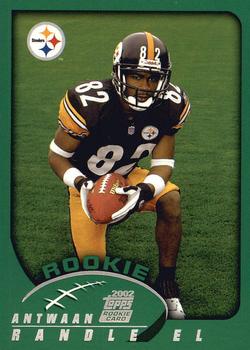
All eyes are on Indiana football after Pittsburgh-born head coach Curt Cignetti and Heisman Trophy-winning QB Fernando Mendoza led the Hoosiers to their first-ever national championship this past season. Cignetti, a former signal-caller with the West Virginia Mountaineers, had coaching stints at Pitt and IUP before arriving in Bloomington. Mendoza is undoubtedly the greatest quarterback in program history. Not far behind in Hoosier lore is a name familiar to Steelers fans and anyone tracking the current coaching carousel: Antwaan Randle El.
The Chicago-area native was a three-sport standout in high school. Drafted by his hometown Cubs in the 14th round of the 1997 MLB Draft, he seriously considered a pro career but chose Indiana, where he played baseball, basketball (under legendary coach Bob Knight), and football. In his first start as Indiana’s quarterback in 1998, Randle El threw for 385 yards and 3 touchdowns while rushing for 82 yards and 3 more scores in a victory over Western Michigan.
He had an outstanding freshman season despite the Hoosiers’ 4-7 record in the Big Ten, earning Big Ten Freshman of the Year honors. His sophomore year was even better, throwing 17 touchdowns against 7 interceptions with 2,227 passing yards, plus 788 rushing yards and 13 scores on the ground. As a junior, he rushed for a personal-best 1,270 yards. Randle El was one of college football’s most dynamic playmakers, becoming the first Division I quarterback to pass and rush for 40 touchdowns each in a career. Yet Indiana never posted a winning record during his tenure.
In his senior year, he led the team to a 5-6 record, including wins over #22 Michigan State and rival Purdue. He finished sixth in Heisman Trophy voting (won by Nebraska’s Eric Crouch) and was named Big Ten Offensive Player of the Year and conference MVP. The Steelers selected him in the second round of the 2002 NFL Draft as a wide receiver.
At Indiana, Randle El also contributed as a punter and returner, showcasing his versatility. In the NFL, he became a slot receiver/hybrid who thrived on gadget plays, drawing comparisons to Kordell Stewart. As a rookie, Randle El caught 47 passes for 489 yards and 2 touchdowns, added 134 rushing yards, and starred on special teams with 733 kick return yards and a 99-yard touchdown against the Bengals in Week 6.
2004 was a special year for Pittsburgh. They drafted Ben Roethlisberger, finished 15-1 to win the AFC North, and reached the AFC Championship to face the Patriots. Randle El posted 601 receiving yards and 3 touchdowns with the Steelers that season. In the loss to New England, he caught three passes for 52 yards. Fans thankfully wouldn’t have to wait long for another deep playoff run.
After finishing the 2005 regular season 11-5, Pittsburgh defeated Cincinnati handily in the Wild Card round before an iconic Divisional win over Indianapolis. Randle El caught a 6-yard TD from Roethlisberger in the first quarter and added four catches for 52 yards in the AFC Championship victory over Denver. His defining moment came in Super Bowl XL.
With Pittsburgh leading Seattle 14-10 in the fourth quarter, he took a handoff from Willie Parker on a trick play and threw a 43-yard touchdown to Hines Ward, one of the more memorable plays in Super Bowl history. Ward earned MVP honors with 123 yards and that score. The Bus went out on top, and Coach Cowher finally got his ring. Randle El also returned two punts for touchdowns that season and was named First-Team All-Pro as a punt returner.
He signed with Washington that offseason, where he remained a reliable pass catcher and return man. The 2007 Redskins made the playoffs at 9-7, and Randle El scored a TD in their loss to Seattle. After four productive years with Washington, he returned to Pittsburgh at age 31, now lower on the depth chart behind Mike Wallace and Hines Ward.
Heath Miller remained a favorite target of Big Ben’s. The Steelers also drafted two notable receivers that year, Antonio Brown and Emmanuel Sanders. In his final season (2010), Randle El caught just 22 passes for 253 yards amid reduced return duties. The Steelers won the AFC North again and reached the Super Bowl but fell to Aaron Rodgers and Green Bay 31-25. Randle El had two catches for 50 yards in the game.
He sat out 2011 and retired in 2012 but stayed connected to the game of football. After a stint as athletic director at Ashburn’s Virginia Academy, he joined the Buccaneers as an offensive assistant in 2019, contributing to their Super Bowl LV win with Tom Brady. He then spent four seasons as wide receivers coach with the Detroit Lions, mentoring stars like Amon-Ra St. Brown and Jameson Williams in a high-powered offense.
Now, Randle El serves as assistant head coach and wide receivers coach for his hometown Chicago Bears under Ben Johnson. With things trending upward in Chicago, his name has surfaced as a candidate for many coaching vacancies league-wide. While an OC role seems more immediate, don’t rule out a head coaching job. He’s only 46, with a proven track record as a developer of talent.
As a player, Randle El was nothing to sniff at, an accomplished college star who seamlessly transitioned to wide receiver and excelled in a unique role. Always a threat with the ball in his hands, he’ll forever be linked to that iconic Super Bowl trick-play TD. Pittsburgh will always hold a special place in his football journey. Perhaps one day he’ll return to help the Steelers chase another Lombardi.
-
The “Other” Barry: Foster’s Breakout ’92 Season
By Brian Kopycinski
When you think of Pittsburgh Steelers football, you think of defense and the run game. Legends like Franco Harris and Rocky Bleier led the way to four Super Bowl championships alongside the Steel Curtain of Mean Joe, Greenwood, Holmes and White. Still, nothing lasts forever. A stretch of mediocrity followed as this core aged and left the game. The 1980s weren’t just unkind to the Steelers, as the Bucs dealt with the fallout of the Pittsburgh Drug Trials.
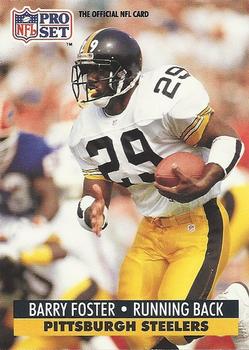
The ‘90s, however, brought new light to the sports scene as the city transitioned from an industrial to a more modern economy heading towards the 21st century, with several new stars making a name for themselves. You had Bonds, Bonilla and Van Slyke, Lemieux and Jágr. All-Stars, champions. It took a few years for the Steelers to get going in the new decade under head coach Bill Cowher. One player who stood out as a potential successor to Franco that has gone severely underappreciated is Barry Foster, a legend in his own right.
Foster grew up in the Dallas area and played his college ball at Arkansas, helping lead the Razorbacks to back-to-back Southwest Conference championships and Cotton Bowl appearances in the late ‘80s. Under head coach Ken Hatfield, Foster thrived in the wishbone offense, rushing for 833 yards and 7 touchdowns during his senior season. The Steelers drafted him in the fifth round, 128th overall in 1990, joining a crowded running backs room that included former first-round pick Tim Worley and Merril Hoge. Foster didn’t see too much action in his first year, though he made a notable blunder on special teams that led to a Steelers’ loss. This rookie mistake didn’t define him, and after an improved sophomore campaign, Foster took the reins after Worley was suspended for the season after failing drug tests.
For the team, the past two seasons had been up and down in Chuck Knoll’s twilight years. Bubby Brister won nine games as a starter in ‘90, but the Steelers regressed the following year to a 7-9 record. 1992 would be the dawn of a new era, with the introduction of Cowher as the Steelers’ new coach, who would name Neil O’Donnell, another 1990 draft pick, the starting quarterback. What Foster did that season was simply unprecedented. Nobody could have expected him to breakout the way he did. As a fifth-round draft pick, he went from being a backup to setting the franchise record for the most rushing yards in a single season at 1,690. This record still stands to this day.
The 1992 season was a look at what was to come under Coach Cowher. The Steelers won the AFC Central Division at 11-5, though they quickly exited the playoffs in a loss to Frank Reich and the Bills, coming off their historic comeback in the Wild Card over the Oilers. Despite the blowout defeat at Three Rivers, Foster still had over 100 yards rushing in the game. O’Donnell threw two interceptions in the Steelers’ 3-24 loss to Buffalo. Coming off such a historic campaign, that included twelve 100-yard performances, Foster was recognized by numerous accolades that included a Pro Bowl nod, First Team All-Pro honors and finishing second in the AP MVP vote to Steve Young.
Next year, Worley was traded to the Bears, giving Foster a firm lock on RB1 moving forward. After what he did in ‘92, this move should have come as no surprise. Foster had another Pro Bowl Season in 1993 but missed some games due to injury. In nine games, he rushed for a total of 711 yards with 8 touchdowns. The Steelers lost again in the playoffs, this time to the Chiefs in the Wild Card. 1994 was another disappointing season for Pittsburgh. While there was another AFC Central title and playoff victory over the Browns to celebrate, losing to the Chargers in the Conference Championship when favored was no way to go out. For Foster, who dealt with ankle and knee injuries again that year, it would be his last NFL game.
The reasons for this are several. There was Foster’s contract, the emergence of Bam Morris, and the signing of Erric Pegram. More than anything, the damage to one’s body that the game of football all but guarantees became too much for him to bear. Foster was traded to the expansion Panthers in May of 1995 but was soon cut after failing his physical. Later that season, he signed with the Bengals for a hefty sum after number one overall pick Ki-Jana Carter went down, then quickly changed his mind and retired once again, at just 26 years old.
Not long after Foster left, the Bus made a stop in Pittsburgh. On Draft Day, Jerome Bettis was traded by the Rams to the Steelers in exchange for draft capital. The rest is history, culminated by another Lombardi hoisted high a decade later. Bettis went out on top, beloved by fans. He’s in the conversation for the best Steelers running back of all-time, up there with Franco Harris. If you were to steer this discussion to the greatest season by a Steelers back, look no further than Barry Foster’s 1992 masterpiece. His peak deserves to be talked about in the same light. Most ‘90s football fans remember a Barry, that is, Barry Sanders. In 1992, “that” Barry was a Pittsburgh Steeler. For one spectacular season, Foster ran with the best of them. Let’s never forget that. Since his playing days, Barry Foster has been a middle school football coach and assistant principal in his home state of Texas.
-
Flashes of Greatness: Dri Archer
By Brian Kopycinski
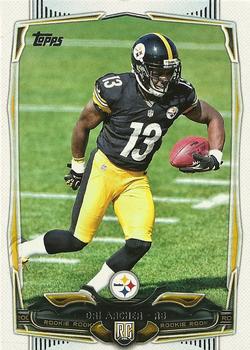
The NFL Draft cycles of the 2010s were marked by a number of high profile busts on the offensive side of the ball. The most notorious of these include Justin Blackmon, Johnny Manziel and Trent Richardson. Another name fans of the Madden series will remember fondly is Dri Archer, a blazing fast triple threat prospect that flamed out in two calendar years. Archer, a consensus All-American at Kent State University, was a dynamic runner, pass catcher and return man for the Golden Flashes. The Pittsburgh Steelers, coming off a disappointing 8-8 season in 2013, selected Archer in the 3rd round, 97th overall, in the 2014 draft. What looked to be a promising NFL career ended rather abruptly soon after it got started.
Adrion “Dri” Archer was born in Tampa and grew up in Venice, Florida, just south of Sarasota. At Venice High, he starred as a three-sport athlete in football, basketball and track and field. His legendary speed gained attention his senior year in 2009 at the Florida state track meet, where he finished second in the 100-meter dash behind Dentarius Locke, later an elite collegiate sprinter at Florida State. Archer beat out future Michigan QB Denard Robinson by a hundredth of a second in the finals for silver. With offers from elite track programs that included Arkansas and Clemson, Archer ultimately chose Kent State, the only school to extend him a football scholarship.
While Kent State is one of the least successful teams in FBS history, it is notable for producing several exceptional talents, such as Jack Lambert, Antonio Gates, James Harrison and Julian Edelman. Archer is up there among the Golden Flashes greats. After two unremarkable seasons marred by injuries, Archer was deemed academically ineligible for the 2011 campaign. Not much is known about this case, and questions remain over the truth of the matter. 2012 would be a year to remember, for both Archer and Kent State.
The year off lit a fire under Archer, who rushed for 1,429 yards with 16 scores, and hauled in 39 passes for 561 yards with 4 receiving TDs. As the Flashes standout returner, he posted a 36.9 average, totaling 591 yards on just 16 returns, and led the MAC with 3 kickoffs returned for a touchdown. Future Steelers fullback Roosevelt Nix was one of his teammates, who then was a defensive lineman. The Golden Flashes went 11-3 on the year, including an 8-0 record in conference play, though they fell to Jordan Lynch and the Northern Illinois Huskies 37-44 in double overtime in the MAC Championship. In their first bowl game in forty years, Kent State faced Arkansas State in the GoDaddy.com Bowl, losing 13-17.
The highlight of their season came in Week 8 when they defeated #18 Rutgers. For Archer, he achieved a career high of 350 all-purpose yards versus Ball State, which included a 99-yard kickoff return for six. He would also throw a touchdown pass to quarterback Spencer Keith in the second quarter of their 31-17 win over Army. It wouldn’t be until the end of the decade that the Flashes found similar success. The 2019 Flashes, driven by head coach Sean Lewis and quarterback Dustin Crum, defeated a Utah State team with Jordan Love under center in the Tropical Smoothie Cafe Frisco Bowl.
Losses in both the conference championship and bowl game likely led Archer to think that he still had unfinished business at Kent State. Looking back, this might not have been the best decision for his career. After such a remarkable season, being named the MAC Special Teams Player of the Year, an All-American as mentioned previously, and finalist for the Paul Hornung Award, he really had nothing left to prove. His breakout year compared favorably to Eugene Jarvis’ 2007 season at Kent, in which he rushed for over 1,600 yards. In the 2013 season opener versus Liberty University, Archer left the game with an ankle injury after the first offensive possession.
This thankfully wouldn’t prove to be a season-ending injury, but it certainly hampered Archer throughout the remainder of his senior year. For the 2013 season, Kent State finished near the bottom of the MAC East at 4-8. Archer put up 854 total yards from scrimmage with ten touchdowns, which wasn’t bad, but not nearly as good as his last year. His usage in the return game suffered as well, though he did return a kickoff for 100 yards to tie a school record. This came in the first quarter of Kent State’s homecoming game at Dix Stadium against NIU, which ended in another loss to the Huskies, this time 38-24.
It’s worth mentioning that Archer returned just six punts for his collegiate career. Had he developed this aspect of his game further, his odds of sticking in the NFL might have improved. Archer soon made a name for himself after a bittersweet end to his tenure at Kent State. At the NFL Scouting Combine in February, he ran a 4.26 second 40-yard dash, which currently ties him with three others for the fifth fastest time ever recorded. Back then, Archer would have been tied for second place with Jerome Mathis, behind Chris Johnson and Rondel Menendez at 4.24 seconds. As a result, Archer’s draft stock soared. John Ross, another all-time bust of the 2010s, bested them all with a time of 4.22 in 2017, that the Chiefs’ Xavier Worthy later beat by a hundredth of a second in 2024. The promise of a player with that much speed was tempting to many scouts and GMs, and Pittsburgh took a chance on Archer, an undersized gadget player, listed at just 5’8” tall, weighing 175 pounds.
Archer’s size was no doubt his greatest concern, whether he could handle the punishment the NFL had to offer. His scouting report reflected this, one that accurately predicted how his career ended up. Drafted as a running back, the Steelers already had their answer at the position, following the emergence of Le’Veon Bell. Pittsburgh had also signed LeGarrette Blount, who was coming off a fine year with the New England Patriots. Special teams wasn’t exactly lacking, either, with Felix Jones and Emmanuel Sanders handling kickoff return duties, though not to an elite level like Devin Hester, or another Kent State alum in Joshua Cribbs. Perhaps this connection that Pittsburgh witnessed often against their division rival swayed them with Archer.
Needless to say, things didn’t work out for Archer and the Steelers. For his rookie year, he had a minimal impact, with just ten rushes for 40 yards, and seven catches for 23. On special teams, he returned nine kickoffs for a total of 161 yards. Markus Wheaton, who some saw as Mike Wallace’s replacement, led the team with 494. Antonio Brown remained the team’s primary punt returner in 2014, good for 319 yards and a touchdown. Archer had just one for a gain of 2 yards. The team improved in their eighth year under head coach Mike Tomlin, claiming the AFC North crown at 11-5, headlined by the Killer B’s of Bell, Brown, and Ben Roethlisberger. Their return to the postseason wouldn’t last, as they lost handily to the Baltimore Ravens 17-30 in the Wild Card game.
Archer’s career came to an end in 2015. While he became more involved on special teams, returning 14 kicks for a total of 354 yards, he didn’t get a single touch on offense in eight games. The Steelers were unimpressed by his performance and cut him in November. Soon after, they claimed former All-Pro return man Jacoby Jones off waivers from the San Diego Chargers. Now in his age-31 season, Jones’ best years were obviously behind him. It’s a bit head-scratching that the Steelers would be so quick to give up on a former third-round pick, when adding a player like Jacoby Jones, past his prime, was the solution. While Jones was coming off a good year with Baltimore, he had clearly lost a step in the time since. You could see the Steelers’ decision as a “win-now” move, with the hope that Jones would return to his former glory. As we all know now, this didn’t work out, either, and the Steelers went on to lose in the playoffs once again, this time to the Denver Broncos in the Divisional Round.
For Archer, that would be the last action he’d see in the NFL. In February 2016, he signed a reserve/future contract with the New York Jets, who then cut him in May. After the Buffalo Bills claimed Archer, he failed to report, and that was that. For a player that was known to get homesick, especially in college, it’s likely the prospect of constantly moving through the waiver wire did not appeal to him. While Dri Archer never lived up to the unrealistic hype bestowed upon him, a contemporary of his did find some success in the pros. De’Anthony Thomas, a star at Oregon, carved out a respectable career over six seasons as a fourth-round draft pick of Kansas City in 2014. Thomas contributed as a receiver, as well as a punt returner, unlike Archer. The two were quite alike in many ways.
It’s unlikely Archer could have reached the highs Darren Sproles or Cordarrelle Patterson achieved in the league. A realistic ceiling for him as a kick returner could have been a player like Dexter McCluster. Archer wasn’t the first player of his type to fail and certainly won’t be the last. Others like him that come to mind are Tavon Austin, and yes, even John Ross. Had Chris Rainey, who racked up over 1,000 return yards in 2012, not done what he did that led to his release, and maintained that level of production in ‘13, it’s possible the Steelers would have simply passed on Archer, figuring they already their kickoff return specialist of the future.
Since his playing days, Archer has remained relatively quiet, and there isn’t much information out there about his life after football. Some will remember him for his standout performance at the combine, others for his Bo Jackson Tecmo Bowl speed in Madden. Archer never made it in the NFL, but that shouldn’t take away from his fantastic collegiate accolades and career. He has much to be proud of. In 2021, Archer was inducted into Kent State’s Athletics Hall of Fame, along with his former teammates Rosie Nix and Brian Winters. Winters, an All-MAC First Team offensive lineman in 2012, was a third-round pick of the Jets in ‘13 and enjoyed nine years in the league with three teams. That Flashes team in 2012, led by Dri Archer, was one of the greatest in program history, bringing joy to a fanbase that so desperately needed it. His legacy at Kent is truly something special.

Pittsburgh Sports History