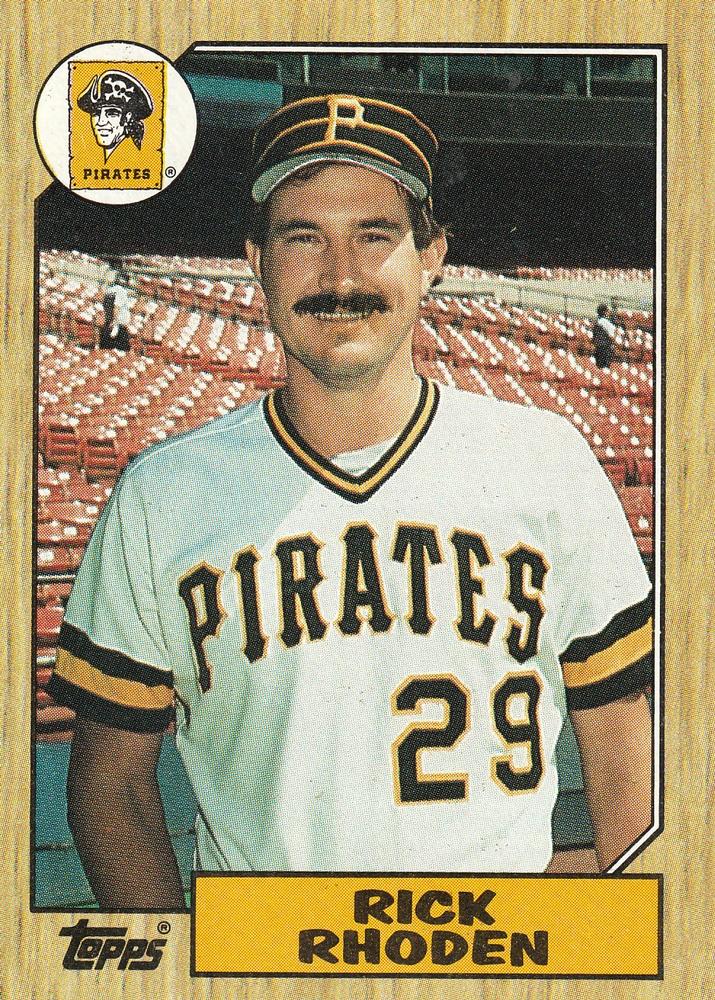
For many years, the debate over the best hitting pitcher remained alive and well. Historically, there’s Bob Lemon and Don Newcombe, and, of course, Babe Ruth. In the modern game, you have Madison Bumgarner, Mike Hampton, Dontrelle Willis, and Carlos Zambrano. Nowadays, it’s hard to argue against Japanese phenom Shohei Ohtani being the answer, not just of this question, but also that of the greatest player of all time. When looking back through the rich history of the Pittsburgh Pirates, one pitcher stands out among those associated with the franchise’s past as the best to ever do it out of the box and off the mound: Rick Rhoden.
Rhoden, born and raised in Palm Beach County, Florida, overcame osteomyelitis as an adolescent. Selected out of high school by the Dodgers in the first round in the 1971 draft, he quickly rose the ranks in the minors and debuted with the big club at the age of 21 in 1974. With Los Angeles, he was an All-Star in 1976, posting a superb 12-3 record along with a 2.98 ERA, and a member of two pennant-clinching teams.
The Dodgers did, however, lose both the 1977 and 1978 World Series to the New York Yankees. After the emergence of another promising rookie in Bob Welch, Rhoden was moved to the bullpen late in the 1978 season. Soon after the 1979 campaign began, he was traded to the Pirates, in exchange for former All-Star Jerry Reuss. This deal worked out well for both sides, as each player’s best years came with their respective new team.
Rhoden made only one start for the Bucs in 1979, against the Braves on May 8, giving up four runs over five innings with just two strikeouts, taking the loss in the Braves’ 4-1 victory. Pittsburgh was aware that Rhoden had been dealing with some arm trouble at the time of the trade, but it ended up being more serious than originally thought. The following month, he underwent shoulder surgery, ending his first season with the Pirates prematurely. As a result, Rhoden was not a “member” of the Bucs’ ‘79 championship team, an accolade that evaded him over the course of his 16-year major league career.
It took Rhoden a few years to establish himself as a starter in the Pirates’ rotation, but when he did, the finesse pitcher with strong control was one of its best for the decade of the 1980s. Rhoden broke out in 1983, greatly improving his ERA from 4.14 the previous year to a stellar 3.09. The Bucs had a strong staff that year, on a team that finished second in the NL East, after starting off the ‘80s to mediocre results.
In the shadow of the Pittsburgh Drug Trials, the Pirates were a disappointment to fans on and off the field. These years, specifically the early to mid ‘80s, are easily the darkest in franchise history, with not much to show for them besides a few standout performers, such as Rhoden. Rhoden wasn’t just a great pitcher; he could swing it, too. Some batting highlights of Rhoden’s tenure with Pittsburgh include a .375 average in 1980, tying a career high three home runs in 1982, and hitting safely in eleven straight games in 1984.
You could argue Don Robinson was the better hitter, but Rhoden did more in fewer plate appearances. He won the Silver Slugger three times, in 1984, 1985, and 1986. Rhoden was also an All-Star in ‘86, and contributed a career-best 6.6 bWAR, placing fifth in the NL Cy Young voting. For five seasons with the Pirates, he had a perfect fielding percentage, making him worthy of a Gold Glove. On all fronts, Rhoden was a professional, plain and simple.
Eventually, Rhoden was traded, per his request, to the Yankees in a deal that saw future Cy Young Doug Drabek included in the return. This trade was a clear win for Pittsburgh, as Drabek became the ace the Bucs needed in their young core to lead them to three consecutive NL East titles. Rhoden, to his credit, had a decent year with the Yanks in ‘87, winning 16 games, but was clearly on the back nine of his career. In 1988, he made history on June 11 as the first pitcher to start a game as a designated hitter.
In two plate appearances, he grounded out and hit a sac fly in New York’s win over Baltimore. Not long after the calendar year turned, Rhoden was traded that offseason to the Astros, as Houston had a clear need in their rotation after the departure of the legendary Nolan Ryan. 1989 would be Rhoden’s last as a big leaguer. For the ‘Stros, he started 17 games, going 2-6 with a 4.28 ERA and just 41 strikeouts.
After his baseball career, Rhoden began a unique journey in the world of professional golf, becoming one of the most accomplished multi-sport athletes of his era. He has several top finishes in PGA Champions Tour events, has won the American Century Championship numerous times, and is a regular competitor in celebrity golf tournaments. This remarkable transition from baseball to golf has no comparison.
A similar case with another sport is Beaver’s John Burkett, an All-Star pitcher and veteran of 15 seasons, who went on to become a professional bowler. Rhoden was an avid golfer when he was with the Pirates and took the game more seriously after retirement. This hard work certainly paid off for him, in more ways than one. Rhoden’s greatness as a pitcher, hitter, and golfer makes him a one-of-a-kind athlete and Pittsburgh Pirate, a special type of player we may never see again. Let’s see Ohtani’s short game.
The Chicago Cubs of the 1960s and 1970s featured a number of all-time greats, such as Ernie Banks, Billy Williams, Ron Santo, and Bruce Sutter. Despite this abundance of talent, the North Siders failed to claim a pennant in this time and well into the 21st century, before the 2016 squad broke the franchise’s 108 year championship drought. The closest these teams came to an NL crown was in 1969, when the Cubs finished second in the East Division, eight games behind the Amazin’ Mets, with a record of 92-70.
This close but no cigar trend continued, with more second and third place finishes for Chicago in the new decade. Banks retired in 1971 but remained with the team for a few years as a coach. Santo and Williams were dealt following the disappointing ‘73 and ‘74 seasons, with Santo heading crosstown to the White Sox first and Williams off to Oakland less than a year later. In the time since, the Cubs lacked true successors at each legendary players’ respective position. To be fair, these would be mighty tough shoes to fill. At third base, plenty of notables occupied the hot corner since Santo’s departure. These include Bill Madlock, Ron Cey, Ryne Sandberg for a season, and Steve Buechele.
When the Cubs drafted Pittsburgh native Kevin Orie, one of nine siblings, in the first round of the 1993 MLB Draft, they felt they’d found their third baseman of the future. Orie, a product of Upper St. Clair, took his talents to Indiana following high school, where he shined on the diamond for the Hoosiers baseball team. His 1994 Topps rookie card makes a bold comparison, to none other than Cal Ripken Jr. It reads “One look at Orie and the words “Cal Ripken Jr.” come to mind.
Like Rip, Kevin is a jumbo-sized shortstop (he wears a size 15 shoe!) yet has such infallible skills and instincts that he can handle the position with ease.” In three seasons at Indiana, from ‘91 to ’93, Orie hit .358 for his collegiate career with 34 home runs. He was an All-Big Ten selection in 1992. That year, Álex Rodríguez was selected first overall by the Seattle Mariners. Another noteworthy third baseman was taken soon after Orie’s name was called, Jasper, Indiana’s Scott Rolen, whom the Philadelphia Phillies took in the 2nd round, 46th overall.
While Rolen would eventually make it to Cooperstown after an outstanding career, Orie’s diverged after a strong rookie campaign in 1997. Orie always hit well in the minors but missed most of 1994 with a wrist injury. Heading into the ‘97 season, he was ranked the #42 prospect in Baseball America’s Top 100. Before his major league debut, he was hitting a blistering .378 between Double-A Orlando and Triple-A Iowa, albeit in a small 12 game sample size. With the big club, Orie got into 114 games primarily at third, with a few games spent at short.
The Cubs’ decline in the ‘90s was no exception that year, Sandberg’s swan song, though Orie ranked third on the team in WAR by both Baseball-Reference (2.4) and FanGraphs (2.3) metrics. He was just behind Sammy Sosa, a year before Sosa’s historic home run chase with Mark McGwire. For the year, Orie hit .275 in 418 plate appearances, with 8 homers and 44 runs batted in. For his efforts, he received down ballot NL Rookie of the Year votes, finishing 11th.
Rolen ran away with the award after a strong full season showing, after appearing in just 37 games for the Phils in ‘96. Boston’s Nomar Garciaparra claimed the honor for the American League. A lot would change in 1998 for the Chicago Cubs. It was a major turnaround for a franchise on hard times. 22 more wins than the previous season, Sosa’s power surge. The emergence of a rookie phenom in Kerry Wood, who struck out a record 20 batters on May 6 versus the Astros at Wrigley Field.
Unfortunately for Kevin Orie, he was involved in the play that resulted in the only hit the Astros notched that game. Houston shortstop Ricky Gutiérrez hit a grounder to Orie’s left, deflecting off his glove, and rolled into left field. Wood had no walks, so if not for this play that was ruled a hit, he would have had a perfect game with his 20 strikeouts.
Orie’s 1998 with the Cubs didn’t go as well. His hitting suffered, batting just .181 in 64 games, and he was dealt to the Florida Marlins at the deadline. A change of scenery seemed to have helped, as he improved on all fronts, hitting .263 in 48 games for the Fish, a year removed from their World Series title run in which they finished an abysmal 54-108 in ‘98. Orie continued to play well in 1999, though he only got into 77 games for the Marlins that year, good for 1.4 bWAR.
At Triple-A Calgary, he hit .319 in 23 games. Manager Jim Leyland resigned after another bad year, and Orie’s fortunes turned in the new millennium. Over the next few years, he bounced around the league via the minors, first being traded to the Dodgers, released, signed by the Royals, then the Yankees, and finally the Phillies before he made his way back to Chicago.
In those years spent in Triple-A, Orie never gave up hope of returning to the big leagues someday. His play reflected this mindset. For the 2001 season with Philadelphia’s top farm club, the Scranton/Wilkes-Barre Red Barons, Orie hit .293 with 13 home runs and 45 RBIs. He signed with the team that first took a chance on him, the Cubs, in November. Orie appeared in 13 games for the North Siders in 2002, as a backup to third baseman Bill Mueller, where he hit .283 in 36 at-bats.
He saw more action with the Iowa Cubs that year, hitting a career high of 20 long balls in 86 games. After the Cubs released him the next spring, he moved around the minors again in the same way between several franchises that included the Indians, the Astros, the Brewers, and the newly founded Washington Nationals. He retired after one game with the Round Rock Express (Houston) in 2006.
While Orie never lived up to the high billing in Chicago, that’s not to take away from what he accomplished in the game. Even after he was released by the Cubs, he was still a great hitter at Triple-A, which most rank above Japan’s NPB for its level of competition. He was also a standout in Division I college baseball on winning teams. Not bad for a kid from the South Hills. In the years since Orie’s playing days, he’s still been involved in the game he loves, as a radio commentator for Pittsburgh’s 93.7 The Fan and color analyst for the West Virginia Mountaineers. Orie currently serves as the COO of MSW Supply based in Oakmont.
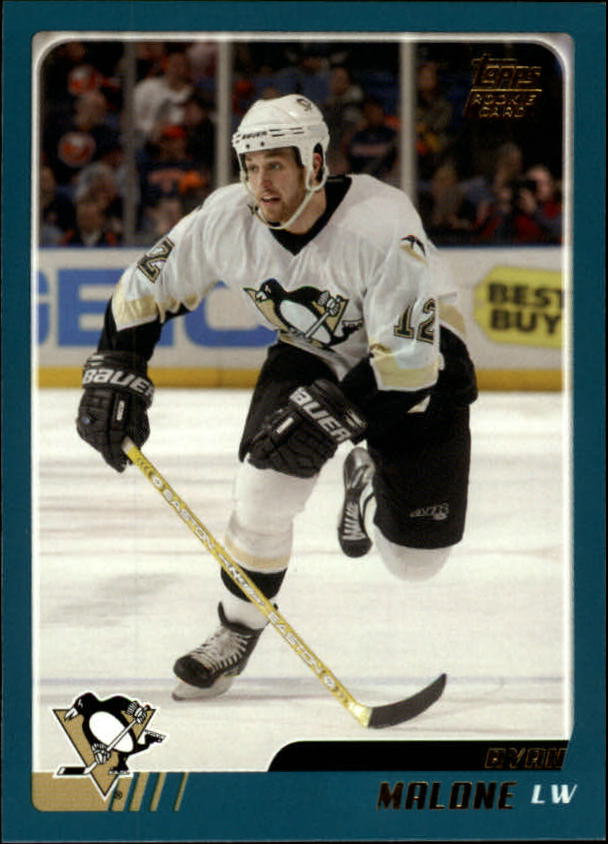
Pro hockey has been a part of Pittsburgh’s sports legacy since the 1920s. For nearly forty years, the Pittsburgh Penguins, founded in 1967, skated in black and gold (and once, powder blue) without ever dressing a player born in the city. That all changed at the start of the 2003-04 season as Ryan Malone, a 23-year-old forward from the South Hills, made his NHL debut against the Los Angeles Kings at Mellon Arena. At long last, the Penguins had a hometown kid in the lineup.
While the Pens lost their season opener, it was just the beginning of a promising career for the young left winger Malone. The son of a Penguin, Ryan was born in 1979, during a rough stretch in franchise history before Mario Lemieux came into the picture. His father, Greg, a gritty center from New Brunswick, Canada, spent seven seasons in Pittsburgh, scoring a career high 35 goals in ‘78-’79, and later went on to become a respected scout. Ryan grew up in the shadow of Civic Arena, watching his dad on the ice, and dreamed of doing the same.
His path to the league wasn’t a straight one. After two years at Upper St. Clair, Malone transferred to Shattuck-St. Mary’s in Minnesota for his junior year, the same prep powerhouse that Sidney Crosby would later star for. Malone finished high school in Omaha while tearing up the USHL with the Lancers, a junior hockey team that would soon produce future Penguins defenseman Alex Goligoski. Pittsburgh liked what they saw in Malone took a chance on the hometown kid, drafting him in the 4th round of the 1999 NHL Draft. Four solid years at St. Cloud State followed, then a brief stint with the Wilkes-Barre/Scranton Penguins.
When Malone finally cracked the big club in ‘03-’04, he wasted no time. 22 goals, the most on the team. 43 points, good for third. An All-Rookie Team nod, and votes for the Calder Memorial Trophy. For a season in which Mario Lemieux managed only ten games, the kid from Pittsburgh helped carry the offense, alongside other notable rookies Marc-André Fleury and Brooks Orpik. The lockout wiped out 2004-05, but when play resumed, Malone continued to produce and eventually found himself on Sidney Crosby’s wing with veteran Marc Recchi. The chemistry was there. On December 15, 2006, at the Igloo, he recorded his first career hat trick against the New York Islanders, joining an exclusive club of father-son duos to accomplish the feat that includes the legendary pair of Bobby and Brett Hull.
2007-08 was arguably Malone’s finest year on the ice, with 27 goals and 51 points in the regular season, and a standout performance in the playoffs, 6 goals and 16 points in twenty games. That year, the Pens went on a run that ended in the Stanley Cup Finals, falling to the Detroit Red Wings in six games. Pittsburgh would have to wait a bit longer to hoist Lord Stanley’s cup once again. Unfortunately for Malone, this would come without him. He would be traded to the Tampa Bay Lightning not long after the Penguins lost to the Red Wings, on June 28, in a package with Gary Roberts in exchange for a 3rd round pick in the 2009 draft. Ben Hanowski, who the Penguins would later select with this pick, never played a game for Pittsburgh. He himself was a part of another big trade that saw the Pens acquire Jarome Iginla in 2013.
Malone would sign a seven year, $31.5 million deal with Tampa Bay, leaving home after four memorable seasons. This move didn’t slow him down, not in the slightest. Malone posted back-to-back 20 goal seasons, helping lead the Lightning to the Eastern Conference finals in 2011. The Boston Bruins won the series in seven games, and later the Stanley Cup in the same fashion over the Vancouver Canucks. Malone also earned a silver medal with Team USA in the 2010 Winter Olympics held in Vancouver that year, watching his old lineman Crosby score the winning goal in overtime to claim gold for Canada.
The later years were quieter. A 2014 arrest for a DUI and cocaine possession led to his release by Tampa in August. Malone then signed with the New York Rangers in September, appearing in just six games for them that season. After a year off from hockey came a failed comeback attempt with the Minnesota Wild, and a final twelve game cameo in the AHL with the Iowa Wild, before Malone hung up his skates for good.
Ryan “Bugsy” Malone never lifted a cup in Pittsburgh, yet no one can take away what he gave the team and the city in those early Crosby years. His career stands as proof that you don’t have to come from a hotbed of talent to make it in the game. Malone served as a bridge between the Lemieux and Crosby eras as the local heartbeat on rosters filled with imports.
More than twenty years after his debut, the city of Pittsburgh has produced plenty of NHL talent, such as J.T. Miller and Brandon Saad, but Ryan Malone will always be the first to wear the Penguins black and gold. He is the first “Pittsburgh” Penguin.
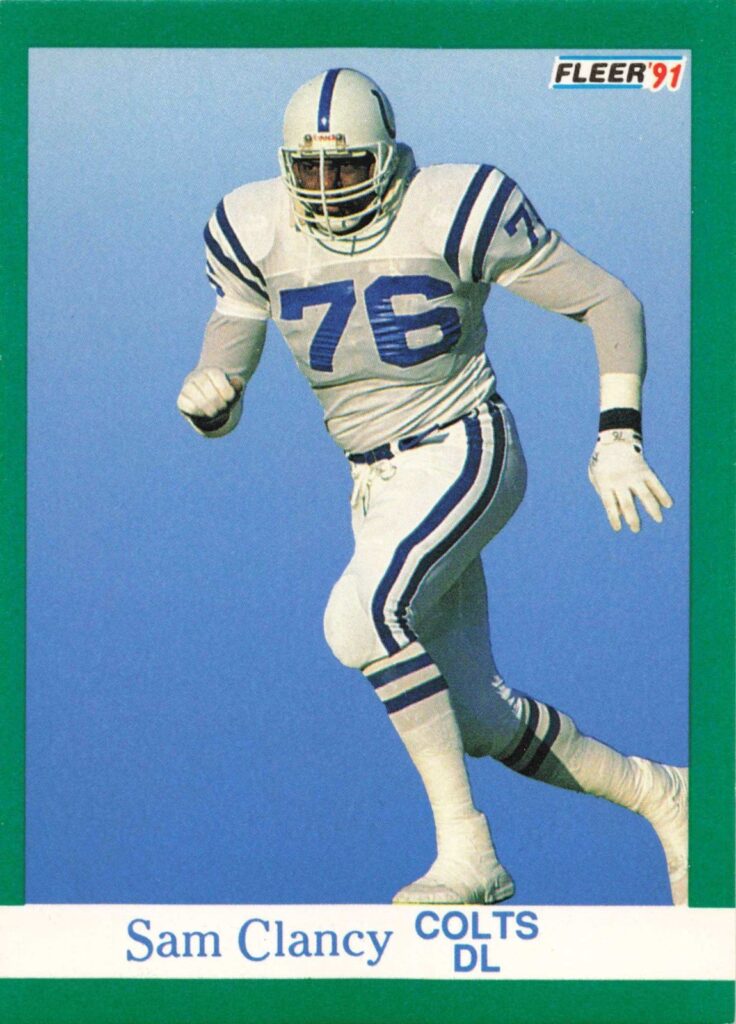
From Tony Dorsett and Dan Marino, to Roger Kingdom and Billy Knight, the University of Pittsburgh has produced a number of elite athletes. One that’s been overshadowed among these greats is Sam Clancy, a rare example of a college basketball star turned NFL regular. Clancy, born in Pittsburgh, grew up in the Hill District and attended Fifth Avenue High. His remarkable career in professional sports deserves to be talked about in the same light as those mentioned previously, as one of the greatest Pitt Panthers of all time.
A product of Pittsburgh’s City League, Clancy won the 1976 Class AAA state championship, scoring 22 points in Fifth Avenue’s 53-42 victory over Norristown, finishing the season undefeated. Clancy also played tight end on his high school’s football team. After Fifth Avenue closed, Clancy was a member of Brashear High’s first graduating class in 1977.
Recruited by notable programs such as NC State and Ohio State, it was another Pitt legend, Tony Dorsett, a Western Pennsylvania native himself, that convinced Clancy to stay home for college. Coming to Pitt, he was an undersized center joining a team that had slipped since Billy Knight’s 1973-74 team finished No. 16 in the AP poll. Back then, the Panthers played in the Eastern 8, now the Atlantic 10 Conference.
Over the next four years, Clancy would bring the Panthers to relevance once again, culminating in an Eastern 8 tournament championship in 1981, defeating rival Duquesne, and subsequent NCAA Tournament appearance, where Pitt fell in the quarter-final round to the North Carolina Tar Heels. One of the highlights of Clancy’s Pitt career was beating No. 3 ranked Duke at Cameron Indoor Stadium his sophomore year, where in the final seconds he recorded a steal, ran down the court, missed a jump shot, but got the rebound and scored the winning bucket.
Clancy also represented his country in the 1979 Pan American Games, under legendary Indiana coach Bobby Knight, on a squad that featured Isiah Thomas, Kevin McHale and Ralph Sampson. Team USA went undefeated to win gold at Roberto Clemente Coliseum in San Juan, Puerto Rico. Clancy is the only player in Pitt history to record over 1,000 points (1,671) and 1,000 rebounds (1,362). He also leads the program in career double-doubles and rebounds.
After a stellar collegiate career at Pitt, including four winning seasons, Clancy averaged a double-double (14.4 points, 11.6 rebounds) and never missed a game. He was drafted by the Phoenix Suns in the 1981 NBA Draft in the 3rd round, 62nd overall. Clancy was one of the last players cut by the team, blocked by veteran power forward Truck Robinson, a two-time NBA All-Star. Clancy continued his basketball career with the Billings (Montana) Volcanos of the Continental Basketball Association, averaging 11.5 points and 8.3 rebounds before the franchise folded that summer.
His unique journey to the NFL began soon after. Clancy had worked out with the Pitt football team for a few weeks one spring, having caught the attention of head coach Jackie Sherrill. He lined up at end with the second-string defense, and faced off against Russ Grimm and Mark May, two future Super Bowl champions, one (Grimm) a Hall of Famer. While in Billings, Clancy was contacted by Chuck Allen of the Seattle Seahawks. He was drafted as a tight end in the 11th round, 284th overall in the 1982 NFL Draft, despite not having played a snap of college football.
After his rookie year with the Seahawks, Clancy switched to the defensive line, with former first-round pick Jacob Green taking him under his wing. Clancy’s first sack came in the postseason, a knockdown of Broncos QB Steve DeBerg in the Seahawks dominant victory in the Wild Card game. Seattle would go on to defeat Miami the following week before falling to the Los Angeles Raiders in the AFC Conference Championship. In 1984, Clancy joined the USFL’s Pittsburgh Maulers, returning home to a better salary.
In their only year of existence, save for the 2022 USFL revival, the original Maulers were one of the worst teams in the league, finishing a dismal 3-15. To his credit, Clancy was one of the best pass rushers in the league, tied for the second most sacks that season with 16. Led by Penn State’s Chuck Fusina, the Philadelphia Stars were champions over the Arizona Wranglers. Clancy played for the Memphis Showboats in 1985, teaming up with the “Minister of Defense”, Reggie White.
After the conclusion of the USFL season, the Seahawks, who still retained Clancy’s rights, traded him to the Cleveland Browns for their 1986 7th round pick. Seattle eventually selected Nebraska running back Paul Miles that year, who would never play a down in the NFL. For the Browns, this seemingly insignificant trade ended up being a smashing success. Clancy’s best years came in Cleveland, under head coach and Pitt alum Marty Schottenheimer, that saw the Browns reach two AFC Championship games, both coming against the Denver Broncos. Clancy recorded 6.5 sacks in his second season with the Browns. He took down John Elway in the conference championship, an iconic game best known for “The Drive”, that saw Elway lead his team 98 yards down the field in the final minutes to send it to overtime, resulting in a Denver victory.
The same outcome would be the eventual result of the 1987 season for the Browns, another heartbreaking defeat to Elway and the Broncos. Clancy remained in Cleveland for another year, then signed with the Indianapolis Colts, a team loaded with talent that looked to be on the rise. For Clancy, these years were the hardest, as the Eric Dickerson and Jeff George led Colts failed to live up to the billing as a contender in the AFC, finishing an abysmal 1-15 for the 1991 season. Despite this, Clancy remained a productive player, achieving a career high of 7.5 sacks for the 1990 campaign. One of Clancy’s teammates on the defensive line in Indianapolis was another Pitt legend, Tony Siragusa.
At Pitt, Clancy was three times an AP All-American Honorable Mention. A college basketball star who hadn’t touched the gridiron since high school, he played twelve seasons of professional football, recording 30 sacks in the NFL. Clancy came close to appearing in the Super Bowl twice with the Cleveland Browns. For his two seasons in the USFL, he was one of its top defensive players.
The only other direct comparisons to Clancy are Kent State’s Antonio Gates, a Pro Football Hall of Famer, and Mo Alie-Cox out of VCU, who’s been with the Indianapolis Colts for nine seasons now. There’s also Dave Winfield, who played baseball and basketball in college at Minnesota, who was drafted by the Minnesota Vikings in 1973. Brian Jordan, who also never played college football, similarly had a long career in major league baseball, as well as a brief stint with the Atlanta Falcons.
Clancy went on to become a defensive lines coach after his playing days were done. In 1997, he won NFL Europe’s World Bowl with the Barcelona Dragons. He has also served on the coaching staffs of the New Orleans Saints and the Oakland Raiders. Clancy completed his bachelor’s degree in social sciences at Pitt in 2005. He is in his 14th year as director of the Varsity Letter Club. Earlier this year, the Pitt Panthers basketball team retired Clancy’s jersey #15. He and his wife Terri live in Oakdale, have five children and ten grandchildren. His son Sam Jr., a standout at USC, enjoyed a long career in professional basketball overseas and has since transitioned to coaching.
What Sam Clancy did between college and the pros is simply incredible. He is without a doubt one of the finest to ever wear the blue and gold.
The NFL Draft cycles of the 2010s were marked by a number of high profile busts on the offensive side of the ball. The most notorious of these include Justin Blackmon, Johnny Manziel and Trent Richardson. Another name fans of the Madden series will remember fondly is Dri Archer, a blazing fast triple threat prospect that flamed out in two calendar years. Archer, a consensus All-American at Kent State University, was a dynamic runner, pass catcher and return man for the Golden Flashes. The Pittsburgh Steelers, coming off a disappointing 8-8 season in 2013, selected Archer in the 3rd round, 97th overall, in the 2014 draft. What looked to be a promising NFL career ended rather abruptly soon after it got started.
Adrion “Dri” Archer was born in Tampa and grew up in Venice, Florida, just south of Sarasota. At Venice High, he starred as a three-sport athlete in football, basketball and track and field. His legendary speed gained attention his senior year in 2009 at the Florida state track meet, where he finished second in the 100-meter dash behind Dentarius Locke, later an elite collegiate sprinter at Florida State. Archer beat out future Michigan QB Denard Robinson by a hundredth of a second in the finals for silver. With offers from elite track programs that included Arkansas and Clemson, Archer ultimately chose Kent State, the only school to extend him a football scholarship.
While Kent State is one of the least successful teams in FBS history, it is notable for producing several exceptional talents, such as Jack Lambert, Antonio Gates, James Harrison and Julian Edelman. Archer is up there among the Golden Flashes greats. After two unremarkable seasons marred by injuries, Archer was deemed academically ineligible for the 2011 campaign. Not much is known about this case, and questions remain over the truth of the matter. 2012 would be a year to remember, for both Archer and Kent State.
The year off lit a fire under Archer, who rushed for 1,429 yards with 16 scores, and hauled in 39 passes for 561 yards with 4 receiving TDs. As the Flashes standout returner, he posted a 36.9 average, totaling 591 yards on just 16 returns, and led the MAC with 3 kickoffs returned for a touchdown. Future Steelers fullback Roosevelt Nix was one of his teammates, who then was a defensive lineman. The Golden Flashes went 11-3 on the year, including an 8-0 record in conference play, though they fell to Jordan Lynch and the Northern Illinois Huskies 37-44 in double overtime in the MAC Championship. In their first bowl game in forty years, Kent State faced Arkansas State in the GoDaddy.com Bowl, losing 13-17.
The highlight of their season came in Week 8 when they defeated #18 Rutgers. For Archer, he achieved a career high of 350 all-purpose yards versus Ball State, which included a 99-yard kickoff return for six. He would also throw a touchdown pass to quarterback Spencer Keith in the second quarter of their 31-17 win over Army. It wouldn’t be until the end of the decade that the Flashes found similar success. The 2019 Flashes, driven by head coach Sean Lewis and quarterback Dustin Crum, defeated a Utah State team with Jordan Love under center in the Tropical Smoothie Cafe Frisco Bowl.
Losses in both the conference championship and bowl game likely led Archer to think that he still had unfinished business at Kent State. Looking back, this might not have been the best decision for his career. After such a remarkable season, being named the MAC Special Teams Player of the Year, an All-American as mentioned previously, and finalist for the Paul Hornung Award, he really had nothing left to prove. His breakout year compared favorably to Eugene Jarvis’ 2007 season at Kent, in which he rushed for over 1,600 yards. In the 2013 season opener versus Liberty University, Archer left the game with an ankle injury after the first offensive possession.
This thankfully wouldn’t prove to be a season-ending injury, but it certainly hampered Archer throughout the remainder of his senior year. For the 2013 season, Kent State finished near the bottom of the MAC East at 4-8. Archer put up 854 total yards from scrimmage with ten touchdowns, which wasn’t bad, but not nearly as good as his last year. His usage in the return game suffered as well, though he did return a kickoff for 100 yards to tie a school record. This came in the first quarter of Kent State’s homecoming game at Dix Stadium against NIU, which ended in another loss to the Huskies, this time 38-24.
It’s worth mentioning that Archer returned just six punts for his collegiate career. Had he developed this aspect of his game further, his odds of sticking in the NFL might have improved. Archer soon made a name for himself after a bittersweet end to his tenure at Kent State. At the NFL Scouting Combine in February, he ran a 4.26 second 40-yard dash, which currently ties him with three others for the fifth fastest time ever recorded. Back then, Archer would have been tied for second place with Jerome Mathis, behind Chris Johnson and Rondel Menendez at 4.24 seconds. As a result, Archer’s draft stock soared. John Ross, another all-time bust of the 2010s, bested them all with a time of 4.22 in 2017, that the Chiefs’ Xavier Worthy later beat by a hundredth of a second in 2024. The promise of a player with that much speed was tempting to many scouts and GMs, and Pittsburgh took a chance on Archer, an undersized gadget player, listed at just 5’8” tall, weighing 175 pounds.
Archer’s size was no doubt his greatest concern, whether he could handle the punishment the NFL had to offer. His scouting report reflected this, one that accurately predicted how his career ended up. Drafted as a running back, the Steelers already had their answer at the position, following the emergence of Le’Veon Bell. Pittsburgh had also signed LeGarrette Blount, who was coming off a fine year with the New England Patriots. Special teams wasn’t exactly lacking, either, with Felix Jones and Emmanuel Sanders handling kickoff return duties, though not to an elite level like Devin Hester, or another Kent State alum in Joshua Cribbs. Perhaps this connection that Pittsburgh witnessed often against their division rival swayed them with Archer.
Needless to say, things didn’t work out for Archer and the Steelers. For his rookie year, he had a minimal impact, with just ten rushes for 40 yards, and seven catches for 23. On special teams, he returned nine kickoffs for a total of 161 yards. Markus Wheaton, who some saw as Mike Wallace’s replacement, led the team with 494. Antonio Brown remained the team’s primary punt returner in 2014, good for 319 yards and a touchdown. Archer had just one for a gain of 2 yards. The team improved in their eighth year under head coach Mike Tomlin, claiming the AFC North crown at 11-5, headlined by the Killer B’s of Bell, Brown, and Ben Roethlisberger. Their return to the postseason wouldn’t last, as they lost handily to the Baltimore Ravens 17-30 in the Wild Card game.
Archer’s career came to an end in 2015. While he became more involved on special teams, returning 14 kicks for a total of 354 yards, he didn’t get a single touch on offense in eight games. The Steelers were unimpressed by his performance and cut him in November. Soon after, they claimed former All-Pro return man Jacoby Jones off waivers from the San Diego Chargers. Now in his age-31 season, Jones’ best years were obviously behind him. It’s a bit head-scratching that the Steelers would be so quick to give up on a former third-round pick, when adding a player like Jacoby Jones, past his prime, was the solution. While Jones was coming off a good year with Baltimore, he had clearly lost a step in the time since. You could see the Steelers’ decision as a “win-now” move, with the hope that Jones would return to his former glory. As we all know now, this didn’t work out, either, and the Steelers went on to lose in the playoffs once again, this time to the Denver Broncos in the Divisional Round.
For Archer, that would be the last action he’d see in the NFL. In February 2016, he signed a reserve/future contract with the New York Jets, who then cut him in May. After the Buffalo Bills claimed Archer, he failed to report, and that was that. For a player that was known to get homesick, especially in college, it’s likely the prospect of constantly moving through the waiver wire did not appeal to him. While Dri Archer never lived up to the unrealistic hype bestowed upon him, a contemporary of his did find some success in the pros. De’Anthony Thomas, a star at Oregon, carved out a respectable career over six seasons as a fourth-round draft pick of Kansas City in 2014. Thomas contributed as a receiver, as well as a punt returner, unlike Archer. The two were quite alike in many ways.
It’s unlikely Archer could have reached the highs Darren Sproles or Cordarrelle Patterson achieved in the league. A realistic ceiling for him as a kick returner could have been a player like Dexter McCluster. Archer wasn’t the first player of his type to fail and certainly won’t be the last. Others like him that come to mind are Tavon Austin, and yes, even John Ross. Had Chris Rainey, who racked up over 1,000 return yards in 2012, not done what he did that led to his release, and maintained that level of production in ‘13, it’s possible the Steelers would have simply passed on Archer, figuring they already their kickoff return specialist of the future.
Since his playing days, Archer has remained relatively quiet, and there isn’t much information out there about his life after football. Some will remember him for his standout performance at the combine, others for his Bo Jackson Tecmo Bowl speed in Madden. Archer never made it in the NFL, but that shouldn’t take away from his fantastic collegiate accolades and career. He has much to be proud of. In 2021, Archer was inducted into Kent State’s Athletics Hall of Fame, along with his former teammates Rosie Nix and Brian Winters. Winters, an All-MAC First Team offensive lineman in 2012, was a third-round pick of the Jets in ‘13 and enjoyed nine years in the league with three teams. That Flashes team in 2012, led by Dri Archer, was one of the greatest in program history, bringing joy to a fanbase that so desperately needed it. His legacy at Kent is truly something special.
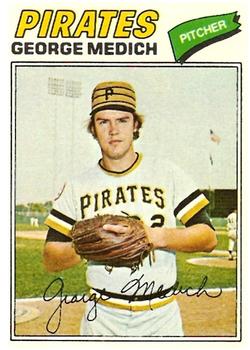
In recent years, the Pittsburgh Pirates have been involved in some historically bad trades, from Jason Schmidt and Aramis Ramírez to Chris Archer and Gerrit Cole. One that stands out among the worst in the franchise’s storied history is the deal, completed on December 11, 1975, that sent second baseman Willie Randolph to the New York Yankees in a package that included Ken Brett and Dock Ellis for starter George “Doc” Medich, a Pittsburgh native. On its own, this trade was undeniably bad, but with greater context it wasn’t as horrible as it seems.
Dave Cash, the Pirates’ primary second baseman on the 1971 World Series team, was traded to the Philadelphia Phillies in October 1973 for Ken Brett, George Brett’s older brother. Cash had shown great promise at the keystone in the years following Bill Mazeroski’s retirement. Rennie Stennett then took over second after Cash’s departure, becoming a reliable presence in the Bucs’ lineup. Still, it’s fair to say that Pittsburgh hadn’t found a true successor to Maz. Randolph, a highly touted prospect, certainly would have been worthy of this mantle had he remained a Pirate.
Brett was coming off the best season of his career to that point with the Phillies in ‘73, posting a 13-9 record in 25 starts and 31 appearances, with 111 strikeouts and an ERA of 3.44. As an 18-year-old rookie, he made history with the Boston Red Sox in 1967 as the youngest to ever pitch in a World Series. With Pittsburgh in 1974, Brett was an All-Star, earning the win in the Midsummer Classic hosted at Three Rivers Stadium, yet the swingman with a good bat was viewed as expendable. Ellis, best known for his no-no while allegedly under the influence of LSD, had worn out his welcome. On its face, the trade made sense for both sides.
The Pirates, aiming to repeat as NL East champs, hoped to bolster their young rotation, which featured John Candelaria, Bruce Kison, and Jerry Reuss, with the addition of Medich as a potential staff ace. The tall, hard throwing righty was a solid starter that showed great potential in his three full seasons with the Yankees, on otherwise mediocre teams. In 1973, Medich finished third in AL Rookie of the Year voting that Baseball-Reference values at 4.8 WAR. In 32 starts, Medich went 14-9 in 235 innings, striking out 145 to an ERA of 2.95. His innings total would increase the following campaigns, highlighting his durability.
Medich was a standout athlete at Hopewell High School in Aliquippa, Beaver County, excelling in basketball and football in addition to baseball. He attended the University of Pittsburgh, where he joined the Panthers’ baseball and football teams, as a tight end and punter on the gridiron. A 30th round selection of the Yankees in the 1970 June Amateur Draft, the pre-med student was committed to continuing his studies. In the minors, Medich would sometimes end his seasons early to return to medical school at Pitt, and miss spring training, often reporting late.
For the Yankees, following the malaise of the Horace Clark Era, it was now or never after the blockbuster signing of Jim “Catfish” Hunter on New Years Eve, 1974. Sandy Alomar Sr. had manned second for the Bronx Bombers the past few seasons to uninspired results. Outside of Hunter, the Yankees had seen decent if not inconsistent performance from the back end of their starting rotation, from the likes of Pat Dobson, Larry Gura and Rudy May. The possibility and experience Brett and Ellis presented appealed to New York. Randolph was widely seen as the prize of all prospects that winter. Before his major league debut on July 29, he was hitting .339 for the Triple-A Charleston (West Virginia) Charlies. At the time, writers generally saw the trade as an even deal, with some even giving the edge to Pittsburgh.
The Yankees made another big move that day, shipping the slugging Bobby Bonds to the California Angels for pitcher Ed Figueroa and outfielder Mickey Rivers, who became key pieces, not to mention Randolph, to the championship puzzles in ‘77 and ‘78. Ellis returned to form in 1976, winning 17 games for the pennant clinching Yanks. Brett was dealt to the Chicago White Sox in May, where he posted one of the best seasons of his career. Following their breakout campaigns, both Brett and Ellis bounced around the league for the remainder of their careers, with varying levels of success. Randolph, however, emerged as one of the finest second basemen of his era, and today has a place in Monument Park. For Pittsburgh, he only got into 30 games in 1975, hitting just .164 in 61 at-bats. Randolph also went hitless in his two plate appearances in the NLCS, as the Pirates were swept in three games by the eventual World Series champion Cincinnati Reds.
Unfortunately for the Pirates, Medich never lived up to the billing with his hometown team. In just one season with the Bucs, he went 8-11 with a 3.51 ERA in 26 starts, striking out just 86 batters. That year, the team finished second in the NL East nine games behind the Phillies, with a record of 92-70 under longtime manager Danny Murtaugh. It wouldn’t be long before Medich found his way on a new ball club. Before the 1977 season began, he was traded in a nine-player deal to the Oakland Athletics. Frustrated by the move, Medich seriously considered quitting the game.
The remainder of his career would have its ups and downs. He found a home with the Texas Rangers for four and a half seasons, where he showed flashes of greatness. As a member of the ‘82 Brewers, he pitched in Game 6 of the World Series, where he gave up six runs, four earned, in two innings. After leaving baseball, Medich was arrested in 1983 for writing illegal prescriptions. He has since admitted to being addicted to painkillers and muscle relaxers, as a way to cope with stress and injury during the last season of his playing career. Medich, an orthopedic surgeon, was charged and convicted on a similar offense in 2001.
With Medich, the A’s received longtime fireman Dave Giusti and prospects Tony Armas, Doug Bair, Rick Langford, and Mitchell Page. In return, the Pirates acquired All-Star Phil Garner, a veteran in Tommy Helms and a rookie in Chris Batton. A few months prior, Manny Sanguillén had been dealt in a rare player for manager trade, for New Castle’s own Chuck Tanner.
Years removed from tearing down his dynasty, A’s owner Charlie Finley wasn’t done just yet. Garner, who wanted more money, was a perfect fit for Pittsburgh at third, after Richie Hebner signed with the Phillies. Garner came up through the minors at the hot corner but was blocked at the position by Sal Bando. There was an opening at second after Oakland released Dick Green to begin 1975. Armas and Page faced stiff competition in Pittsburgh’s outfield, consisting of Al Oliver, Omar Moreno and the late Hall of Famer Dave Parker. If not for a change of scenery, it’s possible their careers could have gone in completely different directions.
Armas, a feared power hitter in the American League for Oakland and Boston, slugged 251 long balls for his career. He led all the major leagues with 43 homers for the Red Sox in 1984, the first Venezuelan player to ever do so. Page, who had a respectable career himself, finished second in AL Rookie of the Year voting in 1977 with a .307 batting average, 21 home runs and a .926 OPS. The award went to future Hall of Famer “Steady” Eddie Murray, who by all accounts had a great season, though it’s debatable whether he should have won it or not, with Page’s 6.1 bWAR to Murray’s 3.2. We can always speculate on players, but they remain nothing more than what-ifs.
Giusti, one of the greatest closers in Pirates’ history, had a good 1977 with the A’s but struggled after being purchased by the Chicago Cubs, retiring shortly after the conclusion of the season. Bair, a journeyman reliever, was a member of two World Series champions, the ‘82 Cardinals and the ‘84 Tigers. Langford was a workhorse starter for the A’s for a decade, who led the league twice in complete games, in 1980 and the strike-shortened 1981 season. Helms, the 1966 NL Rookie of the Year for the Reds, played sparingly for the Bucs, and like Giusti, called it a career in ‘77 after a brief stint with the Red Sox. Batton, who had a cup of coffee with Oakland in ‘76, never suited up for the big-league club in Pittsburgh.
Randolph is up there with Bobby Grich and Lou Whitaker as the best second basemen not in the Hall of Fame. While he was on the ballot just once in 1998, garnering just 1.1% of the vote, Cooperstown remains a possibility someday via the veteran’s committee. Regardless, Willie Randolph had a heck of a career, as a player and a coach. He was consistently great, having one of his best seasons at the age of 36 with the Milwaukee Brewers in 1991, never falling off a cliff over the course of 18 years like some all-time greats eventually do. Randolph was a six-time All-Star and World Series champion. Later, he became the Yankees’ third base coach, contributing to another dynasty in New York. Randolph also found success as the manager of the New York Mets, the team the Brooklyn son grew up rooting for.
Still, there remains a lasting silver lining to an otherwise clear Pirates blunder, that being a championship of their own. The late ‘70s were a special time for Pittsburgh sports, with the Pirates, Pitt Panthers, and Steelers all claiming titles. The “We Are Family” Bucs, led by “Pops” Willie Stargell, were a truly iconic team, defeating the Baltimore Orioles in seven games in a rematch of the 1971 Fall Classic. One of the key, often overlooked, contributors to this World Series was Phil Garner, who batted .500 with a total of 12 hits, as did Stargell, hitting .400 in 30 at-bats. The pair are currently tied with a handful of others for the second most base hits in a single World Series, with Marty Barrett, Lou Brock, and Bobby Richardson topping the list with 13. Stargell, the ‘79 NL co-MVP alongside Keith Hernandez, also took home NLCS MVP and World Series MVP honors in a remarkable postseason run.
Another thing to keep in mind is that stats aren’t everything. There’s a lot that doesn’t show up on the box score. Why do you think they called Garner “Scrap Iron”? It’s difficult to compare him to someone like Randolph. They’re simply different players. Earlier in his career, Garner, too, was a threat on the base paths, though he wasn’t the finest fielder. Randolph certainly has him in this department, though he himself was overshadowed at the position defensively by Frank White and the aforementioned Whitaker. If you’re just looking at WAR, then Randolph is clearly the better player, but the value of someone like Garner to a ball club shouldn’t be understated. After Pittsburgh, he had some good years with the Houston Astros, who he’d later lead to a National League pennant in 2005 as their skipper.
While many Pirates fans think of Willie Randolph as “the one that got away”, a World Series ring in ‘79 is a nice consolation prize. It’s also worth mentioning that the Yankees, who won the most games in the 1980s, never won a championship with Randolph in this span, though they came close in ‘81. Don’t forget that Garner was traded that season to Houston for another underappreciated second baseman in Johnny Ray. Ray finished second in NL Rookie of the Year voting after he took over second full-time in 1982. The following season, he won the Silver Slugger Award, so it’s not like the position was devoid of talent following the loss of Randolph. Would a player of his caliber have helped extend the Bucs’ championship window? It’s unlikely, given the play of Stennett, Garner, and Ray over these years.
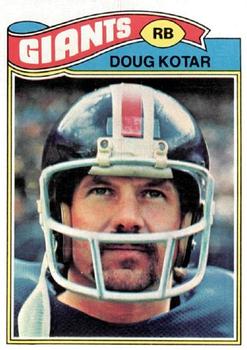
The region of Western Pennsylvania has produced some of the greatest talents in NFL history. It is known to some as the “Cradle of Quarterbacks”, as the home of Dan Marino, Joe Montana, Joe Namath, and Johnny Unitas. On the defensive side, Aaron Donald and Darrelle Revis shined bright; both are widely regarded as among the best ever at their respective positions. Pittsburgh is a gritty, blue-collar town. Its native sons reflect this identity on and off the field. This incredible legacy is undeniable. Over the years, many of its stars built their legends on the biggest stage, while others equally deserving have been largely overlooked in the game’s broader history. Through my writing, I aim to highlight those who’ve been denied the recognition they deserve. The first who came to mind? Doug Kotar, a running back who embodied that tough, ironclad spirit for the New York Giants.
Kotar hailed from Muse, a small town just outside of Canonsburg, in Washington County. At Canon-McMillan High School, he excelled not only in football but also in baseball and track and field, competing in the javelin and shot put. A natural athlete, he was drafted by the Cincinnati Reds as an outfielder in the 16th round of the 1970 MLB Draft. From his earliest years on the gridiron, he was an impact player. An Observer-Reporter column from a few years back chronicled his rise from high school to the pros, featuring a defining performance from his senior season against Chambersburg.
On the first play from scrimmage, Kotar scored on a 70-yard option run after a pitch from quarterback Mike Smutney. Later, in the fourth quarter, he broke free on a 92-yard kickoff return to seal the win for the Big Macs. Kotar became the first Canon-McMillan graduate to reach the NFL, a distinction that stood alone for more than four decades. The next came in 2015, when Penn State linebacker Mike Hull signed with the Dolphins. From Kotar’s era, right-hander Tom Dettore appeared in parts of four big-league seasons with the Pirates (1973) and Cubs (1974-1976). One can only wonder whether Kotar might have reached the majors had he pursued baseball, though breaking into the Big Red Machine’s outfield behind George Foster, César Gerónimo, and Ken Griffey Sr. would have been a tall order.
After high school, Kotar headed to the University of Kentucky. The Wildcats never won more than five games during his time there, facing stiff competition in the SEC. Over three seasons, Kotar piled up 1,167 rushing yards while sharing the backfield with Sonny Collins, a future second-round pick of the Falcons in 1976. Another standout teammate was linebacker Joe Federspiel, a ten-year NFL veteran and member of the New Orleans Saints Hall of Fame. On September 11, 1971, in his first varsity game against Clemson at Memorial Stadium, Kotar, then a sophomore, took the opening kickoff 98 yards to the house, helping Kentucky to a 13-10 win over the Tigers.
Listed at just 5’10 ½” and 205 pounds, Kotar was an undersized, hard-nosed runner. His college numbers were solid but unspectacular. The odds were stacked against him. Undrafted in 1974, he signed as a free agent with his hometown Steelers, only to be traded to the Giants soon after. In exchange, Pittsburgh received quarterback Leo Gasienica, a Rutgers product who later played for the Birmingham Vulcans of the World Football League. The Giants opened the season “at home” against the Redskins, not in New York, but at the Yale Bowl in New Haven, Connecticut, a temporary venue while Yankee Stadium was being renovated. The following year, they played at Shea Stadium before settling into their permanent home, Giants Stadium, in East Rutherford, New Jersey.
Kotar made an immediate impression in his NFL debut, scoring a touchdown and leading the Giants with 43 rushing yards in a close 13-10 loss. He wore #44, the same number worn today by another bruising back, Cam Skattebo. A few weeks later against the Falcons, he posted a career-high 119 yards and another score, his third touchdown in four games. The Giants still fell 14-7, starting the year 1-3. The team was mired in a postseason drought dating back to 1963. Over his first two seasons, Kotar racked up 755 kick-return yards, proving his value and versatility. His finest all-around year came in 1976, when he eclipsed 1,000 all-purpose yards (731 rushing, 319 receiving) and led the Giants in rushing, edging future Hall of Famer Larry Csonka’s 569. He again led the team in 1978, with 625 yards on the ground.
A number of notable personalities made up these Giants teams. Marty Schottenheimer, the linebackers coach and later defensive coordinator, was born in Canonsburg and played his college ball at Pitt. A former defensive back, Schottenheimer won an AFL Championship with the Buffalo Bills as a rookie. Bill Belichick and Romeo Crennel also spent the early parts of their coaching careers with the Giants in various roles. During Kotar’s tenure, he played under three head coaches: Bill Arnsparger, John McVay, and Ray Perkins.
When Kotar was a rookie, his quarterback was Craig Morton, who had previously won a championship with the Cowboys and later faced them as a member of the Broncos in Super Bowl XII. By 1979, Phil Simms, a first-round draft pick, had become the franchise’s future. Billy Taylor led the team that season with exactly 700 rushing yards, while Kotar was close behind with 616. Both contributed over 200 yards receiving. Unfortunately, Kotar’s fortunes turned the following year. He missed the entire 1980 campaign after tearing ligaments in his left knee. Without him, the Giants faltered, finishing fifth in the NFC East at 4-12.
The 1981 season, however, would be different. Led by rookie phenom and future Hall of Famer Lawrence Taylor, who earned Defensive Player of the Year honors, the Giants finished 9-7, their first winning season since 1972, and reached the postseason for the first time in nearly twenty years. Kotar returned to action, appearing in seven games with five starts. His final game came on November 8 at Milwaukee County Stadium, where the Giants narrowly lost 26-24 to the Packers. Kotar recorded just two carries for four yards and one reception for a three-yard loss. A dislocated right shoulder sidelined him for the remainer of the season, as Rob Carpenter, acquired in a trade from the Oilers, emerged as the team’s feature back. The Giants entered the playoffs as the fifth seed, defeating their archrival Philadelphia Eagles in the Wild Card before falling to Joe Montana’s 49ers in the Divisional Round.
Kotar retired after the start of training camp in 1982. The years of physical punishment had taken their toll. His career ended abruptly, but his greatest battle was still ahead. Not long after hanging up his cleats, Kotar began suffering from severe headaches. A CAT scan revealed a malignant brain tumor. Doctors warned that surgery would be life-threatening. Kotar underwent radiation and chemotherapy for over a year, which left his left side partially paralyzed. Tragically, he passed away on December 16, 1983, at Montefiore Hospital in Pittsburgh. He was just 32 years old.
He was survived by his wife, Donna; his children, Doug Jr. and Christie; his brothers, Anton and Richard; and his mother, Rachel. He was laid to rest at Forest Lawn Gardens in McMurray.
Hall of Fame linebacker Harry Carson, one of the pallbearers, once said of Kotar, “He’s a fighter you’d like to have with you in a foxhole.”
Giants teammates, owner Wellington Mara, and Art Rooney Sr. were among those who attended the service in Canonsburg. Kotar’s death has since been associated with repeated head trauma and other cumulative injuries from his playing career. At the time, the NFL was embroiled in a players’ strike, one of the key issues being players’ inability to access their own medical records due to restrictive rules from ownership in the previous collective bargaining agreement. This poignant detail of Kotar’s story was revisited in 2013, when Keith Olbermann paid tribute to him on his ESPN show.
At the time of his retirement, Kotar ranked fourth all-time on the Giants’ rushing list; today, he stands tenth, just behind Frank Gifford. His career was defined by perseverance. He exceeded expectations at every turn. Kotar unquestionably belongs in the Giants’ Ring of Honor – and as of 2025, it remains astonishing that he is not. In 2008, he was inducted into the Pennsylvania Sports Hall of Fame, Washington-Greene County Chapter.
While fans remember Kotar for his toughness on the field, those closest to him recall a devoted husband, father, and friend. Simply put, Doug Kotar was a Giant.