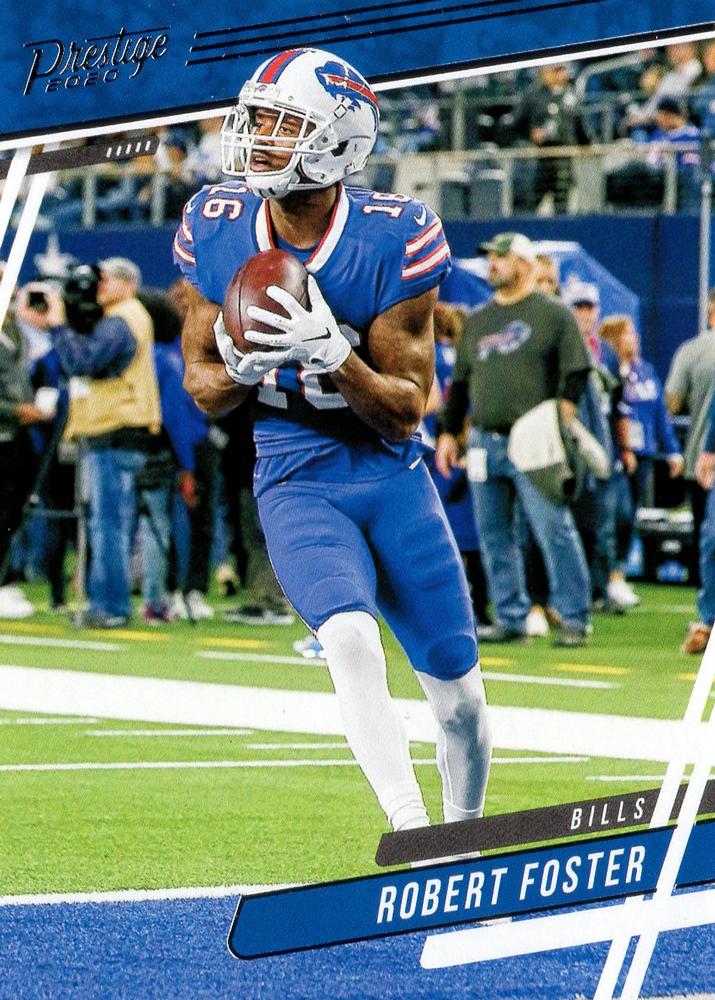
• Local Legends: Central Valley’s Robert Foster

    By Brian Kopycinski

    Robert Foster, a native of Monaca in Beaver County, stands as one of the greatest football players from the region in recent memory. A star receiver at Central Valley, Foster helped lead the Warriors to a WPIAL championship in 2010. By the end of his high school career, he was one of the top prospects not only in Pennsylvania, but in the entire nation. 

    Highly recruited, Foster took his talents to the top football program in the country, the University of Alabama. While he never quite lived up to the almost unrealistic hype at the college level, his rookie season with the Buffalo Bills as an undrafted free agent proved many doubters wrong. Still, whether it was at Alabama or in the NFL, Foster never seemed to receive the fair opportunity his talent suggested he deserved. 

    Blazing fast, Foster’s defining high school performance came in the 2010 Class AAA WPIAL championship game. After defeating Thomas Jefferson in the semifinals, Central Valley faced Montour at Heinz Field. It was the Warriors’ inaugural season following the merger of the Center and Monaca school districts. In the championship, Foster made three game-breaking plays: a 54-yard run, a 35-yard punt return for a touchdown, and a 70-yard reception for another score. Central Valley won convincingly, 24–7. 

    National recruiting outlets quickly took notice. ESPN rated Foster as the No. 2 wide receiver in the ESPN 150 and the No. 28 overall player in the country following his senior year in 2012. He also participated in the prestigious Under Armour All-American Game. Foster ultimately committed to Nick Saban and the Alabama Crimson Tide, winners of the 2009, 2011, and 2012 BCS National Championships. 

    Alabama has long been known for producing elite wide receivers, including Julio Jones, Foster’s teammates Amari Cooper and Calvin Ridley, and later Heisman Trophy winner DeVonta Smith. During the 2010s, the Crimson Tide became arguably the greatest dynasty in college football history. Foster redshirted his freshman season in 2013, a year that ended with Alabama falling to Oklahoma in the Sugar Bowl. 

    As a redshirt freshman in 2014, Foster saw limited action while battling for playing time in a loaded receiver room. He appeared in nine games, catching six passes for 44 yards. For context, Cooper dominated that season with 1,726 receiving yards and 16 touchdowns. Alabama won the SEC but lost to eventual national champion Ohio State in the College Football Playoff semifinal. 

    Expectations were high entering Foster’s sophomore season. He earned his first career start in Week 1 against Wisconsin and scored his first collegiate touchdown on a 22-yard reception from Jake Coker. He followed that performance with another touchdown against Middle Tennessee, totaling eight catches for 99 yards and two scores through two games. Unfortunately, his momentum came to a halt in Week 3 against Ole Miss, when he suffered a season-ending shoulder injury. 

    The injury sidelined Foster for the remainder of the year as Alabama went on to win the national championship. In just three games, he totaled 116 yards and two touchdowns. Calvin Ridley and Ardarius Stewart stepped up in his absence, while O.J. Howard emerged as a major weapon in the passing game. The following season brought a shift in Alabama’s offense, with Jalen Hurts taking over at quarterback. 

    The 2016 Crimson Tide leaned heavily on the run game, with Hurts leading the team in rushing yards. With Ridley, Stewart, and Howard commanding most of the targets, Foster saw few opportunities in the passing game. Despite appearing in ten games, he recorded just five receptions for 55 yards and no touchdowns. Alabama returned to the national championship game but lost to Clemson. 

    By his senior season, Foster had largely faded from the spotlight. Alabama was once again loaded at receiver, and he became something of an afterthought. In 2017, he finished with 14 receptions for 174 yards and one touchdown, including a 52-yard score against Colorado State—his first since 2015. Alabama won another national championship that season, defeating Georgia after Tua Tagovailoa replaced Hurts at quarterback midgame. 

    It was a disappointing end to a college career that began with such promise. Still, Foster competed against elite talent in the nation’s toughest conference and contributed to multiple championship teams. Had it not been for his sophomore-year injury, his trajectory may have looked very different. In today’s era of the transfer portal and NIL, many players in his position would have left. Foster stayed, persevered, and never quit. 

    Despite his limited college production, Foster earned an invitation to the 2018 NFL Scouting Combine, where he ran a 4.41-second 40-yard dash, the fifth-fastest among wide receivers. He went undrafted but signed with the Buffalo Bills, reuniting with former Alabama offensive coordinator Brian Daboll. Foster made the roster and delivered an impressive rookie campaign despite inconsistent quarterback play. 

    After briefly being released early in the season, Foster returned and found his stride. He recorded his first 100-yard game in Week 10 against the Jets and followed it with a 75-yard touchdown against Jacksonville. He added two more 100-yard performances late in the season and finished his rookie year with 27 receptions for 541 yards and three touchdowns, all second on the team. His 541 yards exceeded his total production across four seasons at Alabama. 

    The following offseason, Buffalo invested heavily in veteran receivers, limiting Foster’s role. His production dipped sharply in 2019, and he became expendable. After being part of Buffalo’s final cuts heading into the 2020 season, Foster spent a brief stint on Green Bay’s practice squad before signing with the Washington Football Team, marking his final stretch of in-game NFL action. He appeared in four games for Washington, making two starts and recording two receptions for 37 yards. The Football Team cycled through three starting quarterbacks that season, adding to the offensive inconsistency. 

    Following the 2020 season, Foster remained in the league on practice squads in 2021 with Miami and Dallas, and in 2022 with the Giants and Colts. Despite continuing to earn opportunities, he did not see game action again. Over three seasons in the NFL, Foster totaled 642 receiving yards and three touchdowns. 

    While his professional career never fully matched early expectations, Foster defied the odds as an undrafted player and proved he belonged on football’s biggest stage. He is best remembered for his dominance at Central Valley, where his legacy remains secure. 

    Like other Western Pennsylvania standouts who struggled to find long-term NFL success, Foster’s journey is emblematic of a memorable era of WPIAL football. From a small-town program to BCS national championships at Alabama and a stint in the NFL, his path is one worth remembering. Robert Foster is more than deserving of recognition in both the Beaver County Sports Hall of Fame and the WPIAL Hall of Fame. 
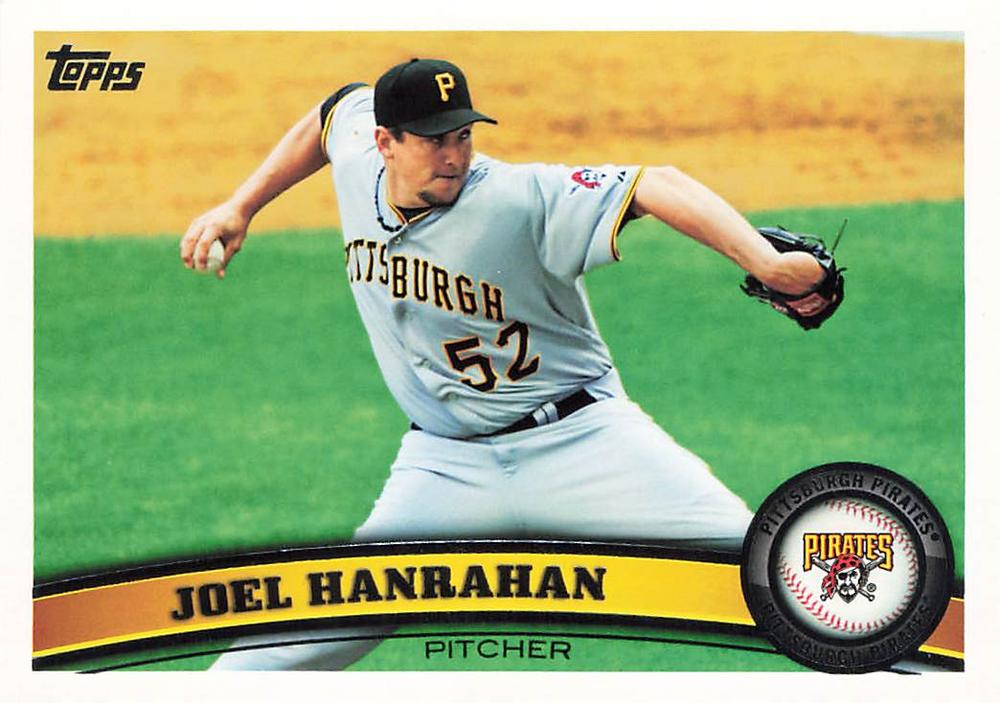
  • Joel Hanrahan: The Hammer

    By Brian Kopycinski

    Joel Hanrahan, nicknamed “The Hammer,” was a dominant closer for the Pirates on losing teams that went nowhere. Acquired from the Washington Nationals, the two-time All-Star was once one of the top relievers in the game. Hanrahan’s brilliance has unfairly been overlooked in favor of his successors, who pitched in more meaningful innings on playoff contenders. While Jason Grilli and Mark Melancon were both excellent in their time, many have forgotten just how good a closer Joel Hanrahan truly was. 

    Hanrahan split his youth between Iowa and Florida and was selected by the Los Angeles Dodgers out of Norwalk (IA) High School in the second round of the 2000 MLB June Amateur Draft. He began his career as a starting pitcher and spent seven years in the minors before making his major league debut with Washington in 2007. Hanrahan joined the Nationals’ organization after becoming a free agent in 2006. He started 11 games as a rookie, appearing in 12 total games, pitching 51.0 innings with a 6.00 ERA while going 5–3. 

    Converted to the bullpen in 2008, Hanrahan found better results in his new role. On a Nationals team that lost 100 games, he went 6–3 with a 3.95 ERA in a career-high 84.1 innings. Hanrahan became a late-inning regular, earning nine saves while finishing 34 games. The first half of the 2009 season was a struggle, and Washington viewed him as expendable. He was traded to Pittsburgh on June 30 with outfielder Lastings Milledge for outfielder Nyjer Morgan and pitcher Sean Burnett. The change of scenery paid off, as Hanrahan was lights out for the remainder of the year, posting an elite 1.72 ERA in 31.1 innings for the Bucs. 

    To say that the Pirates were bad that year would be a massive understatement. Outside of a few bright spots in Hanrahan, and rookies Garrett Jones and Andrew McCutchen, the roster severely lacked depth and talent. Fan favorites Nate McLouth, Freddy Sánchez, and Jack Wilson were all traded that summer. The 2010 season would be even worse, as the Buccos lost 105 games, their worst record since the 2001 inaugural season at PNC Park. Hanrahan continued to impress out of the pen, later sharing closer duties with Evan Meek after Octavio Dotel was dealt to the Dodgers at the end of July. 

    During the 2010 campaign, Hanrahan went 4–1 with a 3.62 ERA, notching a career-best 100 strikeouts. He also earned six saves and finished 27 games. After another disappointing season, ownership knew it was time for a change. Manager John Russell was let go, and former Rockies skipper Clint Hurdle was brought in. Hurdle named Hanrahan his closer for 2011, a well-deserved honor. Hanrahan later credited much of his success to pitching coach Ray Searage. The 2011 season would be a career year, cementing him as one of the league’s best closers. 

    Hanrahan’s walkout music, “Before I Forget” by Slipknot, perfectly captured his intensity on the mound. His high-end fastball and wicked slider were constant problems for opposing hitters. Hanrahan earned his first All-Star nod, striking out Michael Young of the Texas Rangers in the ninth inning of the National League’s 5–1 victory at Chase Field. That year, Pittsburgh improved to a 72–90 record, finishing fourth in the NL Central. Hanrahan’s breakout, highlighted by a 1.83 ERA and 40 saves, was valued at 2.4 WAR per Baseball-Reference. 

    The 2012 season brought great optimism that ultimately ended in a car crash. With a few key additions, the roster began to resemble a real baseball team, but the hot start didn’t last. The second-half collapse was historic and deserving of its own case study. Regardless, Hanrahan remained “that guy” in the ninth inning. He made another All-Star team, striking out the only batter he faced, Billy Butler, in the Midsummer Classic held in Kansas City. While his ERA rose slightly to 2.72, he still enjoyed a strong year, racking up 36 saves. 

    At that point, his two-year total of 76 saves was the greatest in franchise history, a record later broken by Mark Melancon. Still, the Pirates improved considerably during this span, posting a 22-game swing between their 2010 and 2012 records. Clearly, something was working. Unfortunately for Hanrahan, he wouldn’t be part of the success to come, as he was traded to the Boston Red Sox that offseason. The six-player deal sent Hanrahan and Brock Holt to Boston in exchange for Melancon, Stolmy Pimentel, Jerry Sands, and Iván De Jesús. 

    Boston went from worst to first in 2013, winning the World Series, while the Pirates snapped their streak of consecutive losing seasons and defeated the Cincinnati Reds at home in the Wild Card Game. It was a season to remember in Pittsburgh, as Andrew McCutchen earned National League MVP honors and the Bucs returned to the postseason for the first time since 1992. A heartbreaking NLCS loss to the St. Louis Cardinals ended their run, but Bucco Fever had swept the city. 

    Bad luck struck Hanrahan that year. He opened the season as Boston’s closer but missed time early with a hamstring strain before being shut down with a damaged flexor tendon in his right elbow. He underwent Tommy John and flexor tendon surgery, ending his season and costing him a chance at October glory. Hanrahan pitched in just nine games, earning four saves with a bloated 9.82 ERA. Meanwhile, Melancon rebounded with an All-Star season in Pittsburgh. 

    Hanrahan became a free agent and eventually signed a one-year deal with the Detroit Tigers. He did not pitch in 2014 while rehabbing and later re-signed on a minor-league deal for 2015, though he never appeared in a game. A torn UCL discovered that spring led to his release, and fed up with the rehab process, Hanrahan officially retired in 2016. A cruel stretch of injuries ended a career filled with promise. 

    If he had remained healthy, who knows what Joel Hanrahan might have become? He had all the makings of an elite closer and perhaps could have ranked among the decade’s best alongside Aroldis Chapman, Craig Kimbrel, and Kenley Jansen. Hanrahan was just 31 when he pitched his final major league game. He had plenty of baseball left in him. Unfortunately, like so many great what-ifs, injuries took their toll. 

    He soon returned to the game as a pitching coach, beginning with the West Virginia Black Bears. Over the next few years, he climbed the ladder, eventually reaching Triple-A Indianapolis in 2021. Hanrahan modeled his coaching approach after Ray Searage and helped guide pitchers such as Blake Cederlind, Max Kranick, and James Marvel to the majors. He later joined the Nationals organization in a similar role. 

    Joel Hanrahan’s impact on the Pirates—as both a player and a coach—has been seriously overlooked. For a brief stretch, he was one of the best closers in baseball, period. While the trade ultimately netted Pittsburgh Mark Melancon, arguably the better long-term option, “The Hammer” was elite in his own right and deserves to be remembered. Don Kelly should consider bringing Hanrahan onto his staff. He knows exactly what it takes to be great. 

  • Keith Willis and the 1980s Steelers

    By Brian Kopycinski

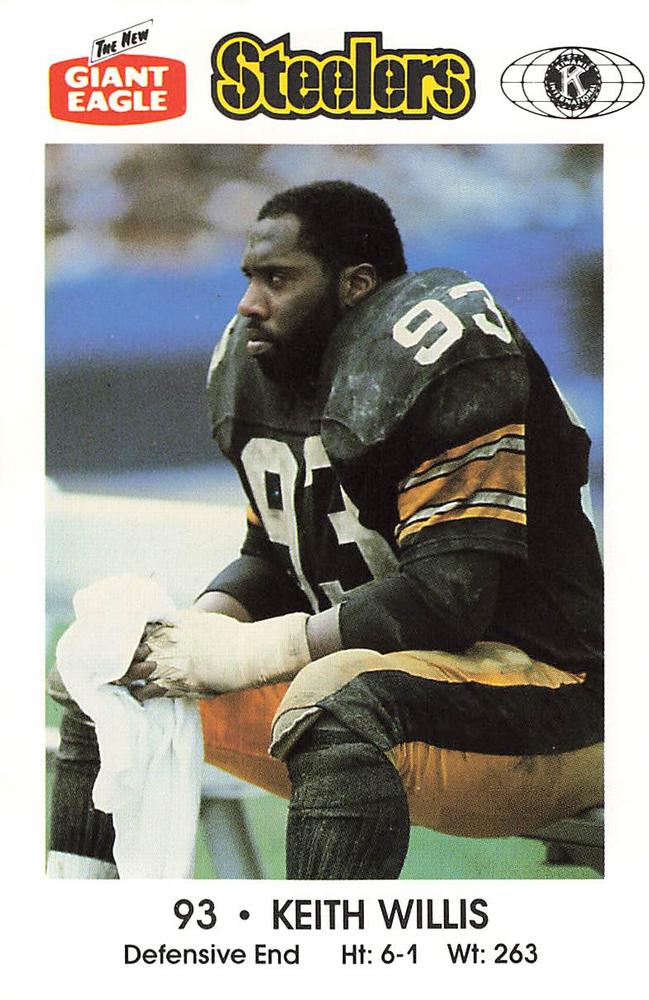
    By the early 1980s, the Pittsburgh Steelers dynasty was fading. The cornerstones of the Steel Curtain were either gone or nearing the end of their careers, and while the team reached the playoffs from 1982 through 1984, that window quickly closed. What followed was nearly a decade of inconsistency, a sharp contrast to the franchise’s Super Bowl standard. 

    Even so, the era was not without its standouts. Veterans such as Mike Webster, John Stallworth, and Donnie Shell remained productive. Yet one defender from this period has been largely forgotten: Keith Willis. 

    An undersized, undrafted lineman out of Northeastern, Willis didn’t merely make the roster—he thrived. Over nine seasons in Pittsburgh, he recorded 59.0 career sacks, a total that still ranks sixth all-time in franchise history. For a player who arrived with little fanfare, Willis became one of the defining defenders of a transitional Steelers generation. 

    Willis grew up in Newark, New Jersey, starred at Northeastern, and went undrafted in 1982. Signed as a free agent, he made the team during a strike-shortened season and appeared in all nine games as a reserve. His first career sack came against Kansas City quarterback Steve Fuller, an early indication of what was to come. 

    In 1983, Willis erupted. Despite starting only four games, he posted a then–team-record 14.0 sacks. While sacks only became an official statistic in 1982—meaning legends like Joe Greene were never fully credited—this context does little to diminish Willis’s achievement. He was disruptive, relentless, and suddenly indispensable. 

    Though his sack totals fluctuated in the seasons that followed, Willis steadily grew into a core defensive piece. By the mid-1980s, as Pittsburgh cycled through quarterbacks and leadership voids emerged in the locker room, he became one of the few constants. In 1986, on a 6–10 team going nowhere fast, Willis still delivered a double-digit sack season—an individual bright spot amid organizational drift. 

    A neck injury sidelined him for all of 1988, coinciding with one of the lowest points in franchise history. Willis rebounded in 1989, however, starting every game and helping guide the Steelers back to the playoffs. The following year, he recorded the only interception of his career and played a key role on another competitive 9–7 team. 

    The 1991 season marked the end of an era. It was the final year of Chuck Noll’s tenure, and fittingly, one of Willis’s most efficient campaigns. Even in a reduced role, he notched seven sacks in seven starts and finished his Steelers career as the franchise’s leader in official sacks—a remarkable feat for an undrafted lineman. 

    Willis’s playing career concluded shortly thereafter, but his impact on the game did not. He transitioned into coaching, beginning at Slippery Rock University and later holding defensive line positions at several collegiate programs before returning to the professional ranks. His longevity in coaching mirrored the perseverance that defined his playing days. 

    The Steelers defenses of the 1980s were tasked with forging a new identity after the collapse of the Steel Curtain. Keith Willis embodied that effort. Tough, relentless, and often overlooked, he stood firm when the standard was slipping. Among undrafted players in franchise history, his name belongs alongside the very best. 

    The 1980s may not be remembered fondly in Pittsburgh, but greatness still emerged. Keith Willis was one of those rare constants—an unheralded gem whose legacy deserves far greater recognition, including a rightful place in the Steelers Hall of Honor. 

  • Greg Malone: Family Ties

    By Brian Kopycinski

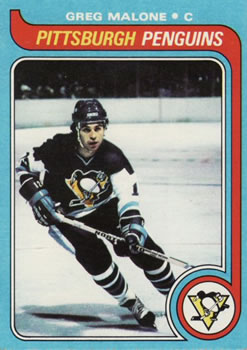
    Before the arrival of Mario Lemieux, the upstart Pittsburgh Penguins had their fair share of talent, from Jean Pronovost to Rick Kehoe and Pierre Larouche. While these teams were often competitive, they ultimately fell short of their goal of hoisting Lord Stanley’s Cup. Early playoff exits became the norm through the early 1980s, before a steep drop-off forced the franchise into a necessary rebuilding period. One of the more underrated players from this era is Greg “Bugsy” Malone, who remains deeply tied to the city of Pittsburgh to this day. Although he last played for the Penguins more than forty years ago, Malone still ranks in the top 20 in franchise history in goals, assists, and points. His family’s enduring connection to the game further strengthens his lasting legacy. 

    Malone grew up in the Chatham neighborhood of Miramichi, New Brunswick, before his family later moved to Fredericton. There, he attended the local high school and played hockey. Malone helped lead the Fredericton Black Kats to a provincial championship in 1973, winning the scoring title with a remarkable 76 points (35 goals, 41 assists) in just 23 games. He went on to play junior hockey in the Ontario Hockey Association with the Oshawa Generals for three seasons, averaging 70 points per year. Malone was selected by the Penguins in the second round, 19th overall, of the 1976 NHL Amateur Draft. He made the immediate jump from junior to the NHL and suited up for Pittsburgh during the 1976–77 season. 

    Malone was a balanced forward, a dangerous goal-scorer and a reliable playmaker. As a rookie, he made an immediate impact, recording 18 goals and 19 assists on a Penguins team that returned to the playoffs. In a Preliminary Round rematch, the Penguins fell once again to the Toronto Maple Leafs, though Malone scored a goal in the Game 2 victory and added an assist in the deciding Game 3 loss. He followed up that strong debut with a 61-point campaign in 1977–78, despite Pittsburgh missing the postseason and finishing fourth in the Norris Division. Malone’s best season in a Penguins sweater came in 1978–79, when he posted a career-high 65 points (35 goals, 30 assists) while playing all 80 games. That year, the Penguins returned to the Stanley Cup playoffs and defeated the Buffalo Sabres 2–1 in the opening round, with Malone contributing an assist in the Game 2 loss at the Pittsburgh Civic Arena. 

    That momentum proved short-lived, as the Penguins were swept by the Boston Bruins in the Quarter-Finals. Malone was held scoreless in the series, and Pittsburgh once more fell short of a deeper playoff run. In the seasons that followed, Malone remained a reliable presence, recording back-to-back 50-point campaigns. The team’s struggles persisted, with early playoff exits against the Bruins in 1980 and the St. Louis Blues in 1981. Malone maintained this production despite playing only 51 and 62 games in those respective seasons. A down year followed in 1981–82, as the Penguins were eliminated in the Preliminary Round by the Islanders. Malone rebounded in 1982–83 with another 60-point season, highlighted by a career-best 44 assists. The team, however, was in clear decline, finishing 18–53–9 for just 45 points. With a full rebuild underway, Malone was traded to the Hartford Whalers in September 1983 for a fifth-round draft pick. 

    Regardless of where he played, Malone continued to produce offensively. On struggling Whalers teams, he posted 54- and 61-point seasons, even as Hartford remained near the bottom of the Adams Division. He was traded midway through the 1985–86 season to the Quebec Nordiques in exchange for former Penguin Wayne Babych. By this stage of his career, Malone was no longer the impact player he once was, recording just 21 points between the two teams that season. After appearing in only six games for the Nordiques the following year, his playing career came to an end. Over 11 NHL seasons, Malone totaled 191 goals and 310 assists for 501 points. It did not take long for him to return to the game in a different capacity. 

    Hired by the legendary Tony Esposito, who served as the Penguins’ general manager, Malone became a scout for his former club. He eventually rose to the role of chief scout and earned two Stanley Cup rings for his work in the front office. Malone held that position in Pittsburgh until 2006 before later joining the Phoenix Coyotes organization. He ultimately settled in the Steel City, where he raised his two sons, Ryan and Mark. 

    Ryan Malone was selected by the Penguins in the fourth round of the 1999 NHL Draft and spent four seasons with the team before later playing for the Tampa Bay Lightning and New York Rangers. Greg and Ryan achieved a rare distinction, becoming one of only two father-son duos in NHL history to each record a hat trick, the others being Ken Hodge Sr. and Ken Hodge Jr. Mark Malone played collegiate hockey at Nichols College before embarking on a professional career in the ECHL with the Wheeling Nailers and Bakersfield Condors. Greg’s brother, Jim Malone, was a first-round pick of the New York Rangers in 1980 and enjoyed a lengthy professional career of his own. Jim’s son and Greg’s nephew, Brad Malone, went on to play parts of nine NHL seasons. 

    Greg Malone was inducted into the New Brunswick Sports Hall of Fame in 2000 and later founded the Malone Family Foundation, which helps provide access to hockey through equipment and facilities for local families in need. Through his playing career, front-office contributions, and continued commitment to the sport, Malone has left a lasting impression on the city of Pittsburgh. He remains an overlooked star from the franchise’s early years and one of the Penguins’ most important players of the pre-Lemieux era. 

  • Kevan Smith: From Pitt QB to Big League Catcher

    By Brian Kopycinski

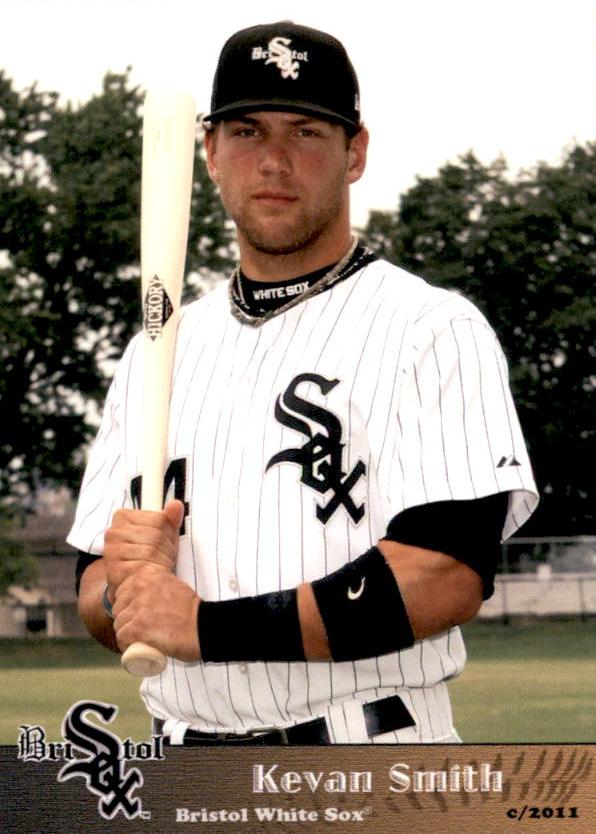
    Kevan Smith went from Pitt’s starting quarterback to catching in the major leagues. The difficult decision to switch from football to baseball quickly paid off. Simply put, Smith is one of the greatest players in program history. His story is one of grit and resilience.  

    The Cranberry, PA, native missed significant time at Seneca Valley during his junior and senior years due to injury. Still, Smith managed to pass for over 1,500 yards and eight touchdowns his final season. On the diamond, he was a four-year letter winner at catcher and was named the Class AAAA Player of the Year by the WPIAL Baseball Coaches Association in 2006. He was considered a top recruit in the state, and even the nation, by some outlets. Smith later committed to the Pitt football program under head coach Dave Wannstedt.  

    Smith redshirted his freshman year and was called on to replace injured starting quarterback Bill Stull in the 2007 season opener versus Eastern Michigan. Pitt won the game 27-3, and Smith was viewed as the starter moving forward. Against Grambling State, he led the Panthers to another victory, going 15-for-22 passing with one touchdown and one interception. Smith struggled the following week at Michigan State in a close game, throwing two picks in the 17-13 Pitt loss. Smith started the first half against UConn but left the game with an injured elbow. He was replaced by Pat Bostick.

    Bostick won the starting job, and Smith wouldn’t see the field again until the second half of the Rutgers game where he went 7-for-11 for 81 yards. He left that game late with a right shoulder injury in another tight Pitt loss. It was a disappointing season overall for the Panthers, but it ended on a high note. In the Backyard Brawl, Pitt defeated No. 2 ranked West Virginia 13-9. While Smith was on the sidelines for this one, he still holds a place in this iconic victory as the backup. During the 2008 season, Stull and Bostick saw the majority of reps at QB, and Smith was essentially a non-factor. He knew it was time for a change.  

    He was drawn to the baseball team by his former high school teammate Zach Duggan, Pitt’s center fielder. For three seasons, Smith provided ample power and strong defense behind the dish. While Pitt baseball wasn’t exactly great during this time, it’s hard not to recognize the impact Smith had. He was an All-Big East First Team selection in 2010 and 2011. The 2011 season was particularly notable. Smith tied all league hitters with a .396 batting average and led the conference in runs scored with 56. His eight home runs and 52 RBIs made him one of the top sluggers in the Big East.

    Today, Smith still ranks highly in several offensive categories, including batting average (.375), total bases (313), and RBIs (123). He was also a factor in tournament play. Across the 2010 and 2011 Big East tournaments, he hit a combined .522. In 2011, he slugged three home runs as Pitt defeated Louisville in the opening round before falling to St. John’s. For all he accomplished at Pitt, Smith was considered one of the top collegiate catching prospects of the 2011 cycle. He was drafted by the Chicago White Sox in the 7th round, 231st overall. Smith got off to a hot start in rookie ball, posting a combined .355 average and a 1.073 OPS between Great Falls and Bristol of the Pioneer and Appalachian Leagues.

    Over the next few years, Smith continued to hit for both average and power in the White Sox system. By 2012, he was ranked Chicago’s 15th best prospect by MLB.com. In 2014 with Double-A Birmingham, he hit .290 with 10 home runs and 48 RBIs. Smith finally reached the show in 2016 for a cup of coffee. The White Sox had a crowded catcher’s room that included Dioner Navarro, Alex Avila, and rookie Omar Narváez. The team finished fourth in the AL Central that year at 78-84.

    In 2017, Smith split catching duties with Narváez, appearing in 87 games for the Sox. He continued to hit well in this role, batting .283 with four home runs and 30 RBIs. Chicago, however, declined to a 67-95 record, finishing fourth in the division once again. Smith remained Narváez’s backup in 2018, hitting an excellent .292 in 187 plate appearances. The White Sox lost 100 games that season, and Smith was released afterward. The Los Angeles Angles claimed Smith that October for added depth at the position.  

    The Angles had also signed Jonathan Lucroy that offseason to serve as their primary backstop. On a team that featured Mike Trout and Shohei Ohtani, arguably two of the greatest players ever, the Halos finished fourth in the AL West at 72-90. Smith appeared in 67 games as a backup and hit a career-high five home runs, though his average dipped to a more pedestrian .251. That winter, he signed with the Tampa Bay Rays, aiming to backup Mike Zunino. The Rays also had future Pirate Michael Pérez on the roster. During the pandemic-shortened season, Zunino missed significant time due to an oblique injury, and Pérez caught the majority of games in the regular season.

    That year, Smith played in just 17 games out of a possible 60. In 38 plate appearances, he batted .258 with a .378/.452/.830 slash line. Zunino eventually returned, and Smith sat out the postseason, which saw the Rays win the AL pennant and lose the World Series to the Los Angeles Dodgers in six games. Still, it must have been special to be part of a pennant-winning team, regardless of the circumstances. Smith played sparingly for the Rays in 2021 and was dealt to the Atlanta Braves for cash considerations. With Travis d’Arnaud and William Contreras positioned behind the plate, he struggled for the first time. Smith appeared in 30 games for the Braves, hitting a career-low .165 in 101 plate appearances. As a below-replacement-level player, he didn’t have much of a future with the club. After the season, he signed no further contracts and has not appeared in the minor leagues or independent ranks since.  

    Kevan Smith enjoyed quite a journey, no matter how it ended. What should have been an incredibly difficult transition, he made look seamless. Smith began his amateur career at Pitt under center and ended it behind the plate. His excellence earned him an opportunity in the big leagues, one he met head-on. Appearing in 263 major league games is a remarkable accomplishment, made even more impressive by the injuries and obstacles he overcame. As one of the more accomplished athletes in program history, he is certainly worthy of a place in Pitt’s Athletics Hall of Fame someday. 

  • Ramón Hernández: Ahead of His Time

    By Brian Kopycinski

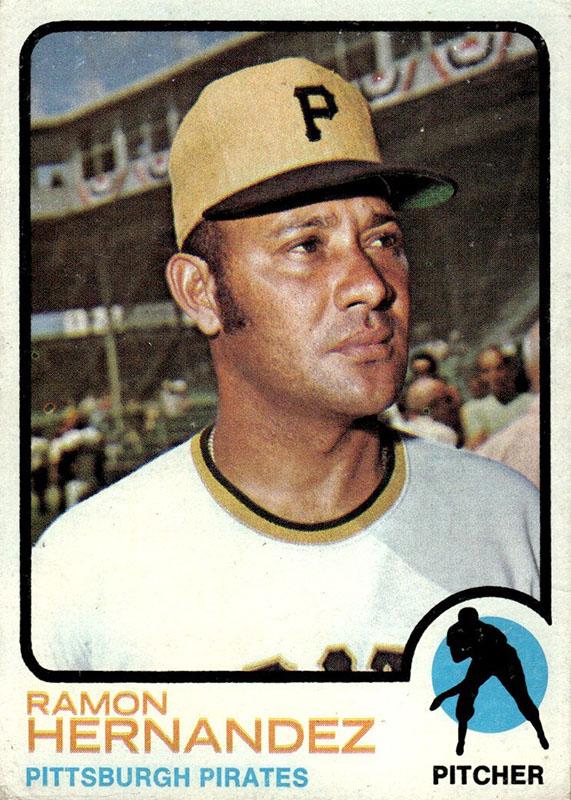
    Ramón Hernández was a fiery competitor for the Pirates in the early 1970s, a crafty relief specialist whose unusual delivery made him something of a pioneer for his era. The left-hander hailed from Carolina, Puerto Rico, the same suburb of San Juan that produced “The Great One,” Roberto Clemente. Hernández debuted in the Puerto Rican Winter League shortly after his 18th birthday, and for the next two decades he returned home each offseason. 

    Hernández’s path to the major leagues was anything but conventional. He first joined the Pirates organization in 1959 as an amateur free agent, beginning a professional career that would span multiple eras. His early years were difficult. He struggled in the minors, endured a suspension, and sat out the entire 1961 season. Pittsburgh eventually sold his contract to the Los Angeles Angels, where he spent several seasons working as both a starter and a reliever without much success. 

    In 1966, Hernández was selected by the Atlanta Braves in the Rule 5 Draft. He broke camp with the club in 1967 as a 26-year-old rookie and spent the entire year in the majors, though his performance was largely replacement-level. After the season, he was claimed by the Chicago Cubs in the Rule 5 Draft, only to continue struggling against major league hitting. His contract was soon purchased by the St. Louis Cardinals, sending him back to the minors once again. 

    Hernández spent the remainder of the 1968 season at Triple-A Tulsa, where results were still uneven. The 1969 season, however, marked a turning point. Pitching for the Cardinals’ Double-A affiliate in Arkansas, he showed significant improvement. Around this time, Hernández also gained a reputation for a volatile temper and frequent clashes with players and management. St. Louis ultimately released him, and he resurfaced in 1970 with the Mexico City Reds of the Mexican League. There, Hernández finally showed the talent that had been missing, posting a 1.82 ERA with 56 strikeouts in 32 games. 

    More than a decade after first joining the organization, Hernández returned to the Pirates in February 1971, acquired in a trade that sent minor leaguer Danilo Rivas the other way. He pitched well enough at Triple-A Charleston to earn two in-season promotions, in June and again in September. During his brief time in the majors that season, Hernández posted a miniscule 0.73 ERA across 12.1 innings. Despite this strong showing, he was ineligible for the Pirates’ postseason roster and missed out on contributing to the club’s 1971 World Series run. 

    The 1972 season stands as the high point of Hernández’s major league career. A mainstay out of the bullpen, he shared save opportunities with Pirates great Dave Giusti and recorded 14 saves of his own. Over 70 innings, Hernández posted an elite 1.76 ERA, establishing himself as one of the National League’s most reliable relief arms. His deceptive sidearm delivery baffled hitters, particularly left-handers, and he mixed a fastball, curveball, and screwball from varying arm angles. 

    That success carried into October. Hernández made history in the 1972 NLCS by forming the first postseason Hispanic battery with catcher Manny Sanguillén, earning the save in Game 1. The Pirates fell short in the series, losing to the Cincinnati Reds. The year ended on a tragic note when Roberto Clemente, Hernández’s close friend and fellow Puerto Rican, died on December 31, 1972, in a plane crash while delivering humanitarian aid to earthquake victims in Nicaragua. Hernández, like the rest of the team, was devastated by the loss. 

    No doubt affected by Clemente’s death, 1973 was a down year for the Pirates, though not for Hernández. He enjoyed another strong season, posting career highs in innings pitched and strikeouts, good for 2.0 WAR. While Pittsburgh missed the postseason that year, the club rebounded to win the NL East in both 1974 and 1975, with Hernández remaining a steady presence out of the bullpen. He allowed no runs in two appearances during the 1974 NLCS versus the Los Angeles Dodgers but gave up two runs in Game 3 of the 1975 series against Cincinnati. 

    The 1976 season marked Hernández’s final year in Pittsburgh, as his contract was later purchased by the Cubs. His major league career concluded in 1977, a disappointing final chapter that saw him split time between the Cubs and the Boston Red Sox. 

    Over nine major league seasons, Hernández compiled 6.2 WAR, an ERA+ of 116, and 46 saves, finishing with a 3.03 career ERA. While Hernández never served as a full-time closer, his skill set indicates he could have thrived in that role. He instead became a trusted high-leverage arm at a time when bullpen roles were still undefined. 

    Following his big league career, Hernández continued pitching winters in his native Puerto Rico through the 1979–80 offseason, where his longevity placed him among the league’s most accomplished pitchers. Ramón Hernández passed away on February 4, 2009, at the age of 68. He was an unsung but essential contributor to four NL East championship teams, a pitcher whose impact rarely showed up in headlines but consistently appeared in the box score. In an era before modern bullpen roles were fully established, Hernández quietly mastered his craft, and in Pirates history, he remains one of the most effective and underappreciated relief pitchers the franchise has ever had. 

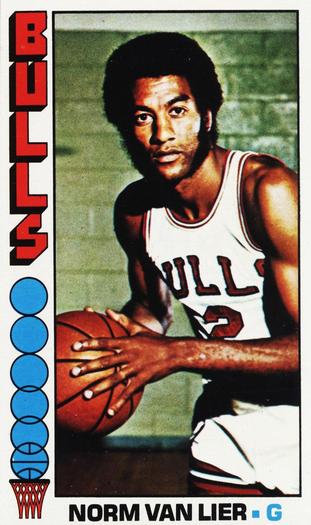
  • Norm Van Lier: Raging Bull

    By Brian Kopycinski

    Norm Van Lier was truly one of a kind, a fierce competitor and a legend both on and off the court. A native of Midland, Pennsylvania, Van Lier rose from humble beginnings to enjoy a decade-long NBA career, most notably with the Chicago Bulls. 

    At Midland High School, Van Lier distinguished himself across three sports. He played quarterback and safety in football, shortstop in baseball, and emerged as a standout on the basketball court. His talent even drew interest from the St. Louis Cardinals, who offered him a professional contract out of high school, an opportunity he declined. In 1965, Van Lier was a key contributor on the legendary Midland Leopards basketball team that finished 28–0 and captured the PIAA state championship. Playing alongside Simmie Hill, the Leopards defeated Steelton-Highspire 90–61 in the title game. 

    After high school, Van Lier attended a tryout practice at the University of Cincinnati before enrolling at Saint Francis University in Loretto, Pennsylvania, much closer to home. Over three seasons with the Frankies, he helped lead the program to a 55–20 record. Van Lier scored 1,410 career points, averaging 18.8 per game, and finished his college career as the program’s third-leading scorer at the time. During the 1967–68 season, he also set a school record with 290 assists. He earned first-team All-East honors twice and was named an honorable mention All-American on two occasions. Van Lier even received a tryout opportunity with the Cincinnati Bengals as a defensive back, but ultimately stayed committed to basketball. In 1969, he was selected by the Chicago Bulls in the third round (34th overall) of the NBA Draft, though he was soon traded to the Cincinnati Royals. 

    A scrappy, physical guard, Van Lier quickly made his mark in Cincinnati, playing alongside Oscar Robertson and under player-coach Bob Cousy. By his sophomore season, he led the NBA in assists. While with the Royals, Van Lier made history by becoming the first player ever to record a scoreless double-double. On January 5, 1971, against the Los Angeles Lakers, he finished with 0 points, 13 assists, and 11 rebounds in a Royals victory. During the 1971–72 season, Van Lier was traded back to Chicago, where he became a cornerstone of the Bulls’ strong teams of the early 1970s under head coach Dick Motta, alongside Jerry Sloan, Bob Love, and Chet Walker. 

    The backcourt duo of Norm Van Lier and Jerry Sloan was relentless and widely regarded as one of the toughest defensive pairings in the league. Van Lier often credited Sloan with helping shape his work ethic and approach to the game. In Van Lier’s first four seasons with Chicago, the Bulls won 50 or more games three times. One of his most memorable performances came in Game 6 of the 1973 Western Conference Semifinals, when he put on a defensive masterclass against Hall of Famer Gail Goodrich. Van Lier held Goodrich to just four points and recorded a then-record 10 steals, helping Chicago force a Game 7. Chicago ultimately fell to Los Angeles, but Van Lier’s impact was evident. 

    In 1974, Van Lier became the first player from Beaver County to earn NBA All-Star honors. Over his career, he was selected to three All-Star Games and earned eight All-Defensive Team honors. He averaged 11.8 points, 7.0 assists, and 4.8 rebounds per game. Van Lier spent his final NBA season in 1978–79 with the Milwaukee Bucks before retiring at age 31. Notably, he and Michael Cooper are the two players with the most All-Defensive Team selections who have yet to be inducted into the Naismith Basketball Hall of Fame. 

    Following his playing career, Van Lier transitioned seamlessly into broadcasting, spending more than 20 years as a television and radio color analyst for the Bulls. His passion, honesty, and deep knowledge of the game further endeared him to Chicago audiences and solidified his place in Bulls history. Norm Van Lier passed away on February 26, 2009, at the age of 61. In 2025, he was posthumously inducted into the Chicago Bulls Ring of Honor. He is also a member of the Beaver County Sports Hall of Fame (1984) and the Saint Francis Athletics Hall of Fame (1999). 

    “Stormin’ Norman” remains one of the greatest athletes to ever come from this region. Underrated in Bulls history and overlooked among the game’s all-time defensive greats, Norm Van Lier’s legacy as both a player and broadcaster deserves serious future consideration for the Basketball Hall of Fame. 

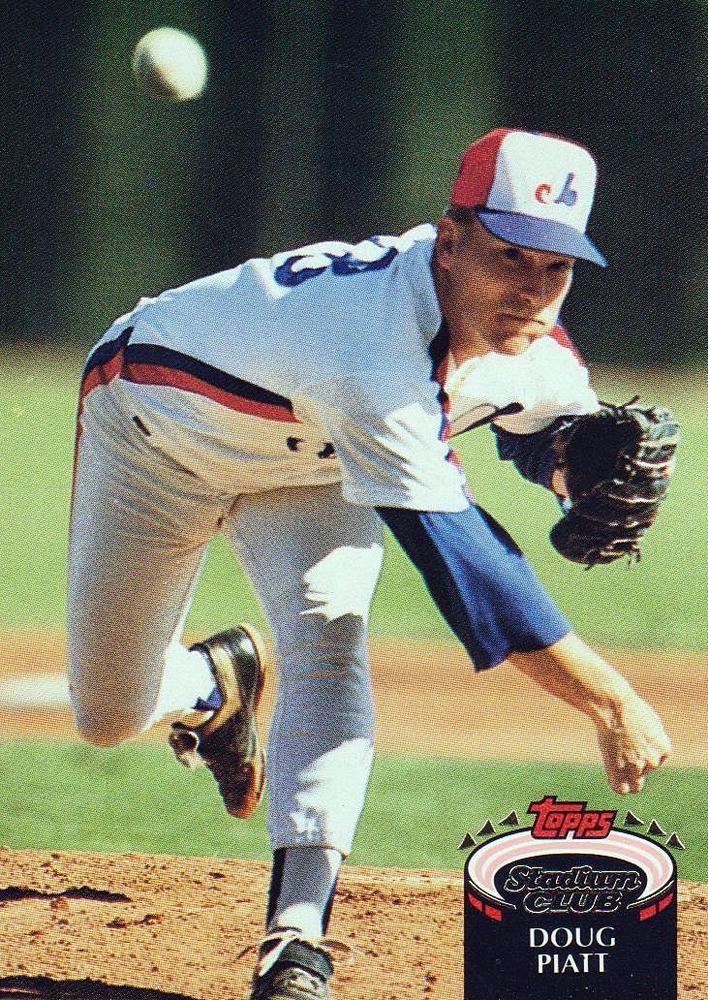
  • Doug Piatt: Seizing the Moment

    By Brian Kopycinski

    Doug Piatt accomplished what so many can only dream of. Not only did he make it to the big leagues but pitched well in his limited showing. The odds of a kid making it from this region, best known for producing talent on the gridiron, are incredibly slim. Piatt worked his way through the minors towards his ultimate goal of making it to the show. When that opportunity came, he made the most of it and thrived in his role out of the bullpen for the Montreal Expos. His journey begins, however, in Beaver County, Pennsylvania.

    Piatt was a four-year letter winner in baseball at Beaver High School, forming arguably the greatest pitching tandem in WPIAL history with future All-Star John Burkett. For Piatt’s senior year in 1983, Beaver won the WPIAL championship and made it all the way to the PIAA state finals. When he wasn’t on the mound, Piatt manned the hot corner for the Bobcats. After graduating, he attended Gulf Coast Community College in Panama City, Florida, quite the culture shock for a kid from Beaver. Piatt was later drafted by the St. Louis Cardinals in the 3rd round of the 1984 MLB January Draft but chose not to sign. After transferring to Western Kentucky University on a scholarship, Piatt eventually signed as a free agent with the Cleveland Indians following an impressive collegiate career.

    His professional career got off to a promising start. After a brief stint in rookie ball, Piatt was assigned to the Waterloo Indians of the Class A Midwest League. In 26 relief appearances, Piatt held a remarkable 2.21 ERA in 36.2 innings pitched, to go with 40 strikeouts and 12 saves. Liking what they saw in the young right-hander, Montreal traded for Piatt in July 1989 and assigned him to their Single A club in Rockford. There, he continued to impress with a 3.20 ERA in 11 appearances. Piatt began the 1990 season in West Palm Beach where he was later named to the Florida State League All-Star Game after posting an elite 0.99 ERA, along with 9 saves. He was then promoted to Jacksonville and continued to punish hitters out of the pen. In 49 innings pitched, his ERA stood at 2.20 for the Expos’ Double-A team.

    Montreal had clearly found something in Piatt, as a potentially elite bullpen arm and perhaps dominant closer. He pitched well enough in 1991 for Triple-A Indianapolis to earn a promotion to the majors mid-way through the season. The Expos were in last place in the NL East, a team in rebuild mode after trading Tim Raines to the Chicago White Sox the past offseason. Still, Montreal held hope in building around young talent, like Larry Walker and Marquis Grissom. Piatt made his big league debut at home on June 11 versus the Cincinnati Reds. A spot on the roster became available after Rick Mahler was released. He entered the ballgame in the 6th inning, and struck out the first two batters he faced, Joe Oliver and Norm Charlton. Piatt then induced future Hall of Famer Barry Larkin into a groundout to retire the side. Other than giving up a hit to Chris Sabo in the 7th, Piatt had a clean, scoreless two-inning debut in the Expos’ loss.

    As a rookie, Piatt made 21 appearances to an ERA of 2.60 in 34.2 innings pitched, striking out 29 and walking 17. Despite this strong showing, he never pitched in the majors again. Piatt spent most of the 1992 season with Double-A Harrisburg, where he started games for his first time as a pro. 1993 would be different. Piatt truly struggled for the first time in his career, splitting time between the Pirates’ and Royals’ Double-A affiliates. He later found success with the independent Beaumont Bullfrogs of the Texas-Louisiana League in 1994, sporting a 3.42 ERA with 7 saves in 15 appearances. After a stay with San Francisco’s Triple-A farm club in Phoenix, Piatt returned to indy ball in ‘95 with the Abilene Prairie Dogs. ‘96 was spent with Rio Grand Valley.

    Piatt’s career in professional baseball ended after the 1997 season. That year, he joined the Waterbury (CT) Spirit of the Northeast League. In 22 games, he posted a solid 3.04 ERA with 11 saves. At the age of 31, he had spent a decade in the pros. His final season stands as a testament to his talent and determination. Piatt never gave up when things got tough. He kept working and found his niche as a pitcher in the independent leagues. He could have quit after his time in the majors was up, but his love for the game kept him going. When he pitched for the Expos, he didn’t disappoint, either. A career 2.60 earned run average in the majors is something to be damn proud of.

    Doug Piatt was inducted into the Beaver County Sport Hall of Fame in 2008.

  • Phil Bourque: The Ol’ Two-Niner

    By Brian Kopycinski

    Phil Bourque grew up outside of Boston in Chelmsford, Massachusetts, but considers Pittsburgh to be his home. A fan favorite for his work on and off the ice, the Steel City has embraced the two-time Stanley Cup champion as one of their own. Bourque’s story is one of resilience, from his early years through his playing days. For all that he’s done in his career and life, Phil Bourque is simply legendary.

    Boston has always been a hockey town, as home of one of the original six teams. When Bourque was a kid, the Bruins were winning Stanley Cups with stars like Bobby Orr and Phil Esposito. From a very young age, Bourque was a natural skater. He grew up playing in the backyard with his two brothers, on an outdoor rink their father had built. Bourque showed his versatility early on in youth hockey, playing both ways. Unfortunately, he was a victim of verbal and physical abuse from his father on a regular basis. The two had a complicated relationship and eventually reconciled years later.

    Bourque played two seasons for the Kingston Canadians in the OHL. He went undrafted in the ‘82 cycle but received offers from his hometown Bruins and the Pittsburgh Penguins. Bourque chose Pittsburgh in part to get away from his father. The Penguins had also made him a better offer. Soon after, he joined the Baltimore Skipjacks of the AHL. Bourque began his career as an offensive-minded blue liner. He made his debut with the Penguins in 1983-84. Bourque then spent the next several seasons up and down between the AHL and NHL before finally becoming a Penguins regular in 1988-89. He made the difficult transition from defenseman to left wing, scoring 43 points in his first full year.  

    That season, Pittsburgh finished second in the Patrick Division with 87 points and made the playoffs. Bourque scored three goals in the Pens’ sweep of the Rangers in the opening Semi-Finals. He also scored the winning goal in overtime in Game 3 of the Division Finals at Philadelphia, a series Pittsburgh would go on to lose in seven games. After an impressive showing, Bourque followed this with a career high 22 goals in 1989-90. While the Penguins missed the playoffs that season, they later drafted Jaromír Jágr that summer. Things were looking up in Pittsburgh in the new decade.

    The early ‘90s were a special time for Pittsburgh hockey. The team was stacked with talent, with several Hall of Famers filling the lineup. Mario Lemieux was the best player in the game. Phil Bourque was a valuable contributor to these back-to-back Stanley Cup champions. For 1990-91, he netted 34 points in the regular season, and added 13 points in the playoffs, notably scoring two goals in the Finals against Minnesota. Next year, the Pens finished third in the Patrick Division but ran the table again to play for the Stanley Cup. In Game 1 of the Finals, Bourque scored a goal in the first period that helped kickstart the Pens’ comeback victory. Pittsburgh ended up sweeping Chicago to claim the franchise’s second title. 

    For the 1992-93 season, Bourque signed with the New York Rangers, where his production gradually declined. He was traded to the Ottawa Senators in March 1994, where he received limited playing time. Bourque nearly died in a rock-climbing accident at Lake Powell in the offseason, falling from about 40-feet, face first. He broke his neck in three places, fractured his skull, his nose; it was a minor miracle that he lived. His friends acted quickly and found park rangers to assist him, sending a helicopter that life-flighted him out to a hospital in Flagstaff. Had he not been in the best shape of his life, the fall likely would have killed him, doctors later said. The NHL lockout delayed the start of the upcoming season until January, and Bourque was able to make a recovery in time to play.

    Those early Senators teams were hard to watch, always one of the worst teams in the league. Bourque played sparingly in Ottawa, and left the NHL after the 1995-96 season, joining the IHL. He spent time with the Detroit Vipers and Chicago Wolves before deciding to play overseas in Germany. Bourque called it a career after the 1999-00 season spent with the Hamburg Crocodiles of the 2nd Bundesliga. For his 12-year NHL career, he totaled 199 points, won two Stanley Cups, and endeared himself to fans with his physical, gritty style of play. A few years later, Bourque joined Mike Lange in the broadcast booth as a color commentator. He has remained with the Penguins organization ever since.  

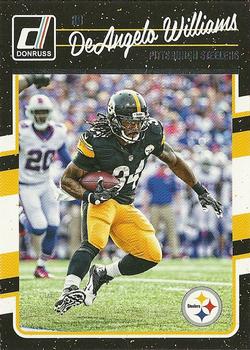
  • DeAngelo Williams: Stepping Up

    By Brian Kopycinski

    When the Steelers needed him most, DeAngelo Williams stepped up. The Panthers’ 2006 first-round pick had been a dynamic playmaker throughout his nine-year tenure with Carolina. Pittsburgh needed an insurance policy for their star running back Le’Veon Bell, who was coming off an All-Pro season. Williams filled in admirably for Bell whenever the opportunities came. He greatly exceeded expectations for a back in his early-30s and quickly became a fan favorite in Pittsburgh. Over his 11 seasons in the NFL, Williams made an impact as a player and advocate for the cause of breast cancer awareness, invaluable both on and off the field.  

    At Memphis, Williams was one of the best running backs in college football. His 22 touchdowns as a junior led the FBS, as did his absurd 1,964 rushing total his senior year. He was the third running back taken in the 2006 draft, after Reggie Bush and Laurence Maroney. While the Heisman Trophy ultimately went to Bush, Williams finished seventh in the award voting that cycle. Selected 27th overall, he would go on to become one of the greatest backs in Carolina’s history, setting several franchise records along the way. Although the Panthers never found much postseason success in his time with the team, Williams still shined on the biggest stage. In 2008, he rushed for 1,515 yards and led the league with 18 touchdowns, earning him a second-team All-Pro nod. He followed this up with another 1,000-yard season and was named to the Pro Bowl.

    With 6,846 yards rushing in a Panthers’ uniform, Williams ranks second in franchise history, behind his teammate Jonathan Stewart. Stewart and Williams were one of the strongest running back tandems in the league when they played together. Williams also ranks third in rushing touchdowns, behind Stewart and Cam Newton. After nine seasons, Carolina released Williams in March 2015, and shortly after he signed with the running back-needy Steelers. LeGarrette Blount was waived the previous season, and Pittsburgh had a true need at the position. Williams fit the role perfectly, a veteran back that still had a lot to give in the run game and as a mentor to Bell. In 2014, while the Steelers won the AFC North at 11-5, they quickly exited the playoffs in a Wild Card loss to the Ravens. With the Killer B’s in their prime, Pittsburgh hoped to take a step forward in the new calendar year.

    With Bell out for two games, Williams opened the season as the Steelers’ lead back. In a Week 1 loss at New England, he rushed for 127 yards on 21 carries, a promising sign of what was to come. In the Steelers’ blowout victory over the 49ers in Week 2, Williams ran for 77 yards and 3 touchdowns. Once Bell returned, however, he reverted to his reserve role. It wouldn’t be until Week 8 that Williams made headlines again, after Bell went down with a season ending MCL injury courtesy of Cincinnati’s Vontaze Burfict. While Pittsburgh lost a close one 16-10, Williams did his job, rushing for 71 on 9 carries, taking over for Bell in the second quarter. He followed this up next week with a career game in a shootout against Oakland, going for 170 and 2 scores in the 38-35 win.  

    Pittsburgh had won five of their last seven going into their Week 17 matchup at Cleveland, with a record of 9-6 to that point. Unfortunately for the Steelers, they would lose another key player in Williams, who went down with an ankle injury and would be out for the playoffs. For the regular season, Williams was the team’s leading rusher in just ten starts, with 907 yards on the ground and 367 through the air, giving him 1,274 from scrimmage, along with a league leading 11 rushing TDs. The Steelers would go on to defeat the Bengals in the Wild Card, with Jordan Todman and Fitzgerald Toussaint leading the backfield. Pittsburgh then fell to Peyton Manning and the eventual Super Bowl champion Broncos in the next round, 23-16. Had Bell and Williams both been healthy, who knows what would have happened?

    To begin the 2016 season, Bell was suspended again, this time for three games. Williams was called upon again to be the team’s workhorse back, and he didn’t disappoint. In Week 1 against Washington, Williams had 143 yards rushing and two touchdowns, to earn himself AFC Player of the Week honors in the Steelers’ win over the Redskins. Still, when Bell came back, Williams was now the backup, again. Bell stayed healthy for the remainder of the season and had another career year, 1,268 yards rushing to go with 7 TDs. Williams, making four starts, had just 343 yards, although he found the endzone 4 times. After another great season, Pittsburgh advanced to the AFC Championship to face New England. In what would be his final game, Williams went for 34 rushing with a TD and had 7 receptions for 51 yards in a heartbreaking, and some would say controversial, Steelers’ loss. 

    After his contract expired, Williams became a free agent. He failed to sign with a team for the 2017 season, and did not announce his retirement until 2018. As a player, he honored his late mother Sandra with his strong dedication in spreading awareness of breast cancer, likely saving many lives. Williams has been very active following his football career. He became a professional wrestler, joining Impact and TNA, and starred on Season 32 of The Amazing Race, where he and his former Panthers teammate Gary Barnidge finished 4th. On the field, Williams racked up over 10,000 yards from scrimmage and scored 70 total touchdowns. His work off it, however, likely means much more to him. Always a class act, DeAngelo Williams is remembered fondly by Panthers and Steelers fans alike for all that he’s done.