
By Brian Kopycinski
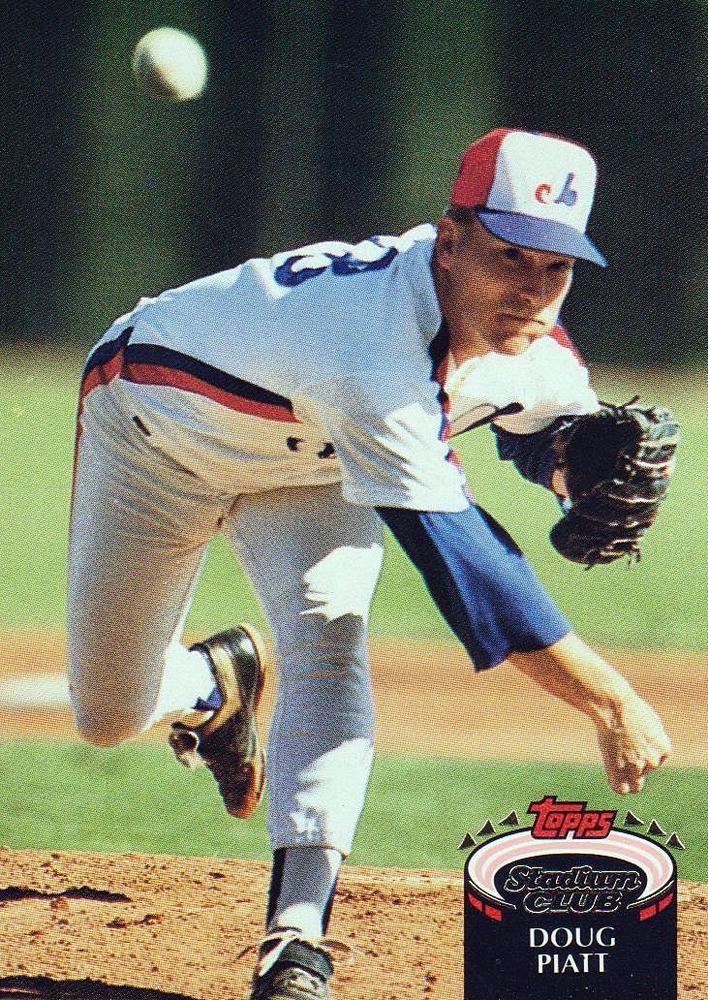
Doug Piatt accomplished what so many can only dream of. Not only did he make it to the big leagues but pitched well in his limited showing. The odds of a kid making it from this region, best known for producing talent on the gridiron, are incredibly slim. Piatt worked his way through the minors towards his ultimate goal of making it to the show. When that opportunity came, he made the most of it and thrived in his role out of the bullpen for the Montreal Expos. His journey begins, however, in Beaver County, Pennsylvania.
Piatt was a four-year letter winner in baseball at Beaver High School, forming arguably the greatest pitching tandem in WPIAL history with future All-Star John Burkett. For Piatt’s senior year in 1983, Beaver won the WPIAL championship and made it all the way to the PIAA state finals. When he wasn’t on the mound, Piatt manned the hot corner for the Bobcats. After graduating, he attended Gulf Coast Community College in Panama City, Florida, quite the culture shock for a kid from Beaver. Piatt was later drafted by the St. Louis Cardinals in the 3rd round of the 1984 MLB January Draft but chose not to sign. After transferring to Western Kentucky University on a scholarship, Piatt eventually signed as a free agent with the Cleveland Indians following an impressive collegiate career.
His professional career got off to a promising start. After a brief stint in rookie ball, Piatt was assigned to the Waterloo Indians of the Class A Midwest League. In 26 relief appearances, Piatt held a remarkable 2.21 ERA in 36.2 innings pitched, to go with 40 strikeouts and 12 saves. Liking what they saw in the young right-hander, Montreal traded for Piatt in July 1989 and assigned him to their Single A club in Rockford. There, he continued to impress with a 3.20 ERA in 11 appearances. Piatt began the 1990 season in West Palm Beach where he was later named to the Florida State League All-Star Game after posting an elite 0.99 ERA, along with 9 saves. He was then promoted to Jacksonville and continued to punish hitters out of the pen. In 49 innings pitched, his ERA stood at 2.20 for the Expos’ Double-A team.
Montreal had clearly found something in Piatt, as a potentially elite bullpen arm and perhaps dominant closer. He pitched well enough in 1991 for Triple-A Indianapolis to earn a promotion to the majors mid-way through the season. The Expos were in last place in the NL East, a team in rebuild mode after trading Tim Raines to the Chicago White Sox the past offseason. Still, Montreal held hope in building around young talent, like Larry Walker and Marquis Grissom. Piatt made his big league debut at home on June 11 versus the Cincinnati Reds. A spot on the roster became available after Rick Mahler was released. He entered the ballgame in the 6th inning, and struck out the first two batters he faced, Joe Oliver and Norm Charlton. Piatt then induced future Hall of Famer Barry Larkin into a groundout to retire the side. Other than giving up a hit to Chris Sabo in the 7th, Piatt had a clean, scoreless two-inning debut in the Expos’ loss.
As a rookie, Piatt made 21 appearances to an ERA of 2.60 in 34.2 innings pitched, striking out 29 and walking 17. Despite this strong showing, he never pitched in the majors again. Piatt spent most of the 1992 season with Double-A Harrisburg, where he started games for his first time as a pro. 1993 would be different. Piatt truly struggled for the first time in his career, splitting time between the Pirates’ and Royals’ Double-A affiliates. He later found success with the independent Beaumont Bullfrogs of the Texas-Louisiana League in 1994, sporting a 3.42 ERA with 7 saves in 15 appearances. After a stay with San Francisco’s Triple-A farm club in Phoenix, Piatt returned to indy ball in ‘95 with the Abilene Prairie Dogs. ‘96 was spent with Rio Grand Valley.
Piatt’s career in professional baseball ended after the 1997 season. That year, he joined the Waterbury (CT) Spirit of the Northeast League. In 22 games, he posted a solid 3.04 ERA with 11 saves. At the age of 31, he had spent a decade in the pros. His final season stands as a testament to his talent and determination. Piatt never gave up when things got tough. He kept working and found his niche as a pitcher in the independent leagues. He could have quit after his time in the majors was up, but his love for the game kept him going. When he pitched for the Expos, he didn’t disappoint, either. A career 2.60 earned run average in the majors is something to be damn proud of.
Doug Piatt was inducted into the Beaver County Sport Hall of Fame in 2008.