
By Brian Kopycinski
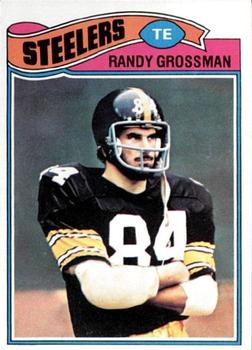
The Pittsburgh Steelers dynasty of the 1970s is widely considered to be the greatest in NFL history. While most remember the stars like Bradshaw, Franco, and “Mean” Joe, these well-rounded teams consisted of a number of unheralded contributors. Some have gotten the recognition they deserve in the years since, while others have been largely forgotten. While never superstars, these men of steel were players you couldn’t win without. One that stands out to me is Curt “Randy” Grossman, a highly underrated tight end from an era that prioritized the run game. Grossman, an undrafted free agent, was with the Steelers for the entirety of this unprecedented run.
Nicknamed “The Rabbi,” courtesy of teammate Dwight White, Grossman was a standout at Temple University before he joined the Steelers. He was born in Philadelphia and raised in the suburb of Havertown, attending Haverford High School. Temple, an independent program at the time, went 9–1 during Grossman’s senior year in 1973, when he led the team in receptions (39) and receiving yards (683). A relatively undersized tight end for the NFL, Grossman battled it out in camp and the preseason to make the team. In 1974, Larry Brown, who later converted to tackle, emerged as the Steelers’ top option at tight end. Grossman contributed 13 receptions for 164 yards in his rookie year, as the Steelers began their dynasty with a win over the Minnesota Vikings in Super Bowl IX.
Grossman scored his first career touchdown in Week 2 of the 1975 season, a 20-yard pass from Joe Gilliam in a close home loss to the Buffalo Bills. He totaled 135 yards on the campaign, as the Steelers went on to repeat as AFC Central champions with a 12–2 record. In the postseason, Grossman made an impact. In the AFC Championship versus Oakland, he added four catches for 36 yards, and he scored a touchdown in the first quarter of Super Bowl X against Dallas. In the 1976 NFL Draft, Pittsburgh selected Clemson tight end Bennie Cunningham in the first round. Undeterred, Grossman had another fine year. As a rookie, Cunningham remained a backup, while Grossman totaled 181 yards. Though Cunningham was viewed as the future, Grossman still factored into the Steelers’ long-term plans. That year, the Steelers once again won the division but later fell to their greatest rival, the Oakland Raiders, in the Conference Championship.
Cunningham emerged as the Steelers’ TE1 in 1977, breaking out with 347 yards and two touchdowns. Grossman became somewhat of an afterthought, hauling in just five passes for 57 yards. The Steelers went 9–5 that year but made an early playoff exit in the Divisional Round against Denver. Cunningham began 1978 as the starter, but an injury cut his season short. Grossman stepped up in his absence in what would be the greatest campaign of his career. His 448 receiving yards were the third-best mark on the team, behind only Lynn Swann and John Stallworth. Grossman’s 64.8 success rate was the best in the league. Pittsburgh returned to the postseason with a vengeance and made it back to the big game to face Dallas in a rematch of Super Bowl X. Grossman had three catches for 29 yards in Super Bowl XIII, as the Steelers defeated the Cowboys to claim their third Lombardi Trophy.
In the City of Champions, 1979 was a special year. The “We Are Family” Bucs defeated the Baltimore Orioles in a classic World Series that went seven games. The Steelers, at the height of their dynasty, cruised through the playoffs and defeated the Los Angeles Rams in Super Bowl XIV, giving Randy Grossman his fourth Super Bowl ring. Reliable as ever, Grossman continued to produce, giving the Steelers a one-two punch at the tight end position with Cunningham leading the way. The beginning of the new decade unofficially marked the end of the Steelers’ dominance. This regression was inevitable, as the core of talent aged together and neared the ends of their careers. In 1981, Grossman’s final season, Pittsburgh went 8–8 and missed the playoffs for the second consecutive year. Grossman scored his last touchdown in a Week 11 win over the Atlanta Falcons.
Over eight seasons, Randy Grossman totaled 1,514 yards and five touchdowns. His contributions in the postseason made a difference and helped the Steelers win when it mattered most. He was never a star in his time, like the Raiders’ Dave Casper or the Lions’ Charlie Sanders, but he was a steady, dependable target on four Super Bowl teams. Like Cunningham, Grossman has gone seriously overlooked in team history at the tight end position. While names like Heath Miller and Eric Green are often at the top, you can’t forget about players like Grossman who contributed meaningfully to the franchise. While never garnering headlines, it’s players like Randy Grossman who help you win championships.
Grossman is a member of both the Temple University Athletics Hall of Fame and the Philadelphia Jewish Sports Hall of Fame. After retiring as a player, he went on to a successful career in finance as an independent advisor with his firm, Wealth Management Strategies. Grossman and his wife Barbara have three children and three grandchildren.