
By Brian Kopycinski
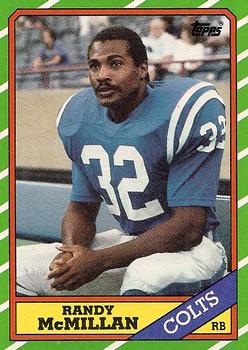
The Pittsburgh Panthers have a history of developing prolific rushers that include Pro Football Hall of Famers, former All-Pros, and Pro Bowlers. When Lewis Lorando “Randy” McMillan transferred to Pitt, it was because of Tony Dorsett, McMillan’s idol. The Harford County, Maryland native dominated the junior college ranks at Harford Community College, leading the Owls to back-to-back undefeated seasons. After his standout sophomore season, McMillan received interest from several top collegiate programs, including Nebraska, Oklahoma, and Penn State. However, it was Pitt head coach Jackie Sherrill connecting him with Dorsett that ultimately made McMillan a Panther.
The Panthers teams of the late ’70s and early ’80s were among the best in the country. While Pitt hadn’t found a true successor to Dorsett after the Heisman Trophy winner departed for the NFL, many believed McMillan just might be that guy.
1979, in particular, was a notable year in Pitt history. It was freshman quarterback Dan Marino’s first season under center. In his first game in a Panthers uniform, McMillan made an instant impact, rushing for 141 yards in a 24–0 win over Kansas at Pitt Stadium. After a Week 2 loss to North Carolina, Pitt won out, finishing 11–1 after defeating Arizona in the Fiesta Bowl. McMillan starred in the Penn State game, scoring three touchdowns in a 29–14 victory at Happy Valley.
For his senior season in 1980, McMillan once again led the Panthers in rushing. Marino guided Pitt to another 11–1 season, with key victories over rivals West Virginia and Penn State. The Panthers crushed South Carolina 37–9 in the Gator Bowl and were ranked No. 2 in the final AP poll. McMillan, a primary fullback, was viewed as the top prospect at the position in the upcoming 1981 NFL Draft.
In two years at Pitt, he rushed for 1,354 yards and 18 touchdowns, adding 355 yards through the air on 30 receptions. While McMillan doesn’t have the numbers to rank among the very best in program history, he was a key contributor to championship-caliber teams.
At the Senior Bowl, Dolphins head coach Don Shula met with McMillan, letting him know Miami was very interested in him. It would be his hometown Colts, however, that selected him 12th overall. The Dolphins, who had the next pick, took Oklahoma halfback David Overstreet.
Baltimore’s selection of McMillan was notable, as the Colts had drafted Texas A&M back Curtis Dickey in the first round the previous year. The franchise, much like Pitt, had a rich history at the position, from Lenny Moore to Lydell Mitchell. In 1980, the Colts finished 7–9 under new head coach Mike McCormack—an improvement over their previous two seasons—but still placed fourth in the AFC East. Former league MVP Bert Jones remained the team’s signal caller. Adding McMillan gave the Colts a potentially formidable backfield duo.
In his NFL debut at New England, McMillan showed flashes of greatness, rushing for 146 yards and two touchdowns in a close Colts win. While Baltimore stumbled to a 2–14 record that year, McMillan had a strong rookie campaign, rushing for 597 yards and three touchdowns.
The 1982 season was shortened by a strike, though McMillan appeared in all nine games. McCormack was out and Frank Kush was in, with Mike Pagel taking over at quarterback. The season would go down as one of the worst in Colts history, as the team finished winless at 0–8–1.
In their seventh game—technically Week 15—the Colts tied the Green Bay Packers. McMillan scored from one yard out in the fourth quarter to send the game to overtime.
As the worst team in the league, the Colts were awarded the first overall pick in the 1983 draft. Baltimore had its eyes on Stanford quarterback John Elway. Elway, to put it lightly, felt differently. The Colts selected him anyway and ultimately traded him to Denver, where he would go on to a Hall of Fame career, winning two Super Bowls.
In return, Baltimore received lineman Chris Hinton, quarterback Mark Herrmann, and a 1984 first-round pick, later used on Ron Solt. Needless to say, Denver won the trade by a wide margin.
In what would be their final year in Baltimore, the Colts were much improved in 1983. McMillan contributed over 800 rushing yards and five touchdowns, while Dickey surpassed the 1,000-yard mark. Still, a 7–9 record wasn’t enough, as the Dolphins—led by rookie quarterback Dan Marino—won the division at 12–4.
What happened next was heartbreaking for Baltimore fans. In the middle of the night, owner Robert Irsay moved the team to Indianapolis. The relocation had been rumored for years, but its execution stunned the city. McMillan, a hometown player, didn’t take the news lightly—nor did his teammates or the fan base. The Colts would begin the 1984 season in Indianapolis at the Hoosier Dome.
Dickey, an injury-prone player, missed time in 1984, allowing McMillan to step up. While the Colts finished 4–12, McMillan totaled 906 yards from scrimmage.
Another note from that season: Art Schlichter, one of the biggest draft busts in NFL history, started five games and struggled, going 0–5 with three touchdowns and seven interceptions. The Colts had selected him fourth overall in 1982. This once-proud franchise was clearly on hard times, and McMillan remained one of its few bright spots.
His best season came in 1985, when he rushed for 858 yards and seven touchdowns, adding 115 receiving yards. With Dickey sidelined and later released, McMillan carried a larger share of the load. It’s a shame he never had the opportunity to play for a true contender, spending his career on struggling teams.
The 1986 season brought more of the same. Rookie quarterback Jack Trudeau went 0–11 as a starter, and head coach Rod Dowhower was fired after a 0–13 start. McMillan again led the team in rushing in what would tragically be his final NFL season.
In April 1987, McMillan was severely injured in a car accident while crossing the street near his home, effectively ending his career at just 29 years old. Both the tibia and fibula in his left leg were shattered, and he suffered nerve damage. He also required plastic surgery on the right side of his face. A metal rod and four screws were inserted, and McMillan underwent more than a year of rehabilitation.
In the aftermath, owner Robert Irsay banned McMillan from team facilities, citing him as a “liability.” His contract was disputed, as the injury was considered “non-football related.” The two sides eventually settled for half of his $320,000 salary. While sidelined for the 1987 season, McMillan could only watch as the Colts traded for star running back Eric Dickerson. The message from the front office was clear: he was no longer part of the team’s plans.
McMillan was released before the start of the 1988 season. He briefly caught on with Miami—the team that had first shown interest in him—but was cut after two weeks. At that point, he decided to retire. Over six seasons, all with the Colts, McMillan rushed for 3,876 yards and 24 touchdowns.
In the years that followed, McMillan worked various jobs, including a stint on the Purdue football staff. After fully recovering from his injuries, he developed a passion for jogging.
Sadly, in 2002, he was involved in another car accident that left him partially paralyzed. He later spoke about the experience in a 2005 interview with The Baltimore Sun. Through activity-based therapy, he made a remarkable recovery and was eventually able to walk again.
McMillan was a private man, and that interview offers a rare glimpse into his life after football. He passed away on January 7 of this year at the age of 67. No cause of death has been reported. This profile serves as a tribute to his life and lasting legacy, both on and off the field.