Category: Local

  • Chris Peters: A Baseball Odyssey

    By Brian Kopycinski

    A quick glance at Chris Peters’ Baseball-Reference page suggests very little: just six seasons in the majors, a losing record, and a career 4.81 ERA. When you look beyond the surface, however, there’s much more to his story than the numbers indicate. The same can be said for countless big leaguers who make it but fail to leave a lasting mark on the game. While fans tend to focus on the extraordinary, it’s sometimes the opposite that makes for the most compelling narratives. 

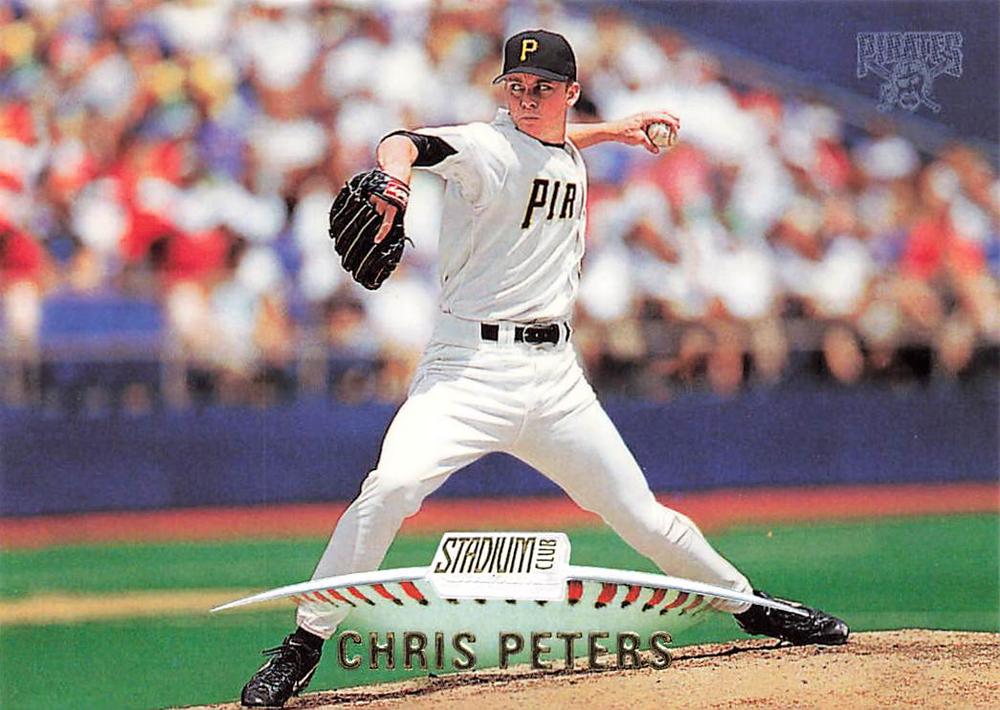
    The journey is often more important than the destination. For someone like Chris Peters, a hometown kid, his path to the show followed a traditional course. He spent time with the Pirates during a memorable stretch and, for a brief window, performed exceptionally at the highest level. Peters last pitched for Pittsburgh in 2000 and retired from professional baseball after the 2003 season. More than a decade later, he surprisingly returned to the Pirates organization in a fitting role. After so many years of losing, Peters was finally part of a winning team in Pittsburgh, just not in the way many might expect. 

    Peters was born in Fort Thomas, Kentucky, in the greater Cincinnati area. His family later moved to Peters Township in Washington County when he was a child. At Peters Township High School, Chris captained the baseball team during his senior year. He went 18-4 as a pitcher in high school and also lettered in basketball. Peters was left-handed and had a great arm, but he was undersized, listed at 6-foot-1 and 162 pounds on Baseball-Reference. He later attended Indiana University Bloomington. In three years with the Hoosiers, Peters won 19 games and struck out 224 batters while making 49 career starts. He was then selected by the Pirates in the 37th round of the 1993 draft and debuted that year for the Welland Pirates of the New York-Penn League. 

    It would be a strongly discouraging season for the big club following three straight NL East titles. “The Slide” truly began after the 1992 NLCS, marking the start of twenty consecutive losing seasons. Peters, to his credit, quickly worked his way through the Pirates system as a pitcher drafted out of college. At Advanced-A Lynchburg in 1995, he dominated with an 11-5 record, a 2.43 ERA, and 132 strikeouts in 24 starts. Peters made his major league debut the following season in relief against the Cincinnati Reds at Three Rivers Stadium on July 19. As a rookie, he made 10 starts in 16 total appearances, going 2-4 with a 5.63 ERA in 64 innings pitched. For the second straight year, the Bucs finished fifth in the division. 

    1997 was a memorable year in Pirates history, as “The Freak Show,” a ragtag group of rookies and veterans under new manager Gene Lamont, greatly exceeded expectations and pushed for the division title deep into September. Instead of losing 100 games, as many predicted, the Pirates stayed in contention with the Houston Astros for the NL Central crown before ultimately finishing five games back. Peters served primarily as a reliever on this team, though he also spent part of the season in Triple-A Calgary. He made 31 appearances out of the bullpen and posted a 4.58 ERA in 37.1 innings pitched. His best season in the majors came the following year. In 1998, Peters started a career-high 21 games and went 8-10 with a much improved 3.47 ERA across 148 innings, striking out 103 batters. 

    His finest start came on July 29, when he threw a complete game against the Colorado Rockies at Coors Field. Peters yielded just five hits while striking out seven and walking two in the Bucs’ 12-1 victory. Baseball-Reference values Peters’ 1998 season at 3.2 WAR. The Pirates rotation that year was young and unproven, consisting of Peters, Jason Schmidt, Francisco Córdova, Jon Lieber, José Silva, and Esteban Loaiza. While Córdova had the best season of the group, and there were bright spots in the lineup such as Jason Kendall and Kevin Young, the Pirates still finished dead last in the Central after seriously competing just one year earlier. 

    Brian Giles arrived from the Cleveland Indians that offseason in a one-for-one trade that sent Ricardo Rincón the other way. Giles enjoyed a career year, and the Pirates improved by nine wins en route to a third-place finish in the division. Peters, meanwhile, battled injuries and struggled in 1999. He later underwent surgery, and his arm was never quite the same. That season, he made just 11 starts, going 5-4 with a 6.59 ERA. Peters rehabbed and eventually returned to the Bucs in 2000, the final season played at Three Rivers Stadium. Used exclusively as a reliever, he delivered promising results, posting a 2.86 ERA in 28.1 innings over 18 appearances. 

    Peters was granted free agency and later signed with the Montreal Expos for the 2001 season. There, he split time between starting and relieving but struggled with his new club. Peters was released in May and later caught on with the Reds and then the Yankees, remaining in Triple-A for the remainder of the year. That proved to be his last taste of big-league action, as he spent the rest of his professional career bouncing between the minors and independent baseball. Peters spent time in the Blue Jays, Tigers, and Devil Rays organizations, along with a stint for the Newark Bears of the Atlantic League under manager Bill Madlock. 

    Adjusting to life after baseball, Peters sold cars at a South Hills dealership for a time before managing several parking lots in Downtown Pittsburgh and Oakland. He has also served as a pitching instructor and coach for local youth teams. Recently, his South Hills team reached the Pony League World Series in 2025. Peters was once the pitching coach at Point Park University as well. Though his playing days were over, he still found ways to stay involved in the game and make a difference. For years, Pirates manager Clint Hurdle wanted Peters on his staff. In 2015, that opportunity finally came, as Peters was hired as a left-handed batting practice pitcher. That Pirates team won 98 games, the franchise’s best record of the 21st century so far. While the Bucs ultimately lost to the Cubs in the Wild Card Game, those teams remain special to Pittsburghers of a certain generation. It took time, but Chris Peters finally became part of a winner with his hometown club. 

    Peters has remained active in the Pirates’ alumni network through charity work and youth camps. In 2022, he was inducted into the Pennsylvania Sports Hall of Fame as a member of the Washington/Greene County Chapter. 
  • Local Legends: Blackhawk’s Adam Liberatore

    By Brian Kopycinski

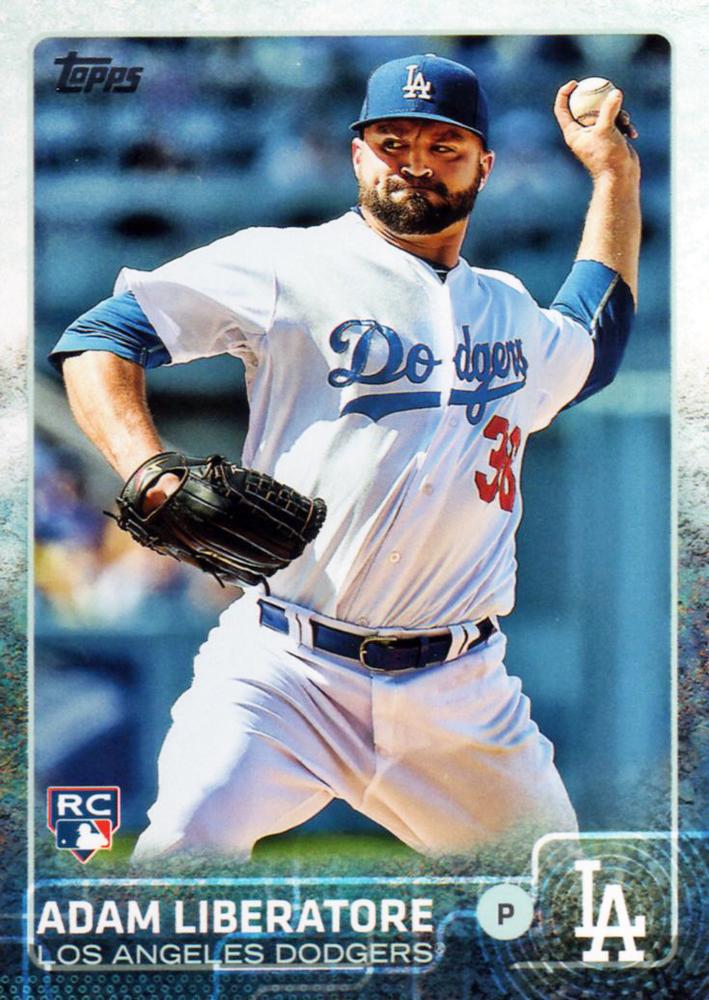
    When Adam Liberatore made his major league debut for the Los Angeles Dodgers on April 15, 2015, it marked the realization of a lifelong dream years in the making. Liberatore retired the first three batters he faced, delivering a perfect ninth inning to close out the Dodgers’ 7–3 victory over the Colorado Rockies. 

    In a matter of minutes, he had arrived. Liberatore was now part of a select fraternity that included the likes of Don Drysdale, Sandy Koufax, and Don Newcombe. A dream shared by so many had finally become reality, Liberatore was officially a Los Angeles Dodger, a member of one of baseball’s most storied franchises. Over the next few seasons, he established himself in the game he loved, culminating in a memorable moment in Dodgers history in 2018. 

    After three years at Quigley Catholic, Liberatore transferred to nearby Blackhawk, where he lettered in both baseball and soccer. An outfielder and pitcher, he starred on the diamond for the Cougars, earning WPIAL All-Star honors and first-team All-Section recognition as a senior. Liberatore then earned a scholarship to Tennessee Tech in the Ohio Valley Conference. The left-handed starter enjoyed a notable collegiate career, including an impressive stint in the Valley Baseball League with the Waynesboro Generals. That summer, he held batters to a league-best .170 average while posting a 6–1 record, earning Pitcher of the Year honors. 

    In 2009, Liberatore went 2–0 with a 2.00 ERA in three starts before an elbow injury ended his season prematurely, leading to Tommy John surgery. Prior to the injury, he shared OVC Pitcher of the Week honors following a dominant performance against Marshall on February 27. 

    Returning as a redshirt senior in 2010, Liberatore recorded 74 strikeouts in 74.2 innings, helping the Golden Eagles capture a regular-season title. He was later selected by the Tampa Bay Rays in the 21st round, 641st overall, of the June Amateur Draft. Liberatore began his professional career that summer with the Hudson Valley Renegades of the New York-Penn League. Converted to a relief pitcher, he impressed out of the bullpen, posting a 2–1 record with a 2.63 ERA in 27.1 innings. 

    Liberatore spent 2011 in High-A with the Charlotte Stone Crabs and capped the year with a strong showing in the Arizona Fall League for the Surprise Saguaros. He reached Triple-A Durham in 2012, where he posted an elite 1.29 ERA in 21.0 innings. The 2013 season was split between Montgomery and Durham, and he also pitched for Estrellas in the Dominican Winter League that offseason. 

    In 2014, Liberatore was invited to major league camp and continued to dominate at Durham, posting a 6–1 record with a 1.66 ERA in 65.0 innings. For his efforts, he was named the Rays’ Minor League Reliever of the Year. 

    That fall, he was traded to Los Angeles along with reliever Joel Peralta in exchange for pitchers José Domínguez and Greg Harris. After beginning the season in Triple-A Oklahoma City, Liberatore was eventually called up to make his long-awaited debut. The Dodgers once again proved to be a strong team, winning the NL West with a 92–70 record. Liberatore finished his rookie campaign with a 2–2 record and a 4.25 ERA in 29.2 innings. 

    In 2016, he set a Dodgers franchise record with 28 consecutive scoreless appearances, breaking John Candelaria’s previous mark of 23 set in 1991, a record that still stands today. His ERA improved to 3.38 as Los Angeles again won the division, though the team fell to the eventual champion Chicago Cubs in the NLCS. 

    The 2017 season proved to be a setback. Liberatore was optioned to Oklahoma City to begin the year and made just four appearances at the major league level before a series of injuries, including groin and forearm issues, cut his season short. 

    Heading into 2018, Liberatore was still working to solidify his place on the roster. While he had been dominant in the minors and continued to improve at the major league level, the Dodgers maintained a deep and competitive bullpen, headlined by closer Kenley Jansen. 

    After splitting a four-game road series against the Arizona Diamondbacks, the Dodgers traveled to Monterrey to face the San Diego Padres in the Mexico Series. With Dodgers legend Fernando Valenzuela throwing out the ceremonial first pitch, the event marked MLB’s return to the country after a 19-year absence. Rookie Walker Buehler started for Los Angeles and delivered six no-hit innings with eight strikeouts. 

    Holding the lead into the ninth inning, thanks to home runs from Chris Taylor and Enrique Hernández, along with strong relief outings from Tony Cingrani and Yimi García, all eyes turned to Liberatore as he took the mound to face Eric Hosmer. 

    On May 4 at Estadio de Béisbol Monterrey, Liberatore retired Hosmer, Christian Villanueva, and Franchy Cordero in order, completing the Dodgers’ combined no-hitter, the first and only such performance in franchise history to this day. In that moment, on an international stage, Liberatore etched his name into baseball lore, the high point of his career. 

    He continued to pitch effectively that season, posting a 2–1 record with a 2.77 ERA in 13.0 innings. Despite this, Liberatore was designated for assignment on August 31 and later released on September 5. He was not included on the Dodgers’ playoff roster, as the team ultimately fell to the Boston Red Sox in the World Series. 

    Following the 2018 season, Liberatore stepped away from professional baseball, not signing with another organization. In 118 career games, he finished with a 6–5 record, a 3.55 ERA, a 111 ERA+, and 93 strikeouts in 88.2 innings pitched, totaling 1.0 bWAR. 

    While those numbers may not fully capture his contributions, Adam Liberatore made history in a Dodgers uniform. He remains one of the more accomplished pitchers to come out of Western Pennsylvania. In 2025, he was inducted into the Beaver County Sports Hall of Fame. 

    Today, Liberatore runs the Liberatore Baseball Club in the Pittsburgh area, hosting camps and clinics while coaching travel teams to help develop the next generation of players. His legacy as a major leaguer endures, and his continued commitment to the community has only strengthened his influence. 

  • Local Legends: Central Valley’s Robert Foster

    By Brian Kopycinski

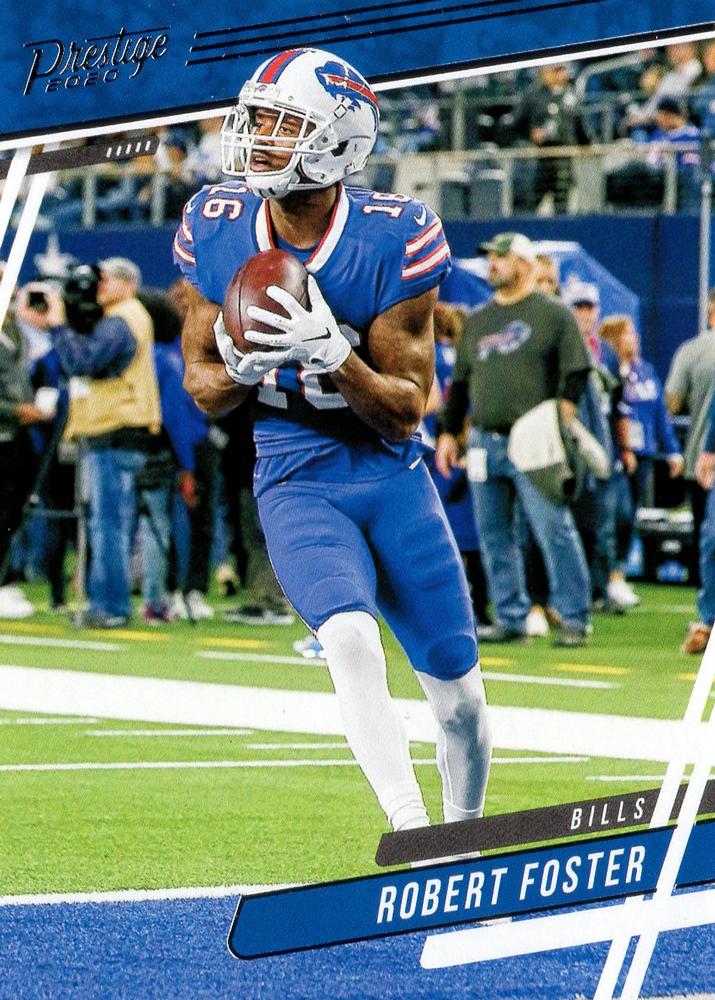
    Robert Foster, a native of Monaca in Beaver County, stands as one of the greatest football players from the region in recent memory. A star receiver at Central Valley, Foster helped lead the Warriors to a WPIAL championship in 2010. By the end of his high school career, he was one of the top prospects not only in Pennsylvania, but in the entire nation. 

    Highly recruited, Foster took his talents to the top football program in the country, the University of Alabama. While he never quite lived up to the almost unrealistic hype at the college level, his rookie season with the Buffalo Bills as an undrafted free agent proved many doubters wrong. Still, whether it was at Alabama or in the NFL, Foster never seemed to receive the fair opportunity his talent suggested he deserved. 

    Blazing fast, Foster’s defining high school performance came in the 2010 Class AAA WPIAL championship game. After defeating Thomas Jefferson in the semifinals, Central Valley faced Montour at Heinz Field. It was the Warriors’ inaugural season following the merger of the Center and Monaca school districts. In the championship, Foster made three game-breaking plays: a 54-yard run, a 35-yard punt return for a touchdown, and a 70-yard reception for another score. Central Valley won convincingly, 24–7. 

    National recruiting outlets quickly took notice. ESPN rated Foster as the No. 2 wide receiver in the ESPN 150 and the No. 28 overall player in the country following his senior year in 2012. He also participated in the prestigious Under Armour All-American Game. Foster ultimately committed to Nick Saban and the Alabama Crimson Tide, winners of the 2009, 2011, and 2012 BCS National Championships. 

    Alabama has long been known for producing elite wide receivers, including Julio Jones, Foster’s teammates Amari Cooper and Calvin Ridley, and later Heisman Trophy winner DeVonta Smith. During the 2010s, the Crimson Tide became arguably the greatest dynasty in college football history. Foster redshirted his freshman season in 2013, a year that ended with Alabama falling to Oklahoma in the Sugar Bowl. 

    As a redshirt freshman in 2014, Foster saw limited action while battling for playing time in a loaded receiver room. He appeared in nine games, catching six passes for 44 yards. For context, Cooper dominated that season with 1,726 receiving yards and 16 touchdowns. Alabama won the SEC but lost to eventual national champion Ohio State in the College Football Playoff semifinal. 

    Expectations were high entering Foster’s sophomore season. He earned his first career start in Week 1 against Wisconsin and scored his first collegiate touchdown on a 22-yard reception from Jake Coker. He followed that performance with another touchdown against Middle Tennessee, totaling eight catches for 99 yards and two scores through two games. Unfortunately, his momentum came to a halt in Week 3 against Ole Miss, when he suffered a season-ending shoulder injury. 

    The injury sidelined Foster for the remainder of the year as Alabama went on to win the national championship. In just three games, he totaled 116 yards and two touchdowns. Calvin Ridley and Ardarius Stewart stepped up in his absence, while O.J. Howard emerged as a major weapon in the passing game. The following season brought a shift in Alabama’s offense, with Jalen Hurts taking over at quarterback. 

    The 2016 Crimson Tide leaned heavily on the run game, with Hurts leading the team in rushing yards. With Ridley, Stewart, and Howard commanding most of the targets, Foster saw few opportunities in the passing game. Despite appearing in ten games, he recorded just five receptions for 55 yards and no touchdowns. Alabama returned to the national championship game but lost to Clemson. 

    By his senior season, Foster had largely faded from the spotlight. Alabama was once again loaded at receiver, and he became something of an afterthought. In 2017, he finished with 14 receptions for 174 yards and one touchdown, including a 52-yard score against Colorado State—his first since 2015. Alabama won another national championship that season, defeating Georgia after Tua Tagovailoa replaced Hurts at quarterback midgame. 

    It was a disappointing end to a college career that began with such promise. Still, Foster competed against elite talent in the nation’s toughest conference and contributed to multiple championship teams. Had it not been for his sophomore-year injury, his trajectory may have looked very different. In today’s era of the transfer portal and NIL, many players in his position would have left. Foster stayed, persevered, and never quit. 

    Despite his limited college production, Foster earned an invitation to the 2018 NFL Scouting Combine, where he ran a 4.41-second 40-yard dash, the fifth-fastest among wide receivers. He went undrafted but signed with the Buffalo Bills, reuniting with former Alabama offensive coordinator Brian Daboll. Foster made the roster and delivered an impressive rookie campaign despite inconsistent quarterback play. 

    After briefly being released early in the season, Foster returned and found his stride. He recorded his first 100-yard game in Week 10 against the Jets and followed it with a 75-yard touchdown against Jacksonville. He added two more 100-yard performances late in the season and finished his rookie year with 27 receptions for 541 yards and three touchdowns, all second on the team. His 541 yards exceeded his total production across four seasons at Alabama. 

    The following offseason, Buffalo invested heavily in veteran receivers, limiting Foster’s role. His production dipped sharply in 2019, and he became expendable. After being part of Buffalo’s final cuts heading into the 2020 season, Foster spent a brief stint on Green Bay’s practice squad before signing with the Washington Football Team, marking his final stretch of in-game NFL action. He appeared in four games for Washington, making two starts and recording two receptions for 37 yards. The Football Team cycled through three starting quarterbacks that season, adding to the offensive inconsistency. 

    Following the 2020 season, Foster remained in the league on practice squads in 2021 with Miami and Dallas, and in 2022 with the Giants and Colts. Despite continuing to earn opportunities, he did not see game action again. Over three seasons in the NFL, Foster totaled 642 receiving yards and three touchdowns. 

    While his professional career never fully matched early expectations, Foster defied the odds as an undrafted player and proved he belonged on football’s biggest stage. He is best remembered for his dominance at Central Valley, where his legacy remains secure. 

    Like other Western Pennsylvania standouts who struggled to find long-term NFL success, Foster’s journey is emblematic of a memorable era of WPIAL football. From a small-town program to BCS national championships at Alabama and a stint in the NFL, his path is one worth remembering. Robert Foster is more than deserving of recognition in both the Beaver County Sports Hall of Fame and the WPIAL Hall of Fame. 

  • Norm Van Lier: Raging Bull

    By Brian Kopycinski

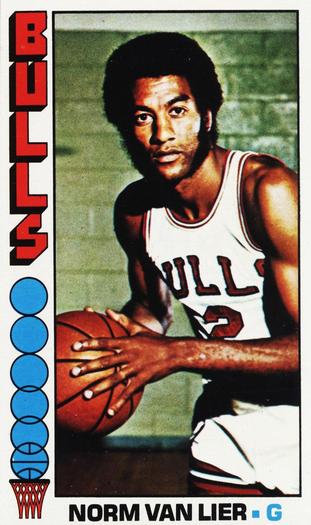
    Norm Van Lier was truly one of a kind, a fierce competitor and a legend both on and off the court. A native of Midland, Pennsylvania, Van Lier rose from humble beginnings to enjoy a decade-long NBA career, most notably with the Chicago Bulls. 

    At Midland High School, Van Lier distinguished himself across three sports. He played quarterback and safety in football, shortstop in baseball, and emerged as a standout on the basketball court. His talent even drew interest from the St. Louis Cardinals, who offered him a professional contract out of high school, an opportunity he declined. In 1965, Van Lier was a key contributor on the legendary Midland Leopards basketball team that finished 28–0 and captured the PIAA state championship. Playing alongside Simmie Hill, the Leopards defeated Steelton-Highspire 90–61 in the title game. 

    After high school, Van Lier attended a tryout practice at the University of Cincinnati before enrolling at Saint Francis University in Loretto, Pennsylvania, much closer to home. Over three seasons with the Frankies, he helped lead the program to a 55–20 record. Van Lier scored 1,410 career points, averaging 18.8 per game, and finished his college career as the program’s third-leading scorer at the time. During the 1967–68 season, he also set a school record with 290 assists. He earned first-team All-East honors twice and was named an honorable mention All-American on two occasions. Van Lier even received a tryout opportunity with the Cincinnati Bengals as a defensive back, but ultimately stayed committed to basketball. In 1969, he was selected by the Chicago Bulls in the third round (34th overall) of the NBA Draft, though he was soon traded to the Cincinnati Royals. 

    A scrappy, physical guard, Van Lier quickly made his mark in Cincinnati, playing alongside Oscar Robertson and under player-coach Bob Cousy. By his sophomore season, he led the NBA in assists. While with the Royals, Van Lier made history by becoming the first player ever to record a scoreless double-double. On January 5, 1971, against the Los Angeles Lakers, he finished with 0 points, 13 assists, and 11 rebounds in a Royals victory. During the 1971–72 season, Van Lier was traded back to Chicago, where he became a cornerstone of the Bulls’ strong teams of the early 1970s under head coach Dick Motta, alongside Jerry Sloan, Bob Love, and Chet Walker. 

    The backcourt duo of Norm Van Lier and Jerry Sloan was relentless and widely regarded as one of the toughest defensive pairings in the league. Van Lier often credited Sloan with helping shape his work ethic and approach to the game. In Van Lier’s first four seasons with Chicago, the Bulls won 50 or more games three times. One of his most memorable performances came in Game 6 of the 1973 Western Conference Semifinals, when he put on a defensive masterclass against Hall of Famer Gail Goodrich. Van Lier held Goodrich to just four points and recorded a then-record 10 steals, helping Chicago force a Game 7. Chicago ultimately fell to Los Angeles, but Van Lier’s impact was evident. 

    In 1974, Van Lier became the first player from Beaver County to earn NBA All-Star honors. Over his career, he was selected to three All-Star Games and earned eight All-Defensive Team honors. He averaged 11.8 points, 7.0 assists, and 4.8 rebounds per game. Van Lier spent his final NBA season in 1978–79 with the Milwaukee Bucks before retiring at age 31. Notably, he and Michael Cooper are the two players with the most All-Defensive Team selections who have yet to be inducted into the Naismith Basketball Hall of Fame. 

    Following his playing career, Van Lier transitioned seamlessly into broadcasting, spending more than 20 years as a television and radio color analyst for the Bulls. His passion, honesty, and deep knowledge of the game further endeared him to Chicago audiences and solidified his place in Bulls history. Norm Van Lier passed away on February 26, 2009, at the age of 61. In 2025, he was posthumously inducted into the Chicago Bulls Ring of Honor. He is also a member of the Beaver County Sports Hall of Fame (1984) and the Saint Francis Athletics Hall of Fame (1999). 

    “Stormin’ Norman” remains one of the greatest athletes to ever come from this region. Underrated in Bulls history and overlooked among the game’s all-time defensive greats, Norm Van Lier’s legacy as both a player and broadcaster deserves serious future consideration for the Basketball Hall of Fame. 

  • Doug Piatt: Seizing the Moment

    By Brian Kopycinski

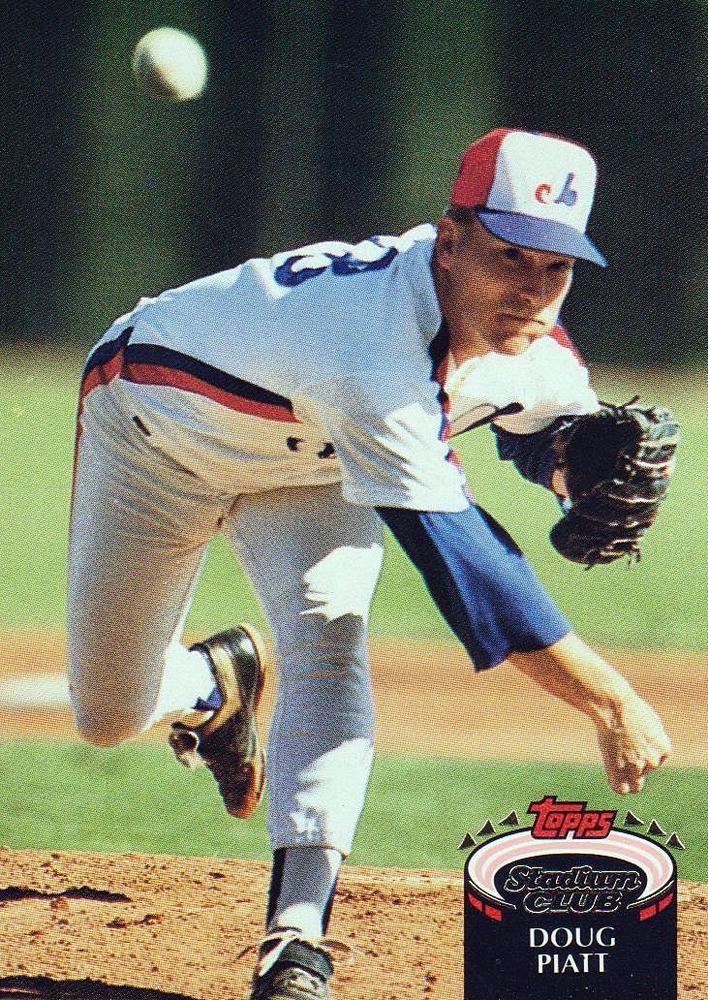
    Doug Piatt accomplished what so many can only dream of. Not only did he make it to the big leagues but pitched well in his limited showing. The odds of a kid making it from this region, best known for producing talent on the gridiron, are incredibly slim. Piatt worked his way through the minors towards his ultimate goal of making it to the show. When that opportunity came, he made the most of it and thrived in his role out of the bullpen for the Montreal Expos. His journey begins, however, in Beaver County, Pennsylvania.

    Piatt was a four-year letter winner in baseball at Beaver High School, forming arguably the greatest pitching tandem in WPIAL history with future All-Star John Burkett. For Piatt’s senior year in 1983, Beaver won the WPIAL championship and made it all the way to the PIAA state finals. When he wasn’t on the mound, Piatt manned the hot corner for the Bobcats. After graduating, he attended Gulf Coast Community College in Panama City, Florida, quite the culture shock for a kid from Beaver. Piatt was later drafted by the St. Louis Cardinals in the 3rd round of the 1984 MLB January Draft but chose not to sign. After transferring to Western Kentucky University on a scholarship, Piatt eventually signed as a free agent with the Cleveland Indians following an impressive collegiate career.

    His professional career got off to a promising start. After a brief stint in rookie ball, Piatt was assigned to the Waterloo Indians of the Class A Midwest League. In 26 relief appearances, Piatt held a remarkable 2.21 ERA in 36.2 innings pitched, to go with 40 strikeouts and 12 saves. Liking what they saw in the young right-hander, Montreal traded for Piatt in July 1989 and assigned him to their Single A club in Rockford. There, he continued to impress with a 3.20 ERA in 11 appearances. Piatt began the 1990 season in West Palm Beach where he was later named to the Florida State League All-Star Game after posting an elite 0.99 ERA, along with 9 saves. He was then promoted to Jacksonville and continued to punish hitters out of the pen. In 49 innings pitched, his ERA stood at 2.20 for the Expos’ Double-A team.

    Montreal had clearly found something in Piatt, as a potentially elite bullpen arm and perhaps dominant closer. He pitched well enough in 1991 for Triple-A Indianapolis to earn a promotion to the majors mid-way through the season. The Expos were in last place in the NL East, a team in rebuild mode after trading Tim Raines to the Chicago White Sox the past offseason. Still, Montreal held hope in building around young talent, like Larry Walker and Marquis Grissom. Piatt made his big league debut at home on June 11 versus the Cincinnati Reds. A spot on the roster became available after Rick Mahler was released. He entered the ballgame in the 6th inning, and struck out the first two batters he faced, Joe Oliver and Norm Charlton. Piatt then induced future Hall of Famer Barry Larkin into a groundout to retire the side. Other than giving up a hit to Chris Sabo in the 7th, Piatt had a clean, scoreless two-inning debut in the Expos’ loss.

    As a rookie, Piatt made 21 appearances to an ERA of 2.60 in 34.2 innings pitched, striking out 29 and walking 17. Despite this strong showing, he never pitched in the majors again. Piatt spent most of the 1992 season with Double-A Harrisburg, where he started games for his first time as a pro. 1993 would be different. Piatt truly struggled for the first time in his career, splitting time between the Pirates’ and Royals’ Double-A affiliates. He later found success with the independent Beaumont Bullfrogs of the Texas-Louisiana League in 1994, sporting a 3.42 ERA with 7 saves in 15 appearances. After a stay with San Francisco’s Triple-A farm club in Phoenix, Piatt returned to indy ball in ‘95 with the Abilene Prairie Dogs. ‘96 was spent with Rio Grand Valley.

    Piatt’s career in professional baseball ended after the 1997 season. That year, he joined the Waterbury (CT) Spirit of the Northeast League. In 22 games, he posted a solid 3.04 ERA with 11 saves. At the age of 31, he had spent a decade in the pros. His final season stands as a testament to his talent and determination. Piatt never gave up when things got tough. He kept working and found his niche as a pitcher in the independent leagues. He could have quit after his time in the majors was up, but his love for the game kept him going. When he pitched for the Expos, he didn’t disappoint, either. A career 2.60 earned run average in the majors is something to be damn proud of.

    Doug Piatt was inducted into the Beaver County Sport Hall of Fame in 2008.

  • Mickey Davis: Mr. Hustle

    By Brian Kopycinski

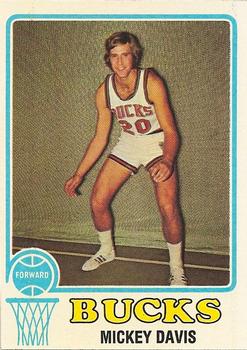
    Edward “Mickey” Davis carved out a respectable basketball career that spanned high school stardom in Western Pennsylvania, collegiate success at Duquesne University, a brief ABA stint, and a solid five-year run in the NBA with the Milwaukee Bucks. The Rochester, PA native, standing at 6’7” and known for his versatility as a swingman, emerged from humble beginnings. The older brother of longtime Dallas Mavericks point Brad Davis, Mickey was the first in the family to make a name for himself. 

    Davis’s hardwood journey began at Monaca High, where he dominated as a three-year starter, showcasing his exceptional scoring and rebounding ability. As a senior in 1968, he set the school’s single-season scoring record (515 points) and earned the team’s MVP honors. His standout high school career in a region rich with talent led to his induction into the Beaver County Sports Hall of Fame in 1985.  

    After graduating from Monaca, Davis attended Duquesne on a basketball scholarship, playing three seasons for the Dukes under head coach Red Manning, alongside his cousin Bill Zopf and Aliquippa’s Jarrett Durham. As a swingman, he quickly became a key contributor. Davis led the team in both points (19.1) and rebounds (9.5) per game as a junior. The peak of his college tenure came during that 1970-71 season, where Duquesne compiled a 21-4 record and earned an NCAA Tournament bid. The Dukes, ranked #15 in the final AP Poll, fell in the first round to Penn. Showing great potential, Davis opted to forgo his senior year and turn pro early. 

    Davis began his professional career with the Pittsburgh Condors for the 1971-72 ABA season. The Condors, formerly the Pipers, had fallen on hard times, years removed from their championship squad that featured Connie Hawkins. Davis played sparingly in his first taste of pro action, appearing in just 23 games as a rookie. While his ABA career was unremarkable, it provided valuable exposure. Davis was later drafted by the Bucks in 1972 in the seventh round, 113th overall. The Bucks, led by Kareem Abdul-Jabbar and Oscar Robertson, were a powerhouse team that won their first NBA title just a season ago.  

    Davis contributed as a role player in an elite environment, becoming a valuable depth piece on playoff-contending teams. He spent five seasons with the Bucks, averaging five points and an assist per game. Davis was waived partway through the ‘76-’77 season and later called it a career. He was an effective shooter. For the ‘73-’74 season, he averaged a career best .504 field goal percentage. His best performance in the regular season came on January 6, 1974, against the Washington Bullets at the Capital Centre, when he scored 22 points, grabbed 8 rebounds, and added 4 assists filling in for an injured Bob Dandridge. 

    Davis’s finest moment arrived in the 1974 NBA Finals against the Boston Celtics. With starting guard Lucius Allen sidelined and Milwaukee’s backcourt struggling against Boston’s defensive pressure, coach Larry Costello shifted the 6’7” Davis to the point, a highly unconventional move. He started all seven games in the series, providing stability to the Bucks’ lineup. The Bucks pushed the Celtics to a decisive Game 7, which Boston won 102-87 at Milwaukee Arena. In Game 6, a Bucks win at Boston Garden, Davis scored 12 points, helping force the series finale. Though Milwaukee fell short in their pursuit of a second title, Davis held his own, averaging 11.3 points in the classic that featured several Hall of Fame talents.

    After his NBA career, Davis worked as a regional sales manager for the Milwaukee-based Miller Brewing Company. Though his career lacked the longevity of his brother Brad’s, Mickey Davis played meaningful minutes at the highest level alongside legends like Kareem and Oscar Robertson. His story remains a point of pride in Beaver County. Today, Mickey and his wife, Linda, reside in Florida, enjoying their retirement. They have four children.

  • Kevin Orie: The Hot Corner on the North Side

    By Brian Kopycinski

    The Chicago Cubs of the 1960s and 1970s featured a number of all-time greats, such as Ernie Banks, Billy Williams, Ron Santo, and Bruce Sutter. Despite this abundance of talent, the North Siders failed to claim a pennant in this time and well into the 21st century, before the 2016 squad broke the franchise’s 108 year championship drought. The closest these teams came to an NL crown was in 1969, when the Cubs finished second in the East Division, eight games behind the Amazin’ Mets, with a record of 92-70.

    This close but no cigar trend continued, with more second and third place finishes for Chicago in the new decade. Banks retired in 1971 but remained with the team for a few years as a coach. Santo and Williams were dealt following the disappointing ‘73 and ‘74 seasons, with Santo heading crosstown to the White Sox first and Williams off to Oakland less than a year later. In the time since, the Cubs lacked true successors at each legendary players’ respective position. To be fair, these would be mighty tough shoes to fill. At third base, plenty of notables occupied the hot corner since Santo’s departure. These include Bill Madlock, Ron Cey, Ryne Sandberg for a season, and Steve Buechele.

    When the Cubs drafted Pittsburgh native Kevin Orie, one of nine siblings, in the first round of the 1993 MLB Draft, they felt they’d found their third baseman of the future. Orie, a product of Upper St. Clair, took his talents to Indiana following high school, where he shined on the diamond for the Hoosiers baseball team. His 1994 Topps rookie card makes a bold comparison, to none other than Cal Ripken Jr. It reads “One look at Orie and the words “Cal Ripken Jr.” come to mind.  

    Like Rip, Kevin is a jumbo-sized shortstop (he wears a size 15 shoe!) yet has such infallible skills and instincts that he can handle the position with ease.” In three seasons at Indiana, from ‘91 to ’93, Orie hit .358 for his collegiate career with 34 home runs. He was an All-Big Ten selection in 1992. That year, Álex Rodríguez was selected first overall by the Seattle Mariners. Another noteworthy third baseman was taken soon after Orie’s name was called, Jasper, Indiana’s Scott Rolen, whom the Philadelphia Phillies took in the 2nd round, 46th overall.

    While Rolen would eventually make it to Cooperstown after an outstanding career, Orie’s diverged after a strong rookie campaign in 1997. Orie always hit well in the minors but missed most of 1994 with a wrist injury. Heading into the ‘97 season, he was ranked the #42 prospect in Baseball America’s Top 100. Before his major league debut, he was hitting a blistering .378 between Double-A Orlando and Triple-A Iowa, albeit in a small 12 game sample size. With the big club, Orie got into 114 games primarily at third, with a few games spent at short.  

    The Cubs’ decline in the ‘90s was no exception that year, Sandberg’s swan song, though Orie ranked third on the team in WAR by both Baseball-Reference (2.4) and FanGraphs (2.3) metrics. He was just behind Sammy Sosa, a year before Sosa’s historic home run chase with Mark McGwire. For the year, Orie hit .275 in 418 plate appearances, with 8 homers and 44 runs batted in. For his efforts, he received down ballot NL Rookie of the Year votes, finishing 11th. 

    Rolen ran away with the award after a strong full season showing, after appearing in just 37 games for the Phils in ‘96. Boston’s Nomar Garciaparra claimed the honor for the American League. A lot would change in 1998 for the Chicago Cubs. It was a major turnaround for a franchise on hard times. 22 more wins than the previous season, Sosa’s power surge. The emergence of a rookie phenom in Kerry Wood, who struck out a record 20 batters on May 6 versus the Astros at Wrigley Field.  

    Unfortunately for Kevin Orie, he was involved in the play that resulted in the only hit the Astros notched that game. Houston shortstop Ricky Gutiérrez hit a grounder to Orie’s left, deflecting off his glove, and rolled into left field. Wood had no walks, so if not for this play that was ruled a hit, he would have had a perfect game with his 20 strikeouts.  

    Orie’s 1998 with the Cubs didn’t go as well. His hitting suffered, batting just .181 in 64 games, and he was dealt to the Florida Marlins at the deadline. A change of scenery seemed to have helped, as he improved on all fronts, hitting .263 in 48 games for the Fish, a year removed from their World Series title run in which they finished an abysmal 54-108 in ‘98. Orie continued to play well in 1999, though he only got into 77 games for the Marlins that year, good for 1.4 bWAR.  

    At Triple-A Calgary, he hit .319 in 23 games. Manager Jim Leyland resigned after another bad year, and Orie’s fortunes turned in the new millennium. Over the next few years, he bounced around the league via the minors, first being traded to the Dodgers, released, signed by the Royals, then the Yankees, and finally the Phillies before he made his way back to Chicago. 

    In those years spent in Triple-A, Orie never gave up hope of returning to the big leagues someday. His play reflected this mindset. For the 2001 season with Philadelphia’s top farm club, the Scranton/Wilkes-Barre Red Barons, Orie hit .293 with 13 home runs and 45 RBIs. He signed with the team that first took a chance on him, the Cubs, in November. Orie appeared in 13 games for the North Siders in 2002, as a backup to third baseman Bill Mueller, where he hit .283 in 36 at-bats.  

    He saw more action with the Iowa Cubs that year, hitting a career high of 20 long balls in 86 games. After the Cubs released him the next spring, he moved around the minors again in the same way between several franchises that included the Indians, the Astros, the Brewers, and the newly founded Washington Nationals. He retired after one game with the Round Rock Express (Houston) in 2006.  

    While Orie never lived up to the high billing in Chicago, that’s not to take away from what he accomplished in the game. Even after he was released by the Cubs, he was still a great hitter at Triple-A, which most rank above Japan’s NPB for its level of competition. He was also a standout in Division I college baseball on winning teams. Not bad for a kid from the South Hills. In the years since Orie’s playing days, he’s still been involved in the game he loves, as a radio commentator for Pittsburgh’s 93.7 The Fan and color analyst for the West Virginia Mountaineers. Orie currently serves as the COO of MSW Supply based in Oakmont.  

  • Doug Kotar: A Giant

    By Brian Kopycinski

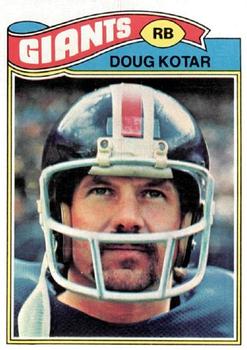
    The region of Western Pennsylvania has produced some of the greatest talents in NFL history. It is known to some as the “Cradle of Quarterbacks”, as the home of Dan Marino, Joe Montana, Joe Namath, and Johnny Unitas. On the defensive side, Aaron Donald and Darrelle Revis shined bright; both are widely regarded as among the best ever at their respective positions. Pittsburgh is a gritty, blue-collar town. Its native sons reflect this identity on and off the field. This incredible legacy is undeniable. Over the years, many of its stars built their legends on the biggest stage, while others equally deserving have been largely overlooked in the game’s broader history. Through my writing, I aim to highlight those who’ve been denied the recognition they deserve. The first who came to mind? Doug Kotar, a running back who embodied that tough, ironclad spirit for the New York Giants. 

    Kotar hailed from Muse, a small town just outside of Canonsburg, in Washington County. At Canon-McMillan High School, he excelled not only in football but also in baseball and track and field, competing in the javelin and shot put. A natural athlete, he was drafted by the Cincinnati Reds as an outfielder in the 16th round of the 1970 MLB Draft. From his earliest years on the gridiron, he was an impact player. An Observer-Reporter column from a few years back chronicled his rise from high school to the pros, featuring a defining performance from his senior season against Chambersburg.  

    On the first play from scrimmage, Kotar scored on a 70-yard option run after a pitch from quarterback Mike Smutney. Later, in the fourth quarter, he broke free on a 92-yard kickoff return to seal the win for the Big Macs. Kotar became the first Canon-McMillan graduate to reach the NFL, a distinction that stood alone for more than four decades. The next came in 2015, when Penn State linebacker Mike Hull signed with the Dolphins. From Kotar’s era, right-hander Tom Dettore appeared in parts of four big-league seasons with the Pirates (1973) and Cubs (1974-1976). One can only wonder whether Kotar might have reached the majors had he pursued baseball, though breaking into the Big Red Machine’s outfield behind George Foster, César Gerónimo, and Ken Griffey Sr. would have been a tall order. 

    After high school, Kotar headed to the University of Kentucky. The Wildcats never won more than five games during his time there, facing stiff competition in the SEC. Over three seasons, Kotar piled up 1,167 rushing yards while sharing the backfield with Sonny Collins, a future second-round pick of the Falcons in 1976. Another standout teammate was linebacker Joe Federspiel, a ten-year NFL veteran and member of the New Orleans Saints Hall of Fame. On September 11, 1971, in his first varsity game against Clemson at Memorial Stadium, Kotar, then a sophomore, took the opening kickoff 98 yards to the house, helping Kentucky to a 13-10 win over the Tigers.  

    Listed at just 5’10 ½” and 205 pounds, Kotar was an undersized, hard-nosed runner. His college numbers were solid but unspectacular. The odds were stacked against him. Undrafted in 1974, he signed as a free agent with his hometown Steelers, only to be traded to the Giants soon after. In exchange, Pittsburgh received quarterback Leo Gasienica, a Rutgers product who later played for the Birmingham Vulcans of the World Football League. The Giants opened the season “at home” against the Redskins, not in New York, but at the Yale Bowl in New Haven, Connecticut, a temporary venue while Yankee Stadium was being renovated. The following year, they played at Shea Stadium before settling into their permanent home, Giants Stadium, in East Rutherford, New Jersey.  

    Kotar made an immediate impression in his NFL debut, scoring a touchdown and leading the Giants with 43 rushing yards in a close 13-10 loss. He wore #44, the same number worn today by another bruising back, Cam Skattebo. A few weeks later against the Falcons, he posted a career-high 119 yards and another score, his third touchdown in four games. The Giants still fell 14-7, starting the year 1-3. The team was mired in a postseason drought dating back to 1963. Over his first two seasons, Kotar racked up 755 kick-return yards, proving his value and versatility. His finest all-around year came in 1976, when he eclipsed 1,000 all-purpose yards (731 rushing, 319 receiving) and led the Giants in rushing, edging future Hall of Famer Larry Csonka’s 569. He again led the team in 1978, with 625 yards on the ground.  

    A number of notable personalities made up these Giants teams. Marty Schottenheimer, the linebackers coach and later defensive coordinator, was born in Canonsburg and played his college ball at Pitt. A former defensive back, Schottenheimer won an AFL Championship with the Buffalo Bills as a rookie. Bill Belichick and Romeo Crennel also spent the early parts of their coaching careers with the Giants in various roles. During Kotar’s tenure, he played under three head coaches: Bill Arnsparger, John McVay, and Ray Perkins.  

    When Kotar was a rookie, his quarterback was Craig Morton, who had previously won a championship with the Cowboys and later faced them as a member of the Broncos in Super Bowl XII. By 1979, Phil Simms, a first-round draft pick, had become the franchise’s future. Billy Taylor led the team that season with exactly 700 rushing yards, while Kotar was close behind with 616. Both contributed over 200 yards receiving. Unfortunately, Kotar’s fortunes turned the following year. He missed the entire 1980 campaign after tearing ligaments in his left knee. Without him, the Giants faltered, finishing fifth in the NFC East at 4-12.  

    The 1981 season, however, would be different. Led by rookie phenom and future Hall of Famer Lawrence Taylor, who earned Defensive Player of the Year honors, the Giants finished 9-7, their first winning season since 1972, and reached the postseason for the first time in nearly twenty years. Kotar returned to action, appearing in seven games with five starts. His final game came on November 8 at Milwaukee County Stadium, where the Giants narrowly lost 26-24 to the Packers. Kotar recorded just two carries for four yards and one reception for a three-yard loss. A dislocated right shoulder sidelined him for the remainer of the season, as Rob Carpenter, acquired in a trade from the Oilers, emerged as the team’s feature back. The Giants entered the playoffs as the fifth seed, defeating their archrival Philadelphia Eagles in the Wild Card before falling to Joe Montana’s 49ers in the Divisional Round.  

    Kotar retired after the start of training camp in 1982. The years of physical punishment had taken their toll. His career ended abruptly, but his greatest battle was still ahead. Not long after hanging up his cleats, Kotar began suffering from severe headaches. A CAT scan revealed a malignant brain tumor. Doctors warned that surgery would be life-threatening. Kotar underwent radiation and chemotherapy for over a year, which left his left side partially paralyzed. Tragically, he passed away on December 16, 1983, at Montefiore Hospital in Pittsburgh. He was just 32 years old. 

    He was survived by his wife, Donna; his children, Doug Jr. and Christie; his brothers, Anton and Richard; and his mother, Rachel. He was laid to rest at Forest Lawn Gardens in McMurray. 

    Hall of Fame linebacker Harry Carson, one of the pallbearers, once said of Kotar, “He’s a fighter you’d like to have with you in a foxhole.” 

    Giants teammates, owner Wellington Mara, and Art Rooney Sr. were among those who attended the service in Canonsburg. Kotar’s death has since been associated with repeated head trauma and other cumulative injuries from his playing career. At the time, the NFL was embroiled in a players’ strike, one of the key issues being players’ inability to access their own medical records due to restrictive rules from ownership in the previous collective bargaining agreement. This poignant detail of Kotar’s story was revisited in 2013, when Keith Olbermann paid tribute to him on his ESPN show. 

    At the time of his retirement, Kotar ranked fourth all-time on the Giants’ rushing list; today, he stands tenth, just behind Frank Gifford. His career was defined by perseverance. He exceeded expectations at every turn. Kotar unquestionably belongs in the Giants’ Ring of Honor – and as of 2025, it remains astonishing that he is not. In 2008, he was inducted into the Pennsylvania Sports Hall of Fame, Washington-Greene County Chapter. 

    While fans remember Kotar for his toughness on the field, those closest to him recall a devoted husband, father, and friend. Simply put, Doug Kotar was a Giant.