
By Brian Kopycinski
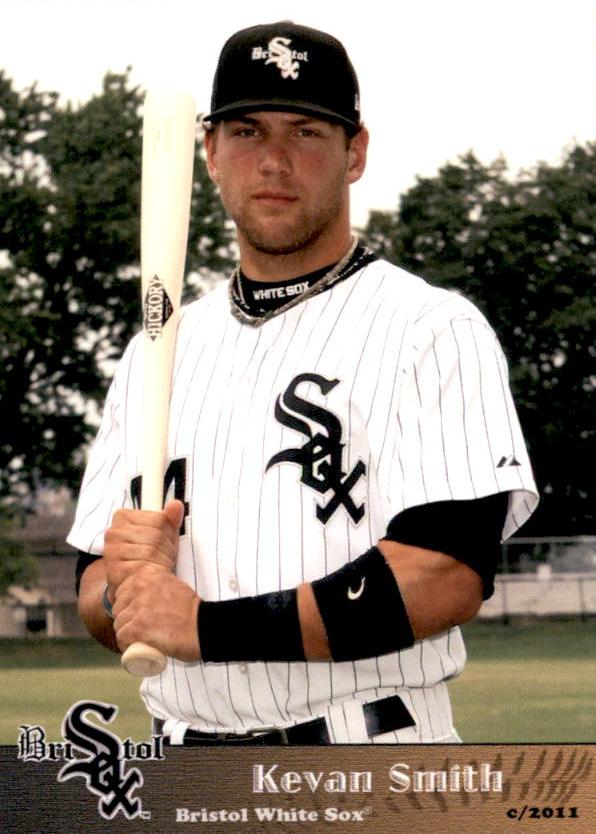
Kevan Smith went from Pitt’s starting quarterback to catching in the major leagues. The difficult decision to switch from football to baseball quickly paid off. Simply put, Smith is one of the greatest players in program history. His story is one of grit and resilience.
The Cranberry, PA, native missed significant time at Seneca Valley during his junior and senior years due to injury. Still, Smith managed to pass for over 1,500 yards and eight touchdowns his final season. On the diamond, he was a four-year letter winner at catcher and was named the Class AAAA Player of the Year by the WPIAL Baseball Coaches Association in 2006. He was considered a top recruit in the state, and even the nation, by some outlets. Smith later committed to the Pitt football program under head coach Dave Wannstedt.
Smith redshirted his freshman year and was called on to replace injured starting quarterback Bill Stull in the 2007 season opener versus Eastern Michigan. Pitt won the game 27-3, and Smith was viewed as the starter moving forward. Against Grambling State, he led the Panthers to another victory, going 15-for-22 passing with one touchdown and one interception. Smith struggled the following week at Michigan State in a close game, throwing two picks in the 17-13 Pitt loss. Smith started the first half against UConn but left the game with an injured elbow. He was replaced by Pat Bostick.
Bostick won the starting job, and Smith wouldn’t see the field again until the second half of the Rutgers game where he went 7-for-11 for 81 yards. He left that game late with a right shoulder injury in another tight Pitt loss. It was a disappointing season overall for the Panthers, but it ended on a high note. In the Backyard Brawl, Pitt defeated No. 2 ranked West Virginia 13-9. While Smith was on the sidelines for this one, he still holds a place in this iconic victory as the backup. During the 2008 season, Stull and Bostick saw the majority of reps at QB, and Smith was essentially a non-factor. He knew it was time for a change.
He was drawn to the baseball team by his former high school teammate Zach Duggan, Pitt’s center fielder. For three seasons, Smith provided ample power and strong defense behind the dish. While Pitt baseball wasn’t exactly great during this time, it’s hard not to recognize the impact Smith had. He was an All-Big East First Team selection in 2010 and 2011. The 2011 season was particularly notable. Smith tied all league hitters with a .396 batting average and led the conference in runs scored with 56. His eight home runs and 52 RBIs made him one of the top sluggers in the Big East.
Today, Smith still ranks highly in several offensive categories, including batting average (.375), total bases (313), and RBIs (123). He was also a factor in tournament play. Across the 2010 and 2011 Big East tournaments, he hit a combined .522. In 2011, he slugged three home runs as Pitt defeated Louisville in the opening round before falling to St. John’s. For all he accomplished at Pitt, Smith was considered one of the top collegiate catching prospects of the 2011 cycle. He was drafted by the Chicago White Sox in the 7th round, 231st overall. Smith got off to a hot start in rookie ball, posting a combined .355 average and a 1.073 OPS between Great Falls and Bristol of the Pioneer and Appalachian Leagues.
Over the next few years, Smith continued to hit for both average and power in the White Sox system. By 2012, he was ranked Chicago’s 15th best prospect by MLB.com. In 2014 with Double-A Birmingham, he hit .290 with 10 home runs and 48 RBIs. Smith finally reached the show in 2016 for a cup of coffee. The White Sox had a crowded catcher’s room that included Dioner Navarro, Alex Avila, and rookie Omar Narváez. The team finished fourth in the AL Central that year at 78-84.
In 2017, Smith split catching duties with Narváez, appearing in 87 games for the Sox. He continued to hit well in this role, batting .283 with four home runs and 30 RBIs. Chicago, however, declined to a 67-95 record, finishing fourth in the division once again. Smith remained Narváez’s backup in 2018, hitting an excellent .292 in 187 plate appearances. The White Sox lost 100 games that season, and Smith was released afterward. The Los Angeles Angles claimed Smith that October for added depth at the position.
The Angles had also signed Jonathan Lucroy that offseason to serve as their primary backstop. On a team that featured Mike Trout and Shohei Ohtani, arguably two of the greatest players ever, the Halos finished fourth in the AL West at 72-90. Smith appeared in 67 games as a backup and hit a career-high five home runs, though his average dipped to a more pedestrian .251. That winter, he signed with the Tampa Bay Rays, aiming to backup Mike Zunino. The Rays also had future Pirate Michael Pérez on the roster. During the pandemic-shortened season, Zunino missed significant time due to an oblique injury, and Pérez caught the majority of games in the regular season.
That year, Smith played in just 17 games out of a possible 60. In 38 plate appearances, he batted .258 with a .378/.452/.830 slash line. Zunino eventually returned, and Smith sat out the postseason, which saw the Rays win the AL pennant and lose the World Series to the Los Angeles Dodgers in six games. Still, it must have been special to be part of a pennant-winning team, regardless of the circumstances. Smith played sparingly for the Rays in 2021 and was dealt to the Atlanta Braves for cash considerations. With Travis d’Arnaud and William Contreras positioned behind the plate, he struggled for the first time. Smith appeared in 30 games for the Braves, hitting a career-low .165 in 101 plate appearances. As a below-replacement-level player, he didn’t have much of a future with the club. After the season, he signed no further contracts and has not appeared in the minor leagues or independent ranks since.
Kevan Smith enjoyed quite a journey, no matter how it ended. What should have been an incredibly difficult transition, he made look seamless. Smith began his amateur career at Pitt under center and ended it behind the plate. His excellence earned him an opportunity in the big leagues, one he met head-on. Appearing in 263 major league games is a remarkable accomplishment, made even more impressive by the injuries and obstacles he overcame. As one of the more accomplished athletes in program history, he is certainly worthy of a place in Pitt’s Athletics Hall of Fame someday.