
By Brian Kopycinski
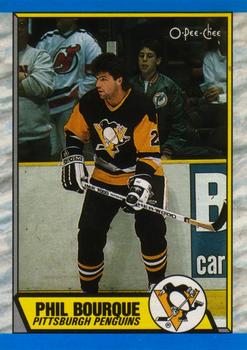
Phil Bourque grew up outside of Boston in Chelmsford, Massachusetts, but considers Pittsburgh to be his home. A fan favorite for his work on and off the ice, the Steel City has embraced the two-time Stanley Cup champion as one of their own. Bourque’s story is one of resilience, from his early years through his playing days. For all that he’s done in his career and life, Phil Bourque is simply legendary.
Boston has always been a hockey town, as home of one of the original six teams. When Bourque was a kid, the Bruins were winning Stanley Cups with stars like Bobby Orr and Phil Esposito. From a very young age, Bourque was a natural skater. He grew up playing in the backyard with his two brothers, on an outdoor rink their father had built. Bourque showed his versatility early on in youth hockey, playing both ways. Unfortunately, he was a victim of verbal and physical abuse from his father on a regular basis. The two had a complicated relationship and eventually reconciled years later.
Bourque played two seasons for the Kingston Canadians in the OHL. He went undrafted in the ‘82 cycle but received offers from his hometown Bruins and the Pittsburgh Penguins. Bourque chose Pittsburgh in part to get away from his father. The Penguins had also made him a better offer. Soon after, he joined the Baltimore Skipjacks of the AHL. Bourque began his career as an offensive-minded blue liner. He made his debut with the Penguins in 1983-84. Bourque then spent the next several seasons up and down between the AHL and NHL before finally becoming a Penguins regular in 1988-89. He made the difficult transition from defenseman to left wing, scoring 43 points in his first full year.
That season, Pittsburgh finished second in the Patrick Division with 87 points and made the playoffs. Bourque scored three goals in the Pens’ sweep of the Rangers in the opening Semi-Finals. He also scored the winning goal in overtime in Game 3 of the Division Finals at Philadelphia, a series Pittsburgh would go on to lose in seven games. After an impressive showing, Bourque followed this with a career high 22 goals in 1989-90. While the Penguins missed the playoffs that season, they later drafted Jaromír Jágr that summer. Things were looking up in Pittsburgh in the new decade.
The early ‘90s were a special time for Pittsburgh hockey. The team was stacked with talent, with several Hall of Famers filling the lineup. Mario Lemieux was the best player in the game. Phil Bourque was a valuable contributor to these back-to-back Stanley Cup champions. For 1990-91, he netted 34 points in the regular season, and added 13 points in the playoffs, notably scoring two goals in the Finals against Minnesota. Next year, the Pens finished third in the Patrick Division but ran the table again to play for the Stanley Cup. In Game 1 of the Finals, Bourque scored a goal in the first period that helped kickstart the Pens’ comeback victory. Pittsburgh ended up sweeping Chicago to claim the franchise’s second title.
For the 1992-93 season, Bourque signed with the New York Rangers, where his production gradually declined. He was traded to the Ottawa Senators in March 1994, where he received limited playing time. Bourque nearly died in a rock-climbing accident at Lake Powell in the offseason, falling from about 40-feet, face first. He broke his neck in three places, fractured his skull, his nose; it was a minor miracle that he lived. His friends acted quickly and found park rangers to assist him, sending a helicopter that life-flighted him out to a hospital in Flagstaff. Had he not been in the best shape of his life, the fall likely would have killed him, doctors later said. The NHL lockout delayed the start of the upcoming season until January, and Bourque was able to make a recovery in time to play.
Those early Senators teams were hard to watch, always one of the worst teams in the league. Bourque played sparingly in Ottawa, and left the NHL after the 1995-96 season, joining the IHL. He spent time with the Detroit Vipers and Chicago Wolves before deciding to play overseas in Germany. Bourque called it a career after the 1999-00 season spent with the Hamburg Crocodiles of the 2nd Bundesliga. For his 12-year NHL career, he totaled 199 points, won two Stanley Cups, and endeared himself to fans with his physical, gritty style of play. A few years later, Bourque joined Mike Lange in the broadcast booth as a color commentator. He has remained with the Penguins organization ever since.