
By Brian Kopycinski
Pitt football enjoyed an unprecedented run of success from the late ‘70s through the early ‘80s that it has not replicated since. A Heisman Trophy winner in Tony Dorsett, multiple national championships, both claimed and unclaimed, the development of elite talents bound for the Pro Football Hall of Fame. It’s unlikely in today’s landscape of college football that we’ll see as much attention and success in the program ever again. We all know that nothing lasts forever.
By 1983, Dan Marino and many more were off to the National Football League. Certainly, filling their shoes would be no easy task. The ‘83 Panthers had a difficult road ahead of them, under second year head coach Foge Fazio. What followed was an unexpected run that ended in heartbreak at Sun Devil Stadium in Tempe, Arizona in the 1984 Fiesta Bowl.
Succeeding Marino was sophomore John Congemi. Congemi had weapons on offense that included halfback John McCall and wideouts Bill Wallace and Dwight Collins. On the defensive side of the ball were standouts like noseguard Bill Maas and DB Tom Flynn. The Panthers started out the season strong, going 2-0 in wins over Tennessee on the road and Temple. Pitt fell, however, to Boomer Esiason and the Maryland Terrapins in Week 3.
A Backyard Brawl matchup at West Virginia was set for Week 4. In a close game, Conemaugh’s Jeff Hostetler led the Mountaineers to victory over the Panther 24-21. This loss, while huge, didn’t define Pitt’s season. The Panthers ran off six straight wins, including a W over #18 Notre Dame in South Bend.
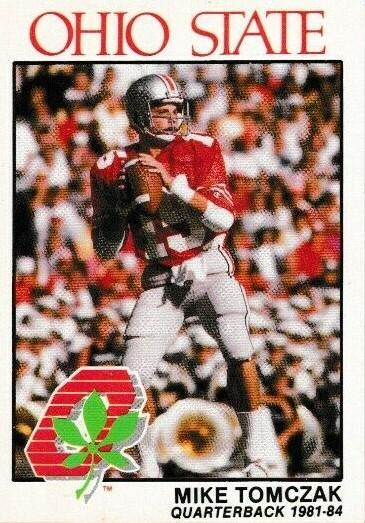
Against reigning national champion Penn State, the #17 ranked Panthers drew a 24-24 tie in the final regular season game. With a record of 8-2-1, Pitt was awarded a coveted bid in the Fiesta Bowl and would face the 8-3 Ohio State Buckeyes. Tempe wasn’t unfamiliar to the Panthers, who defeated the Arizona Wildcats in the ninth edition of the bowl game in 1979. Ohio State, led by quarterback Mike Tomczak, presented a greater challenge.
A defensive battle for the first three quarters, the action picked up in the fourth that came down to the final seconds in Ohio State’s favor. The memorable contest marked the end of an era of sorts in Pitt football.
The Buckeyes quickly drove down the field to open the game. Tomczak faked the handoff at the goal line and snuck it in to put Ohio State up early. Pitt fought back and tied things up just over a minute into the second quarter, on Congemi’s 6-yard touchdown pass to tight end Clint Wilson. Congemi hit McCall on a 42-yard strike to set up the score. Before the half was out, Keith Byars dove from the 1-yard line for six to put the Buckeyes on top with less than a minute to go. This capped off a 73-yard drive that ate up nearly five minutes of game clock.
The third quarter was hard-fought, but neither team scored. Luck appeared to be on Pitt’s sideline, as early in the fourth quarter, Wilson recovered McCall’s fumble in the endzone for a touchdown to tie the game. This good fortune for the Panthers wouldn’t last, as Byars took the ensuing kickoff 99-yards to the house. With just under ten minutes remaining, Pitt closed the gap after Congemi threw another touchdown. Beaver Falls native Dwight Collins hauled in the pass from 11-yards out, though Pitt failed on the two-point conversion attempt to make the score 21-20.
After a stop on defense, Pitt rallied and on the next possession took the lead with Ray “Snuffy” Everett’s 37-yard field goal to make it 23-21. Despite the unfavorable odds, Mike Tomczak led the Buckeyes down the field. On an 89-yard, 13 play drive capped off by a 39-yard shot down the sideline to Thad Jemison, Ohio State took their final lead. Backup Pitt QB Chris Jelic filling in for an injured Congemi was unable to replicate the miraculous drive, and the game was over. The final score, 28-23 Ohio State.
Congemi, the losing quarterback, was named the Offensive Player of the Game. He completed 31 passes, then a Fiesta Bowl record, for 341 yards. Ohio State linebacker Rowland Tatum was named the Defensive Player of the Game. The Buckeyes rose to #9 in the final AP poll, whereas Pitt fell to #18. Congemi remained Pitt’s starter for the next three seasons, finishing second behind Dan Marino in passing yards in program history. Both records have since been broken.
Tomczak, who went 5-21 passing in the second half, helped the Buckeyes win the Big Ten in 1984, and led them to the Rose Bowl where they fell to the USC Trojans. An undrafted free agent, Tomczak found success as the starting quarterback of the Chicago Bears and later with the Pittsburgh Steelers. Byars was the runner up for the Heisman in ‘84 and had a solid NFL career. The same can be said, and then some, for Bill Maas, a first-round pick of the Kansas City Chiefs in 1984.
It’s not easy to define success. What Pitt did back then is difficult to compare to any period in the years since. Sure, you had some good years and bowl wins in the 2000s and 2010s, but nothing like the Dorsett and Marino years. The closest example you could point to would be 2021 when Pitt won the ACC and Kenny Pickett made a run at the Heisman. Still, that’s a bit of a reach, as they failed to make the College Football Playoff and lost the Peach Bowl to Michigan State, with several key players like Pickett sitting the game out.
With coach Pat Narduzzi and true freshman QB Mason Heintschel, Pitt found new life in 2025 yet lost in embarrassing fashion to East Carolina in that year’s Military Bowl. As always, the future remains unpredictable, especially with the influence of NIL overtaking the game. College football now is so different from what it was back then. Watching highlights from the game, you’ll notice the oversized shoulder pads, neck rolls, and quarterbacks taking more than a five-step drop. It’s from a bygone era that many Pitt fans still remember fondly to this day. Hail to Pitt!